Product Genius, the Podcast for Inventors, Entrepreneurs, and Startups
Honest advice for inventors—with obscure cultural references included at no extra charge.
Episode
261
Should Product Inventors and Developers Do Networking?
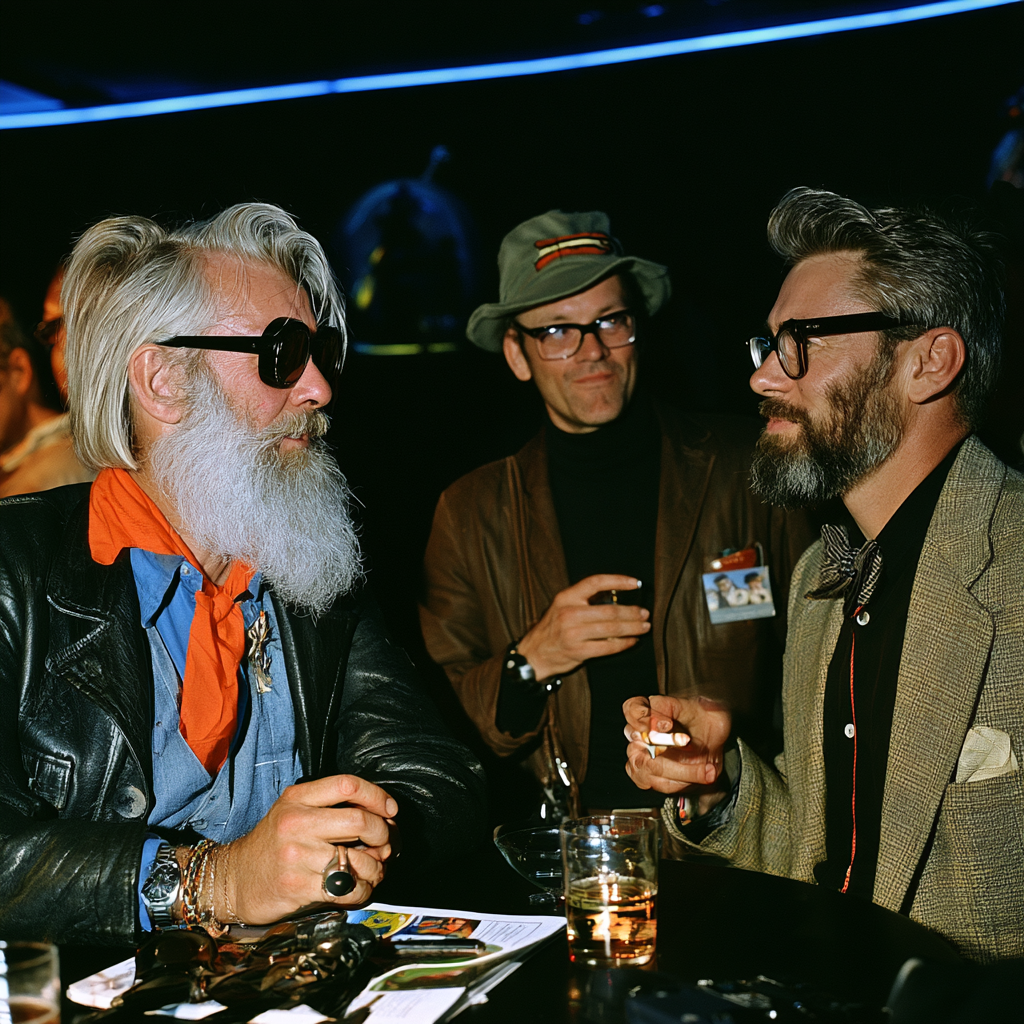
Should inventors and product developers still network when AI, online marketplaces, LinkedIn, and specialized digital services can answer questions or locate vendors instantly? In this follow-up to Episode 259, Steven and Noah argue that technology has changed networking—but has not eliminated the need for trusted human relationships. Digital tools can accelerate communication and make early ideas easier to share. An inventor can generate concept imagery, research unfamiliar topics, organize questions, or visualize a CAD design on different users. Yet those outputs still need experienced people who understand engineering, manufacturing, patents, licensing, marketing, logistics, and the founder’s actual goals. AI can support a workflow; it should not become the entire team. The conversation explains why inventors should network beyond people who share the same background, learn the difference between online connection and earned trust, and avoid making introductions based only on LinkedIn proximity. Noah describes relational product development: understanding whether the founder wants to license, manufacture, grow, or eventually sell the company changes the design and development strategy. Steven and Noah also examine why automation built for 80% of users can fail the remaining 20%, and why novel products require perspectives that derivative systems may miss. The best modern network combines online reach, diverse specialists, honest human judgment, and relationships built over time.
Core Topics for this episode:
- Marketing
- Inventor Strategy
Key Takeaways Include:
Listen here:
Episode Blog
Should Product Inventors and Developers Still Network?
The old symbols of business networking are disappearing. Rolodexes, desk phones, stacks of business cards, and rooms full of coaxial cable have given way to LinkedIn, online calendars, AI assistants, cloud documents, and instant searches.
That shift can create a tempting conclusion: if technology can find answers and vendors, perhaps inventors no longer need to build relationships.
Episode 261 reaches the opposite answer. Inventors still need people—especially because product development involves novel problems, incomplete information, conflicting goals, and consequences that cannot be resolved by a generic online result.
The right approach is not old networking or technology alone. It is a hybrid network in which digital tools accelerate real relationships and expert work.
Online Connections Are Not Automatically a Network
A LinkedIn connection means two profiles are linked. It does not establish competence, trust, availability, shared values, or willingness to help.
Before asking someone to introduce you to one of their contacts, consider whether either relationship is real enough to support the introduction. A trusted connector risks personal credibility every time they refer someone. “We are connected online” is not the same as “I know how this person works.”
Use online platforms to discover people and remain in contact. Build trust through conversation, follow-through, observed work, and useful exchanges.
Use Technology to Improve Communication
AI tools can help an inventor communicate an early concept. Someone without visualization skills can describe an idea, refine generated images, and show a designer the intended style or context. The image may not be manufacturable, but it gives the conversation a better starting point than words alone.
A product developer can use similar tools to place a CAD design on different representative users, create scenario imagery, or explain an idea more quickly. This work previously required more time than the communication value justified.
Transparency matters. AI-generated imagery should be labeled, especially when proportions, fit, or human details may be imperfect.
AI Is an Accelerator, Not the Whole Team
AI can create lists, summaries, images, and drafts. It cannot accept responsibility for a bad production run, negotiate with a factory, understand every legal nuance, or know why a particular founder values one outcome over another.
For high-consequence work, inventors still need qualified people:
- A patent professional for intellectual-property strategy
- Designers and engineers for function and manufacturability
- Manufacturers and quality specialists for production
- Marketing and sales experts for positioning and customer acquisition
- Logistics specialists for inventory and fulfillment
- Licensing professionals when the goal is to license rather than manufacture
Technology can make each person more effective. It does not erase the need for judgment and accountability.
Network With People Who Are Not Like You
A network made only of inventors facing the same obstacles cannot supply every missing skill. A founder should intentionally connect with people who have different expertise, incentives, and experience.
This diversity also creates productive disagreement. A marketer may challenge a feature the engineer loves. A manufacturer may expose hidden assembly cost. A customer may reject an assumption that every inventor in the club accepted.
If every person in the network knows and believes the same things, the network is merely talking to itself.
Relationships Reveal Goals That Transactions Miss
A transactional engineer asks, “What should I design?” A relational product developer also asks, “What do you want to do with this business?”
The answer changes strategy. A founder who wants to license may need a compelling proof of concept and a licensing package. A founder planning to manufacture needs supply chain, tooling, quality, inventory, and distribution. A founder aiming for acquisition may prioritize scalable operations and protectable intellectual property.
Understanding motivation does not require becoming best friends. It requires enough conversation to see the product in the context of the founder’s actual destination.
Automation Works Until You Are the Exception
Noah’s pharmacy story illustrates a familiar automation problem. A system designed for the typical refill could not recognize his specific need and attempted to refill years of unrelated prescriptions. The tool may have helped most callers while creating more work for everyone involved in the exception.
Inventors live in the exceptions. Their goal is to create something that does not already fit the standard pattern. Generic guidance is useful, but it may not account for a novel user, mechanism, regulatory issue, or business model.
Human expertise is most valuable when the project leaves the well-marked path.
Avoid the Faster-Horse Trap
Noah suggests that if Henry Ford had relied only on derivative AI output, he might have spent his life optimizing a faster horse. Current generative systems learn patterns from existing information. They can combine those patterns creatively, but the inventor must still define the unmet need, imagine a different direction, and judge whether the result matters.
Use AI to explore and accelerate. Do not let its fluency narrow imagination to variations of what already exists.
A Practical Modern Networking Plan
- Identify the expertise your current team lacks.
- Use online tools to discover credible candidates.
- Ask trusted contacts for context, not merely names.
- Have real conversations about goals, methods, and fit.
- Begin with a small, appropriate interaction when possible.
- Observe follow-through before making broader introductions.
- Keep relationships active by sharing useful information and updates.
- Label AI-generated materials and verify technical claims.
- Add viewpoints that challenge the existing team.
- Treat every contact as a person, not an asset in a database.
Product Genius Take
Networking is still essential, but the modern inventor does not need to choose between technology and people. Use digital tools to communicate, research, and find specialists faster. Then invest in the human relationships that create context, trust, accountability, and unexpected insight. AI can accelerate the work; a diverse network helps decide which work is worth doing.
Or, read the full transcript here:
Steven Julian
Previously on Product Genius, Noah and Steven encounter the Klingons.
Noah McNeely
They're in the network and they don't take prisoners.
Steven Julian
Even at warp speed, Noah, we can't outrun them.
Noah McNeely
Fire everything!
Steven Julian
And now, the exciting conclusion of networking on Product Genius. Do you want to be a successful inventor entrepreneur? Struggling to get your product from idea to market? Well, you've come to the right place. Welcome to Product Genius, the down-to-earth podcast that explores important topics about inventing and launching new products. Noah McNeely is your trusted guide. With more than 20 years of product launch experience, he's here to help you on your journey to become a product genius. Let's get started. Here's your slightly annoying co-host, Steven Julian. Hey, that's my line. Yes!
It is your slightly annoying co-host, Steven Julian. Welcome to another, hopefully one day soon, award-winning edition of Product Genius. The intrepid producer Jody Smith is wiggling the knobs and trying to find the exact right sound for my voice, and he still can't get it because it's an unsolvable equation. Across the table is the host, the man who puts it all together, the genius who brings other geniuses to the table. It is. Noah McNeely.
Noah McNeely
Good afternoon.
Steven Julian
Good afternoon. The no fire trucks, no ambulances, no trains coming by yet.
Noah McNeely
At least not yet.
Steven Julian
Hey, I wanted to start off the show. This is part two. Welcome to the cliffhanger episode. Welcome to Who Shot JR? Since we are doing a...
Noah McNeely
I think it was Maggie Simpson.
Steven Julian
Apparently in the works, we have a second podcast that you want to start about true crime of product design or something. Hey, that rhymes. So this is the second part. Before we even get into the topic, I have to ask you a question. We're going to do a little show production meeting on the end. When are we going to get an AI-generated hard rock version of our intro?
Noah McNeely
Ooh, hard rock, huh?
Steven Julian
Yeah, hard rock, metal rock, 80s hairband.
Noah McNeely
Well, now that you've inspired that, I'm going to say this afternoon.
Steven Julian
Yeah, okay, good. Because I was over here, I do a little dance into the music, and I'm like, I'm getting a little tired.
Noah McNeely
I had AI generate a heavy metal Easter bunny song a few months ago, and it was quite amusing.
Steven Julian
Quite good.
Noah McNeely
It was chocolate death bunnies. Chocolate death. It was fantastic.
Steven Julian
Nice. All right. Well, coming soon.
Noah McNeely
Glad we're putting all this computing power in the world to good use, right? Exactly.
Steven Julian
Yeah. Yeah, I'm glad all that water and energy is going to create good, helpful stuff. And I did want to bring that up because we're talking about the second part two of the show. Last show we did, we talked about the dangers of networking. We talked about... The people you want to try to avoid when you're networking and as you're building your network, the pitfalls to avoid. So we kind of wanted to turn it on its head and kind of do the positive side. And you had a great idea. So you had this nice picture and it involved computers.
Shocking. Noah, the recovering engineer who does CAD drawings and does 3D printing, had a computer analogy for what we want to talk about today.
Noah McNeely
Oh, you want me to tell it?
Steven Julian
Better than me telling it.
Noah McNeely
So, you know, back in the old days when you had your computer network, you had to plug everything into the wall and you were kind of limited. You only had so many plugs and. you had to run these. Cat 5 cables, baby. Yeah, Cat 5 cables.
Steven Julian
Sorry, I used to work in a.
Noah McNeely
Yeah, for younger listeners, that has nothing to do with felines. And it's just these wires you had running everywhere. So you're kind of limited. But now, think of the network you have in your house. It's totally wireless. Believe it or not, you used to have to plug the TV into a special cable that came out of the wall, but now you can put it anywhere.
Steven Julian
Oh, man. You had a coaxial cable and it had that scary little pointy thing at the end and you had to twist it on right and it would get on. Yeah.
Noah McNeely
And if you broke that, you were in deep trouble.
Steven Julian
You were in big time trouble. And the point being that... Networking is changing. Building your, you know, having a network is changing. And Noah, you kind of wanted to say, look, as the world of computing and as the world of your network in your home or in your business has dramatically shifted, we used to, my first job out of college was working for a telephone company that. put in office phone systems. And everything was analog. You had a punch board and you had all this stuff. And then everything started going to VoIP or VoiceOver Internet Protocol.
It took 15 years to do it. But now there's no phone room. There's no phone board that you, I mean, it was this whole, they map it out and they do it. You don't do that anymore. Yeah.
Noah McNeely
Older office complexes, they still have rooms that used to be the phone rooms. Correct. And you go in there and there's all these holes in the wall now. Correct.
Steven Julian
Absolutely. So it got turned into a. Data storage. Anyway, so things have changed dramatically in the computing world and in how we do computing. And so we wanted to kind of bring the flip side of this topic and just kind of talk about how has networking changed and does networking even need to be done? We talked about this bad. Some people might go, I'm just going to avoid networking altogether because... And what I loved was as we started talking about how to make this a second show, you had a couple of thoughts, but then you. and I just started talking and I said to comment, no, I think you and I just need to have an open conversation in front of our loyal listeners and just kind of go, we're still trying to figure this out too.
The world is changing so drastically, so quickly. And when it comes to building your business, building your product-based business, bringing your product to market. Has it changed so much that we just need to stop dealing with people altogether? And the answer is no.
Noah McNeely
Yeah, I mean, I think a lot of people would like to believe it has, especially those who are natural introverts like myself. But, you know, it is very different. And just like with the old school networking in your computer world, you had wires and things running everywhere, and now you don't. Now, used to old school networking in the people world was you had a Rolodex, you went to places, you collected business cards. I don't even have business cards anymore. And used to, you know, used to, again, like you had that big phone sitting on the desk and you would call people up.
And, you know, introverts like myself would just email, of course, but a lot more phone calls were happening then. And, you know, when I actually started this company 11-ish years ago now, I had a whole briefcase full of business cards I collected in my former company at trade shows. And it's like, yeah, I could turn this into an interesting art piece. But other than that, you know, those business cards aren't worth anything at this point or even at that point because all those people moved on to other jobs. The phone numbers weren't right.
Everything was different. So we're in a very different world now.
Steven Julian
And I think the temptation is to then go, well, then. I just need to do everything online. I need to go completely online or shut myself in and do everything myself. The whole point of this show, if you've listened for any amount of time, you can't do everything yourself, but hey, I'll just search. I'll just have AI tell me the best place to go for this or I'll just search for the best whatever instead of going out and meeting people and getting to know people and building a network of people.
And I. don't think that's the right solution.
Noah McNeely
No, I think that's an overcorrection. I think you see that overcorrection in a couple of ways. I think you see it with bigger companies trying to really do all their customer service that way, which if it's a really simple issue, yeah, that works. That works great. I had an incident earlier this week, and it kind of brought out the old man hates technology side of me because, you know, I get... I had to pick up a prescription at a pharmacy and they used to have a system where you push one and talk to a pharmacist or you could just type in your refill code.
That was great. It was simple. It was a really weird robotic voice. Please enter your code. I loved it. It was fine. I could do it. No problem. Now they've got this AI thing that answers the phone. Hello, how are you today? I'm great. I just want to fill. Would you like to fill a prescription? Yes. Tell me what it is. I can't find that prescription. Please tell me what your prescription is. So the only option that would work is, would. you like to just refill all your prescriptions? Yes, refill all the prescriptions.
So we went back like eight years of prescriptions to things like, you know, I had a cold one time and I was prescribed, you know, erythromycin four years ago and they tried to refill that. So now you've got this pharmacy. Supposedly using this AI system to make things easier, faster, quicker. Now the pharmacy, the automatic robot sends out to that doctor who is no longer at that clinic to ask, can I refill erythromycin for this patient that you've not seen in four years? And that was easier for me to get the one thing I needed.
Okay, I'm getting a little too agitated.
Steven Julian
Jody and all the listeners, let's all together help Noah by saying one, two, three. Get off my lawn. Okay. So that was your. get off my lawn.
Noah McNeely
Old man yells at clown. Yeah.
Steven Julian
So at times, so in trying to make things better or more streamlined, you then can create more individual problems for individuals who then go, wait, the old system was fine. All I had to do was go to my app and do this and click. this and I'm good.
Noah McNeely
Yeah, we've talked about the 80-20 rule on this show before, which for products, that makes total sense. You know, who's going to buy 80% of your products you design for that group of people? That's fantastic. It's a terrible idea in customer service. So these companies, they've designed AI systems that meet the needs of 80% of the people and totally screws over the other 20%.
Steven Julian
Yes. And even, yeah, and even if it's, oh, well, we're only going to have problems with 10%. And then here's what's really funny is I think as AI continues to grow in some of those streamlining things, I think the other thing that I've already heard actually with some people who are using it, and I think it'll be interesting is if it can handle it fine, but how quickly can you get off to actually talk to a person? Because at the end, this is the point I think you and I wanted to make is at the end, one of the points we want to make at the end of the day.
How important are people in getting your product to market, in building your business, in kind of seeing your business goals or your business dreams be reached? You still need people.
Noah McNeely
Yes, I agree completely. And if you think about my experience with the pharmacy, you know, it's a system designed to meet the needs of 80%. If you try to not network with actual people and you just use everything from, you know, all sorts of online services and tools, which are great. Don't get me wrong. There are places and reasons to use all these things. But if that's all you're doing, then you're getting the same results and answers that 80% of everybody else is getting. You're not doing anything new or different or exciting or innovating, which as an inventor, that's kind of what you're trying to do.
Steven Julian
That answer right. there could be another show. I don't think we can go all the way down that rabbit hole.
Noah McNeely
This is not going to be a three-part show.
Steven Julian
No, it's not going to be a three-part show. But when we were talking about this and preparing to do this second part, one of the things you said was using both technology and people. well. They have to be used together.
Noah McNeely
I don't like the phrase using people, Steven. That's a little bit outdated.
Steven Julian
Okay. How would you like to correct me in that?
Noah McNeely
Utilize. I'm just making fun of you.
Steven Julian
Yeah, I know.
Noah McNeely
We use people all the time.
Steven Julian
No, that's not right. Access, no.
Noah McNeely
Maximize the relationship you have with people.
Steven Julian
Oh, that's fantastic. That's why he's the genius, ladies and gentlemen. So the idea of technology, absolutely, you need to find the ways it can help you. You need to be careful not to replace. There are... People scenarios that don't need to be replaced. And let's talk about you. Let's talk about what you do.
Noah McNeely
One of my top 10 favorite subjects.
Steven Julian
I know. It's climbing the charts. Depending on the week, it's somewhere between three and seven. In your role of helping people bring their product to market, what is a way that technology in the last five to 10 years has helped you in helping your clients? And then what is something that you're like, I still have to be involved even though I'm using this technology to help me help them?
Noah McNeely
Okay, there's a lot of question there. And there were broad answers. I'll. give an example.
Steven Julian
Yeah, there you go.
Noah McNeely
So just AI is big. Everybody knows what AI is now more or less. So what I found is it actually currents can use it. Very helpfully to try to communicate what they're trying to do to be better. So instead of bringing me something made out of Play-Doh, which I still don't mind, bring it, I don't care. They can actually go on to ChatGPT or whatever and describe what they want. It generates a picture and then they say, okay, change this, change that. It still isn't a product that's designed, but if you come in and they can show me really a good example of, hey, I was going for this kind of look and, you know, that's not quite right, but this is what I want.
And I can look at it and say, okay. We can't manufacture it this way and that way, but we can do these things. But it just gets the communication a little bit further along, which is helpful. Now, I use that tool. I've used that tool in the other direction sometimes. If I have, for example, working on a project right now. that's this thing that people wear on their heads. So it interfaces with the body. And we wanted to show that. I wanted to show that what it would look like on different people from different ages and et cetera.
So I could use the AI to take my CAD model, my images of it, and say, okay, put this on a model that is a 45-year-old woman and a 25-year-old man, and it could do that quickly. That would have taken me a long time to do in the past and wouldn't have provided enough value per hour to do that for the client. We just have to imagine, imagine on this person, that person. This I could do in a matter of minutes. The design still had to be done by me. You know, for engineering and manufacturability, but I can communicate how that design rolls out across a much broader, in a much faster way than I could before.
Steven Julian
Is one of the dangers of, I didn't want to talk about dangers, we want to talk about the positive of building a network, but in this stuff of AI, so in your example, you're talking about, hey, we could have just imagined it, but here I got to put it into AI and show it. I would wonder if one of the cautions is, Using AI to do so many things, you're going, okay, but 17 of those 20 things you just used AI to do, we didn't really need to do that. I don't need to show everything.
I don't need to go down, okay, I used all these different examples. Yeah, I get that, but did you have to have 972 examples? I mean, good heaven. You used the people from the Star Trek pilot episode with the big giant heads. I didn't need that. There's nobody with that head.
Noah McNeely
Yeah, I mean, you still want to use things efficiently because... You can sit down and waste an entire day playing with AI if you want to. But again, you got to remember, this is a business. Time is money. Use it effectively. Use AI effectively. Don't bother with things you don't need. And I will caveat, when I do use AI, like in that case, I always put the disclaimer, hey, these were generated, these models were generated with AI to show the product. Because sometimes, you know, they don't look quite like they're supposed to.
People just, I want to make sure I'm very transparent about that.
Steven Julian
I think also the other thing, getting back to kind of the positive of your network and who you're networking with, you use AI differently than your clients. use AI because you are bringing your experience, your past, your prototype building expertise to AI. So what you're going to ask AI to do is different than what they're going to ask AI to do, which means the point of as someone is bringing a product to market, So let's just review real quickly, who are some of the people, the people that they need to include on their team?
And everything's different, but some of the key people that they need to at least think about finding for their network and talking to.
Noah McNeely
Yeah. So if you're planning to bring it all the way to the market versus licensing, if you're planning to license it, you need someone that understands licensing on your team. The internet or even AI, but it's going to be basic information. It's not going to be the nuances of how to. actually pitch your specific product and how to write that deal around your specific thing. So licensing experts. in that case, if you are taking all the way to the market, you need someone that knows how to market the product, how to sell the product, the logistics of, okay, am I going to put these in my garage?
Do I work with a warehouse company? What do I do there? Of course, and then the stuff that I do, you need, most likely you need some expertise in design, engineering, designing it, designing it for manufacturing, and someone that has relationships or can help you build those relationships with factories to get things done. Because at the end of the day, you make a thousand or something, it comes in and it's wrong. Are you going to yell at ChatGPT about it? Or are you going to get it? You're going to go back to the real people and say, help me fix this.
Steven Julian
I think that was one of the big things. as we were talking about this that I wanted to bring out was the concept of technology. as it continues to grow, it brings the ability. for me to look at some things, get some examples, and get some knowledge about things that I have almost no knowledge about or very little knowledge about. However, that doesn't mean I would want AI to write my will. Right. Because AI, because at the end of the day, somebody who has the expertise and the knowledge, a person needs to look and go, okay, that's, yeah, that's there, but it's not all the way there.
And when it comes to certain things like building a prototype, oh, AI, I ran it through this AI and this agentic thing, and it told me to do this and this, and I did it. And they bring it to you and go, that's fantastic, but it's not going to work because of Yeah, whatever.
Noah McNeely
I mean, it won't work because of this, because of that. But I think viewing, and this wasn't supposed to be an episode all about AI, so we'll circle back around in a minute. Sorry.
Steven Julian
When you say technology now, that's what you mean, right? I mean, that's the problem.
Noah McNeely
Viewing AI as an enhancement and an accelerator to your workflow is great. Viewing it as your entire team workflow, that usually doesn't work out that well. Now, again, if it's a simple task like, Help me come up with, you know, a to-do list. Sure. Get AI to do it. Who cares? I'm talking about really big stuff, life-changing stuff.
Steven Julian
Hey, AI, write me a patent. That's not a good idea.
Noah McNeely
Yeah. Now, if you want to say, hey, AI, what should I consider putting in my patent? Absolutely. Then give that list to someone like our friend Brock to go through and actually make a good patent out of it. That's fine. In fact, that probably accelerates that process in a good way. But then Brock's going to go through and say, Yeah, but this doesn't make sense. This does. And you didn't even talk about this. We need to do it. It's more of a starter than anything else. Right.
Steven Julian
So when you come to doing networking the right way and you come to doing network in the wireless age that we're in, one of the things you kind of had down here as a good rule to think about doing it right is network with people who aren't like you. Opposites kind of. attract. Talk about that.
Noah McNeely
Well, and we touched on this earlier in the last part of this episode or this two-part episode. If you're just talking with people that are kind of in your same position, they're struggling to invent something, they're having the exact same problems you have, or they have the exact same expertise you have, you're not expanding that knowledge base. It's kind of like, again, back to AI. If you trained an AI bot on everything you know, and that's it. It might be fun to talk to yourself, but you're just talking to yourself.
Product Genius is brought to you by Opu Probiotics. Pre and probiotics you can pour directly on your tongue in delicious mint and mocha flavors. But the taste is just the beginning.
Steven Julian
With Opu, you can see improved digestive function, boosted immune system, easier weight management, improved mental health, and much more.
Noah McNeely
Try today at GetOpu.com. That's GetOpu.com.
Steven Julian
Look at this show. You and I, while we share a love of weird, nerdy topics, and every show is a contest secretly of who can put in the most obscure cultural reference, you always talk about how you're an introvert, and I'm. basically an extrovert. You're a recovering engineer and I'm a, you know, you would stand in the corner of a networking group and I would go, oh, look, there's an audience. Let me see how I can get people to laugh or whatever.
Noah McNeely
And those are, I think, our natural tendencies. I'm a little better than I used to be.
Steven Julian
Okay, goodness gracious. Noah, you're great.
Noah McNeely
I'm very easily offended.
Steven Julian
Awesome. You're fantastic. I am going to book you at my next show or I'm going to, I'm going to put you on the Apollo and you're going to do standup comedy. So also when you're, when you're networking with people, I think one of the things we want to talk about, my first career I worked. With teenagers in church settings. And one of the things that I was taught in working with teenagers is relationships are absolutely essential. It's all about the relationships. And it's funny, I think sometimes you look at a church or I think you look at business, I think in today's wireless world, the danger is we get more focused on the program.
Then we are on the relationship. We get focused on the. show, what's up on stage or what's being flashed, you know, what's being shown in front of everybody instead of what about the people? So you, you know, one of the things we want to do as a benefit of kind of doing it right is treating people as people and kind of talking about that relational aspect. You, you know. You're not best friends with all your clients.
Noah McNeely
No.
Steven Julian
But what does it look like to be relational? What does it look like to have a good relationship with a client?
Noah McNeely
Well, for me, it's a lot more than just understanding the product they're trying to do or just understanding the elements that I'm going to necessarily touch directly. I want to understand what their drivers are. Why do you want to do this product? What are your goals? What are your business goals? When we have a first call, I don't typically just ask them about the product. One of the questions I asked early on, and I also caveat it with, you may not know the answer to this yet, and that's okay. We'll figure it out.
But what do you want to do with this? And. that goes back to licensing or actually I want to manufacture it. I want to manufacture and then get bought out because that helps me to help them better. But if I just ask, okay, what do you want to design and prototype? I'll do that and that'd be great. That doesn't give me enough information to make suggestions back to them that can actually help them further along what they really want to do.
Steven Julian
So to people who are trying to, you know, inventor entrepreneurs who are listening to this show, don't be scared to ask relational questions. Not will you be my friend, but just kind of, you know, if they're just wanting a transaction, there might be somebody better out there for you. Is that a fair statement?
Noah McNeely
Yeah, I mean, you need people. And people are more complex than just the simple transaction you're dealing with. I mean, if you're just buying something at the store, yeah, go to the automated checkout if you don't want to talk to people. That's not going to change your life. But at the same time, if you want to be friendly and talk to the cashier, do it. There's. nothing wrong with that either. But when we're talking about something big, You don't want an engineer that operates or a designer or anything else related to your business that operates like an automatic checkout machine.
You know, you need people and I'm sorry, you're going to say something. I was about to change. I was about to jump to another subject.
Steven Julian
Oh, well, okay. So before you do, wow, he's pivoting the show. I was sitting here thinking that, okay, relationships matter and people matter, but. Make sure you're not doing the people from the Dr. Rick. progressive episodes, progressive commercials that you're, oh, I'm in a relationship with the guy working in the sewer. Oh, is this related to the elementary school? By the way, one of these, it still is in my head. Jody has, our intrepid producer Jody has the greatest theory of what the end game of those progressive commercials is going to be.
So that's a tease. I'm not going to give it away on the air that we'd have to bring him on to talk about it. It's brilliant. Those are the greatest commercials going on right now. Okay. How did you want? to pivot? Because I was going to pivot to something, but I'll see what you want to pivot to. We may have two more topics.
Noah McNeely
Or we may be pivoting in the same direction. That would be amazing. Yeah. So I was going to say, you know, look at one of the big problems that we recognize as a culture now. And you mentioned teenagers. So how many stories have you heard about teenagers that their entire relationship base is merely online? It's through Snapchat or... You know, whatever it is, I almost said Facebook, but I don't think any teenagers actually use Facebook.
Steven Julian
It's our platform.
Noah McNeely
All the cool stuff that teenagers do online, you even hear about people that their girlfriend is a chatbot. And that's their entire relationship. And those are just, those are things that at best are just reflecting back what they're telling it on some level. And it's not real. I mean, it... Maybe it's fun. if you want to chat with a thing about, hey, let's talk about how llamas evolved. Who cares? Whatever it is you want to talk about, that's fine. Do it because no normal person wants to talk about. that with you.
But that's not the same as actually building a relationship with someone that has their own drivers and their own life that can intersect with yours. In ways that you can't predict, in ways you can't ask a question about. You just have to let it happen and see what happens.
Steven Julian
Relationships are messy. Relationships take work. Relationships may not always go the way you want them to go, or they may take longer than you want them to take. All of those things might be tempting online. But then there are other consequences for that. Where I was going to pivot to is going back to your pharmacy.
Noah McNeely
Hold on. The second half of that point was a lot of people that are out trying to start a business and a lot of people running businesses, I see them approaching networking the way these teenagers are approaching their social lives. These teenagers that are stuck online are approaching their social lives. All right. That was my whole point.
Steven Julian
And how are they doing that?
Noah McNeely
Just online. They're not building any real relationships.
Steven Julian
He really just said the same thing twice. But it is his show. But.
Noah McNeely
I did this when I did it.
Steven Julian
You did. You did it. You did it with a lot of conviction. That's right. You almost pounded the table, but you knew that it would make a noise. By the way, you have been very skillfully drinking from your Georgia Tech mug with your Pepsi Wild Cherry, neither of which are sponsors of this show, but could be if they would reach out. And thank you, Opu Probiotics.
Noah McNeely
I don't know why I chose a heavy metal cup to drink out of today. that makes clinky noises every time I pick it up.
Steven Julian
It was why I thought of the heavy metal reintroduction of our show. But I was going to... I was going to say this. I wanted to go back to the pharmacy. The pharmacy, what a great story of the AI bot.
Noah McNeely
Would you just like all your, I mean, you can't make it up. It was so infuriating. Yeah.
Steven Julian
And it was like, why am I getting allergy pills from when I was 16?
Noah McNeely
At the end of the day, I'm sure that costs some actual people more time than if I just called them and thought, okay, okay, okay.
Steven Julian
All right. Get off my lawn. I know. I know. Well, I would just like to say welcome as the other.
Noah McNeely
Back in my day, people answered the phone. That's right.
Steven Julian
We walked down. Anyway, go watch Lily Tomlin on Laugh-In do the operator, the plug-in. They had party lines and everything. So I was going to ask this because you mentioned, by the way, what was the name of the thing that you had when you had a cold? What was the name of what they prescribed?
Noah McNeely
Erythromycin. Erythromycin. It wasn't a cold. It was an infection. It was an antibiotic.
Steven Julian
This is not a medical show. I know. I love that. you know that name.
Noah McNeely
My wife's in pharmacy, so I know lots of stuff.
Steven Julian
So here's what I was getting. When we were talking pre-show, we were kind of talking, you were talking about networks and you were talking about computer networks and you were talking about avoiding viruses. And I'm wondering if you kind of meant that in terms of, hey. The more time you spend online, the more time you potentially get of getting a virus if you're trying to do more with. your network than you really should, meaning your computer network. Is that kind of what you meant?
Noah McNeely
Well, yeah, sort of. So it's about how shallow the relationship is. So if you're going online and you're like, oh, I pop up. Hey, this is a network tool. Download and it'll make you do all these things. Never do any of that. You do all these things and there's malware, there's all sorts of stuff you can release on your home network. that's terrible. You know, all sorts of bad things happen. In the human networking space, if your relationships are so shallow, maybe they're just online, you don't know who you're letting into your network either.
And my point is that that may not be someone you want to be associated with. And we just don't know. I mean, how many people out there are like, I see someone you don't even really know. I see you're connected with so-and-so on LinkedIn. Can you connect me? It's like, I don't know you. I don't know them. We're just connected because we're connected to other people. So, you know, that's not necessarily a great idea. Now, if you want to take. the time to get to know them, that's different.
Steven Julian
LinkedIn is the business online connection, which for about five to seven years, it was, you got to be on LinkedIn. You got to be active. You got to be doing this. You got to be doing that. It still has a role to play, but. If you use LinkedIn to completely replace being in front of other people and building actual relationships face-to-face or over the phone through your Rolodex or whatever.
Noah McNeely
You will get a lot of congratulations for your work anniversary from people you've never heard of.
Steven Julian
You want to hear something really funny? I apparently have a work anniversary for my day job as a financial advisor. I have one for this podcast. I have one for another podcast I do. I have one for when I left. My first broker dealer to go to my, and I went independent. And so like six times a year, I get a whole list. Hey, congratulations on your work anniversary.
Noah McNeely
I don't know who saw that. What are you talking about? Who started that and why?
Steven Julian
I was going to say this about online versus real relationships offline and. building relationships with the important people you need and doing what you're doing in your business. I was going to bring this up. Speaking of Dr. Rick and just kind of talking about commercials. I don't know if either of you remember, there was an old, old commercial, and by old, I mean, I think around 2006, 2007, when Facebook was first becoming a thing, okay, maybe 2008, 2009. So Facebook was just kind of taken off. It was the new thing.
Now I'm beginning to think it was probably 2010, 2011. Anyway.
Noah McNeely
Old people have trouble remembering things.
Steven Julian
Exactly. It all runs together. There was this commercial with this young lady, and this is when Facebook was it. It was the first big social network. And this lady went on and said, I was helping my parents the other day at their house and they just got on Facebook. They only had 45 friends. I have over 800 friends. And she looked at the camera and went, it's so sad. And I remember that commercial and it was so brilliantly done. And the point of that commercial was, hey. And then it showed her parents out biking and out. walking and out doing stuff.
And it was like, hey, go live life. And I'm like, wow, if we replayed that commercial today, we'd want to play it for the younger generations to go, hey, look at this. Maybe you want to be anti-establishment? You want to go against the grain? Watch this. Be the old people in this commercial. So I think it's kind of flipped on its ear a little bit. And also it could be shown to older generations, people who've been in business and I want to build my business. It's like, I want to take it all online.
Again, you cannot avoid the necessary relationship. So last thing, Noah, and again, I said this was going to be a little bit of an open conversation. I do want to say... Jody and I were doing something for one of the previous recordings and you were over there making furious notes. Is there anything we missed? Is there anything you wrote down in the seven or eight minutes where after our conversation and before we started, I saw you writing so much stuff? and I'm like, did I miss something?
Noah McNeely
Yes, sometimes. Well, only my pithy. little thing I said before the show about. if Henry Ford had... Access to AI and had just used AI, he would have spent the rest of his life trying to make a faster horse. Because AI is derivative. I mean, it just looks at things that have been, not what can be.
Steven Julian
I think that's because I, and again, this wasn't a show about AI, but I think people are talking about it like we know everything, like they are looking ahead. You're someone who's been involved with 3D printing for a long time. When 3D printing first came out, it was like, we're this close to being what they had on Star Trek and we're going to have food replicators. Translation.
Noah McNeely
Noah, you used to be a nerd and you're still a nerd.
Steven Julian
You're still a nerd. Absolutely. And so I always, and I love what you say, AI is, will AI ever go beyond what is derivative? Because if there's one thing of, oh, AI is going to replace us, it'll never replace the... I've got a new twist on something and I'm going to bring my creative and my relational power to bear on this.
Noah McNeely
Well, I mean, this gets into a lot of philosophy, but AI isn't really, what we call AI isn't really artificial intelligence. It's just machine learning and combining pattern recognition and regurgitation and et cetera. It's a fantastic tool, but I don't necessarily, no, I could be proven wrong. I don't believe in what they call, what is it? Artificial general intelligence. I don't even know that it's possible. Now, if that were possible, I guess, theoretically, that could have some creative elements to it. But I don't know. I'm doubtful of it. Yeah.
Steven Julian
So again, nothing can replace some... You need some human interaction. You need some relational interaction. You need to build a network of people.
Noah McNeely
Back to that song, the AI song, I said the heavy metal chocolate bunny song. Yeah, AI could create that song after I told it what I wanted, but it wasn't going to come up with the idea of heavy metal chocolate bunnies on its own.
Steven Julian
Yeah, good point. Good point. I like it. All right. So if you'll go to Spotify and Apple Music, you can download Noah's latest album.
Noah McNeely
Oh, no, it's private.
Steven Julian
Death by Chocolate. Oh, it's private. That's a.
Noah McNeely
dessert. I think that's trademarked, but Death by Chocolate.
Steven Julian
Okay. Non-trademark Death by Chocolate. Yes, yes. That's what we'll call it. Great. So, oh, you know what? You know what we should have, an AI heavy metal rock band, Frank's Cheese Hammers. That's what we need to do. All right. So we went all over the place. If you guys followed along, the reason we don't give an email on this episode is because we don't want to read your critiques. But if you go to productquickstart.com and you fill out the info sheet, you can put a critique of the show if you want.
Noah McNeely
But hey, if you do have anything you'd like us to cover on the show, let us know. We'd love to talk about it.
Steven Julian
Because Lord knows if you haven't figured out by now, we might be running out of topics. No, I'm just kidding. There's another one in the chamber ready for next time we record. So for Jody and for Noah, this is Steven Julian. Thank you guys. so much for listening. Thanks. We hope you have a little bit of fun. We hope you learned something. And we hope you take your. product to market. And we'd love to be a part of it here on Product Genius.