Product Genius, the Podcast for Inventors, Entrepreneurs, and Startups
Honest advice for inventors—with obscure cultural references included at no extra charge.
Episode
253
Proof of Concept or Piece of Crap? | Flash of Genius
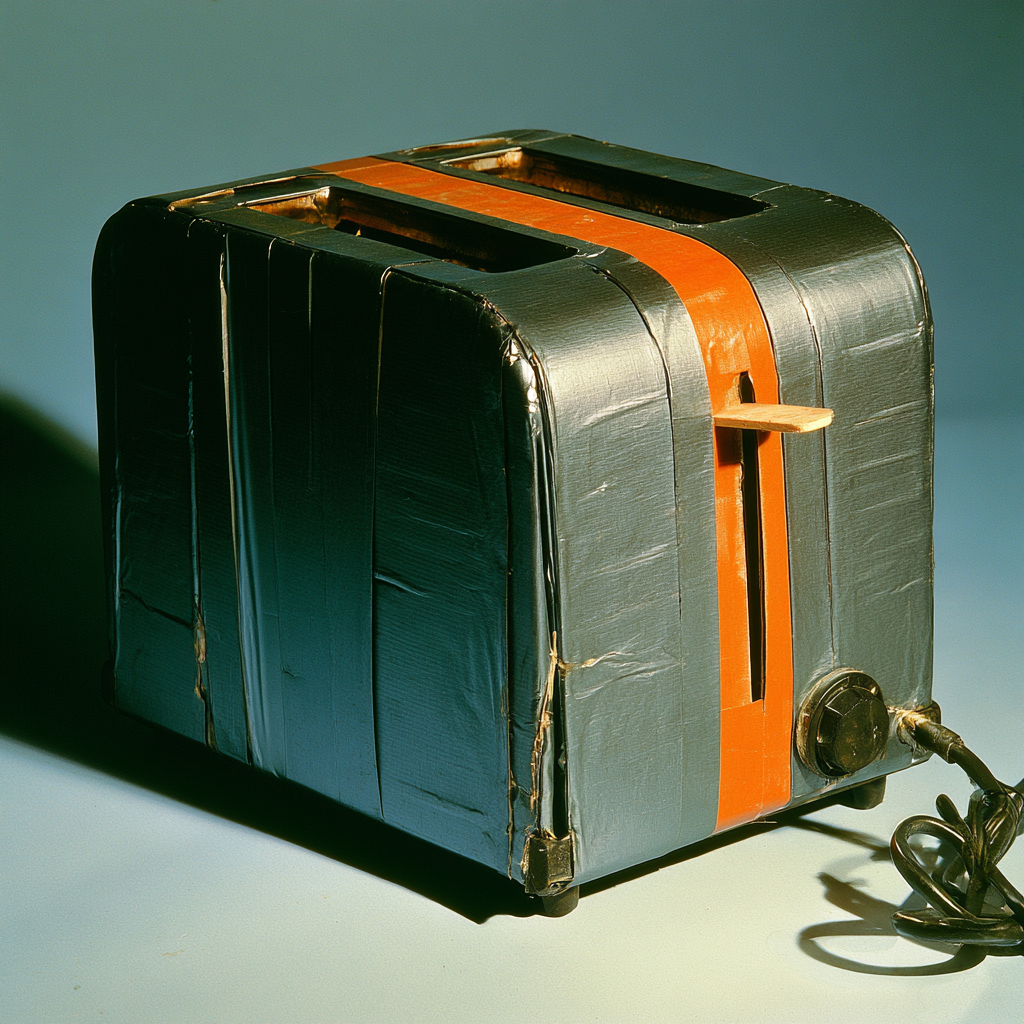
A proof of concept may look rough, improvised, or even like a “piece of crap”—and still be exactly the right prototype. In this Flash of Genius mini-episode, Steven and Noah explain that early product development is not about building one beautiful model that does everything. It is about learning what you do not yet know. A focused proof of concept can answer a single question: Is the product too heavy? Will it hold the required load? Can fabric replace plastic? Will an attachment stay on the wall? Does one small mechanism work? That experiment might use duct tape, scrap wood, foam, cut-up plastic parts, or leftover hardware. Appearance matters only when appearance is the question being tested. Noah also clarifies the relationship between a proof of concept and a prototype. A proof of concept is one type of prototype within a broad spectrum that also includes benchtop models, appearance models, functional prototypes, and polished trade-show or investor prototypes. Most invention ideas need several inexpensive, targeted experiments before an integrated prototype makes sense. By testing individual risks for tens of dollars instead of combining every unknown into an $800 model, inventors can fail cheaply, iterate quickly, and make smarter product-development decisions.
Core Topics for this episode:
- Prototyping
- Invention Process
Key Takeaways Include:
Listen here:
Episode Blog
Proof of Concept or Piece of Crap? Sometimes It Should Be Both
Inventors often imagine a prototype as a polished version of the final product: attractive, functional, and ready to impress investors. That kind of prototype has a purpose, but it is rarely the smartest place to begin.
Early product development is about uncertainty. A proof of concept exists to answer a question you cannot confidently answer on paper. If the quickest reliable experiment uses duct tape, scrap wood, foam, a cut-up plastic part, and hardware left over from another project, that may be excellent engineering.
The model does not need to look valuable. It needs to produce valuable information.
Test One Question at a Time
A proof of concept should have a clear learning objective. Examples include:
- Will the structure support the required load?
- Is the mechanism too large or heavy?
- Can the product attach securely to a wall?
- Can a fabric component replace a molded plastic part?
- Will the geometry pick up, release, seal, or grip the target object?
- Do users understand the basic interaction?
The narrower the question, the simpler the experiment can be. If the uncertain part is a pickup mechanism, there may be no reason to prototype the finished handle. If the handle uses a proven design, it adds cost and distraction without reducing meaningful risk.
Ugly Is Not the Same as Unsuccessful
A crude model can succeed in two ways. It may prove that the concept works, or it may prove that it does not. Both outcomes replace uncertainty with knowledge.
Discovering failure early is especially valuable. A ten-dollar experiment that disproves an approach protects the inventor from spending hundreds or thousands of dollars integrating that weak idea into a larger prototype.
Problems arise when appearance becomes an unspoken goal. If a proof of concept looks beautiful enough for a sales presentation, the team may have invested in finish, symmetry, paint, hidden fasteners, or cosmetic detail that did nothing to answer the technical question.
A Proof of Concept Is a Type of Prototype
“Prototype” is a broad term for a model that simulates some element of the real product. Different prototypes serve different purposes:
# Proof of Concept
Tests whether one idea, mechanism, material, or physical principle works.
# Benchtop Prototype
Uses accessible components—sometimes in a large box or open assembly—to test system function without matching the final size or appearance.
# Appearance Model
Tests form, proportions, ergonomics, color, and customer reaction. It may look realistic without functioning.
# Functional Prototype
Simulates important product operations, although it may use different materials, processes, or packaging than production.
# Presentation Prototype
Combines refined appearance and convincing function for investors, buyers, trade shows, marketing, or high-level user validation.
No single prototype must accomplish every objective. Trying to make the first model beautiful, compact, strong, manufacturable, and fully functional can make learning unnecessarily expensive.
Several Cheap Experiments Can Beat One Expensive Prototype
Suppose an inventor needs to learn whether a product can hold weight, stay attached to a wall, and appeal visually to customers. Three focused experiments might cost $10, $10, and $20. An integrated prototype that addresses all three could cost $800 because the parts must work together and look finished.
The focused sequence has another advantage: each result informs the next experiment. If the attachment method fails, the team can revise it before designing the surrounding enclosure. If users dislike the appearance, the styling can change without rebuilding an expensive functional assembly.
This is risk reduction in the right order—learning cheaply before committing heavily.
Decide Who Needs to See the Model
A proof of concept is often for the development team, not the public. It may be inappropriate for a retailer, investor, licensing prospect, or crowdfunding page because viewers could mistake rough construction for poor product quality.
When outside stakeholders need to evaluate the concept, choose a prototype that communicates the right information. An investor may need credible function and a clear path to manufacturing. A buyer may need realistic appearance, price, packaging, and production readiness. A user test may require only the feature involved in the task.
The audience determines the prototype—not the inventor’s desire to make every model impressive.
Write the Question Before Building
Before starting a proof of concept, document:
- The specific question being tested
- The minimum model needed to test it
- The measurement or observation that defines success
- The budget and time limit
- What decision follows each possible result
This prevents the experiment from slowly expanding into an unfocused prototype. It also makes failure easier to accept because the objective is learning, not proving that the inventor was right.
Product Genius Take
A proof of concept earns its value by answering one important question—not by looking like a finished product. Build the cheapest reliable experiment that reduces the next major uncertainty. It can be ugly. It can fail. If it teaches you something you did not know and guides the next decision, it has done its job.
Or, read the full transcript here:
Steven Julian
It's Flash of Genius. It's a shorter episode than normal, but that doesn't mean the topic isn't important. We're talking about proof of concept. Noah, you sent me a note that said POC. Is it proof of concept or piece of crap?
Noah McNeely
Yes, that's exactly what I sent you. Yeah.
Steven Julian
So talk about proof of concept. What are we talking about?
Noah McNeely
So proof of concept is basically a prototype that you build to wait for it. Prove a concept. No way.
Steven Julian
It's amazing how that lines up.
Noah McNeely
So sometimes you're just trying to prove, hey, the thing's too heavy. Sometimes trying to prove it'll hold this amount of weight. It's too big. It's too small. One little thing sometimes. That means you don't need to make this super fancy, pretty thing to show to investors and put on the internet. You're just really trying to learn something you didn't know. So you might look at this thing and it's made out of duct tape. And wood and, you know, whatever's left over from, you know, the last project you did. And you're thinking, wow, that looks like a piece of crap.
But it's also a proof of concept. So we. can be both and still do its job well.
Steven Julian
So the piece of crap may not be that the concept didn't get proved. It may be that it's just strung together with a lot of foam, rubber, and duct tape.
Noah McNeely
That's exactly right. So if you look at your proof of concept and you're like, oh, that's beautiful. I want to show it to people. Maybe you spend a little bit too much time and money on it as well. So that's the other side of that. Now this is, am I going to show this to investors? No. No, I'm going to show it to investors. Am I going to show it to the buyer at Walmart? No, absolutely not. That's not what it's for. It's to show yourself. Maybe you're going to show your mom and depending on your mom's personality, she might say, oh, honey, that.
That's great, sweetheart. I'm glad to see what you're doing. And then she goes away and wonders what you're doing with your life. Or she may have a different personality and say, hon, that's a piece of crap. In which case you can say, yeah, that's what I was going for, mom. And you hit it right on the head of the nail. But I proved out what I wanted to prove or I proved it didn't work. Either way is a good result because now you know something you didn't know.
Steven Julian
So proof of concept can be, it can support weight. I can make this with fabric instead of plastic. Ooh, nice shout out to a previous show. It might also say I can stick it on the wall. This can pick up the trash. And if... If we ever get to where we do the show on YouTube, which I can't because I have a voice for podcasting, I get a dollar. every time someone says, you got a face for podcasting.
Noah McNeely
You know they have filters for that.
Steven Julian
Yes, they do.
Noah McNeely
You could be a unicorn.
Steven Julian
I could. Or I would actually do Cody Rhodes' American Nightmare tattoo over my face. But I would, if people could, if we could do our YouTube show from the layer, they would see that a lot of what you're doing around the layer, a lot of what you do in your workspace is proof of concept.
Noah McNeely
Yes. And upon initial inspection, it looks like a lot of pieces of crap.
Steven Julian
Exactly.
Noah McNeely
I've got plastic parts that have been cut in half. I've got, you know, this big contraption, which is really a little dangerous. It's got a lot of stuff sticking out of it. I really need to take it apart now that I've used it. It's got this motor and it's got all these pieces of metal and stuff and it kind of sticks out into the walking space.
Steven Julian
There may or may not, what you may be discussing as of recording of this wonderful Flash of Genius, there may or may not be a giant prototype proof of concept that could either be some type of seating device or some type of rectal exam device. We're not sure.
Noah McNeely
Or both.
Steven Julian
Or both. Oh, both and instead of either or. I like the way we're going on this episode. Maybe I don't. So, yeah, so proof of concept and piece of crap, they could be the same thing because they don't necessarily look good. Is proof of concept something that the typical inventor-entrepreneur isn't sure what to do? I have broken Noah. It has happened. Mark it down. 2025, somewhere. in the midst of the second quarter, third quarter.
Noah McNeely
Well, I was just thinking it's the surprise rectal exam. Because that's when you get the best readings, when you don't expect it.
Steven Julian
The Sopranos? Is that what you—?
Noah McNeely
No, the surprise rectal exam.
Steven Julian
Surprise rectal. That's when you get authentic readings.
Noah McNeely
Exactly. You can't prep for it.
Steven Julian
Nobody was prepared for it. It just—.
Noah McNeely
This show may get the explicit label too.
Steven Julian
That then leads me to Chevy Chase, Moon River. He was surprised. Anyway, is the proof of concept, is this something that entrepreneurs don't think about that you're really trying to help? No, we got to take this step.
Noah McNeely
Some do, some don't. I mean, there are a lot of people that are really good at tinkering. They'll do a lot of stuff in their garage and they understand that they're trying to learn a bit at a time. Others... They don't really understand what a prototype is for. They think a prototype is just about showing the finished results rather than learning things you don't know. And to be clear, a proof of concept can be pretty. Sometimes it does need, if you're trying to prove, hey, people like the way this looks.
That's true. But it doesn't necessarily have to work if that's all you're trying to prove.
Steven Julian
And some products. Take more than one proof of concept. I've got to do the concept of weight, and now I've got to do the concept of how is it going to look, and are people going to be attracted to it?
Noah McNeely
Right. Most products do take several. In fact, look at it this way. If I can learn, is it strong enough for $10? And I can learn, does it, you know, will it hold to the wall for $10? And I can learn, is it pretty for $10 or $20, whatever. I spent $40 versus I make one prototype that does all those that might cost me $800.
Steven Julian
Let me ask a question as someone who's never... I've never been an inventor, never invented anything. Can you give me a difference of what's the difference between a prototype and a proof of concept?
Noah McNeely
Well, a proof of concept is a type of prototype. In my world, it is. We call it a model or a prototype. A prototype is really, in my view, it is building. a model that simulates some element of A real thing. And it could be what we call a proof of concept, a benchtop prototype. It can be just a big box with a bunch of buttons on it. It can be a lot of things. It can also be. A prototype can also be that beautiful thing that works like, looks like the real thing that you take to a trade show or to your investors.
There's a whole spectrum of what a prototype is.
Steven Julian
So that helps me. So a product that is designed to pick something up, you may do a prototype proof of concept just on the part of the product that's picking something up. The handle comes later.
Noah McNeely
Yeah, or maybe I already know the handle is going to work. So why am I going to prototype that right now when really I just need to figure out if this one little piece works and I need to work that out? I may have to make five proofing concepts of that one little piece to make sure to get the mechanism to be where it needs to be.
Steven Julian
So for our most loyal listeners, I wonder. if they will reach out through your website and ask. So tell me more about this. Rectal exam thing that Steven's talking about.
Noah McNeely
I don't think those are going to be our loyal listeners. I think it's going to be somebody who does a weird internet search and finds a transcription of this show. And I'm going to blame you. And I'm going to forward them to your email address.
Steven Julian
I love it. I'd be happy to take that on.
Noah McNeely
Steven's the inventor of that. Here's his home number. He'd be delighted to talk to you.
Steven Julian
Actually, what you should do is say that the things I'm currently working on are all, you know, I can't talk about them. I'm sorry. I can't share any more details.
Noah McNeely
And some of them like that, I wouldn't want to talk about.
Steven Julian
No. And it has nothing to do with that. It has nothing to do with that. And I can't go into any more detail. I just know it does have some kind of chair. So that's all. We'll just stop there. Right. Is that fair?
Noah McNeely
I think that's the right word.
Steven Julian
This has been the most edge of standards and practices. episode of Flash of Genius, which I've always laughed about Flash. And of course, now everybody's thinking the wrong way of Flash. You know, Flash and not Flash in terms of we cover the topic quickly. So for Noah, this is Steven. Thanks for joining us on Flash of Genius and please don't cancel me.