Product Genius, the Podcast for Inventors, Entrepreneurs, and Startups
Honest advice for inventors—with obscure cultural references included at no extra charge.
Episode
247
How Teamwork Created the iLevel
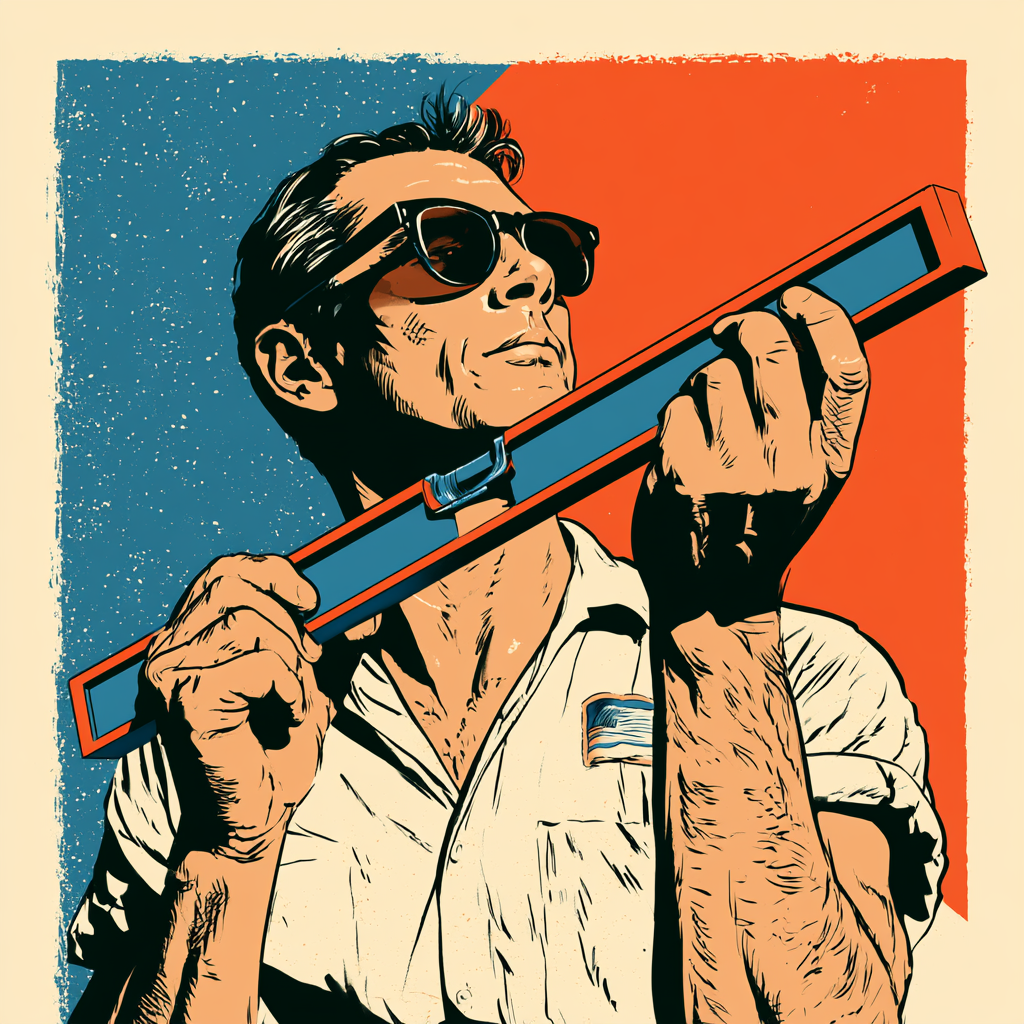
How does an inventor turn a dream into a licensed product? Steven and Noah sit down with iLevel inventor Andrew Varner, electronics engineer Jason Koher of Aqua Engineering, and industrial designers Carlo Russo and Tim Hayes of Cardboard Helicopter to unpack the teamwork behind a color-changing carpenter’s level. They explore crude prototypes, electronics development, industrial design, manufacturability, iteration, patent constraints, realistic timelines, and the persistence it took to turn roughly 100 no’s into a licensing deal with Franklin Sensors. It’s a real-world lesson in why successful inventors tinker, listen, adapt, collaborate, and keep knocking on doors.
Core Topics for this episode:
- Invention Process
- Interviews
Key Takeaways Include:
Listen here:
Episode Blog
How Teamwork Created the iLevel: What Inventors Can Learn From a Successful Product Collaboration
Great inventions are often associated with one person having one brilliant idea.
The reality is usually more interesting.
A successful product may begin with one inventor, but getting it from an idea to something customers can actually buy often requires a collection of people with very different skills.
Episode 247 of Product Genius provides a particularly good example.
Inventor Andrew Varner joins Steven Julian and Noah McNeely along with electronics engineer Jason Koher of Aqua Engineering and industrial designers Carlo Russo and Tim Hayes of Cardboard Helicopter to tell the story of iLevel—a carpenter’s level that uses color-changing illumination to make it obvious when the tool is level.
The finished product looks deceptively simple.
Getting there was anything but.
The Idea Came From a Dream
Andrew’s original idea literally arrived while he was asleep.
After doing some home renovation work, he dreamed about a level that changed colors as its orientation changed. When he woke up, the idea stuck with him.
Traditional spirit levels require the user to look at a bubble vial. Andrew imagined something much easier to see: a level that turns green when level, yellow when close, and red when it is significantly off.
That simple visual change creates an important benefit.
You can see the result from a distance and from different viewing angles without staring directly at a small bubble.
Andrew started asking a crucial inventor question:
Does this already exist?
When he could not find the product he had imagined, he began experimenting.
Start Tinkering Before You Spend Big Money
Andrew does not describe himself as an engineer or industrial designer.
He calls himself a tinkerer.
That turned out to be one of his greatest strengths.
Before hiring professionals, he built crude versions of the concept himself. They were not commercially viable products. They did not look polished. But they helped prove the fundamental idea.
That early tinkering gave the professional development team something extremely valuable: information.
Carlo and Tim point out that inventors can save substantial time and money by exploring ideas before jumping immediately into formal development.
Sketch something.
Build something ugly.
Tape pieces together.
Use paperclips and rubber bands if necessary.
The goal is not to impress anyone.
The goal is to learn.
Every inexpensive question you answer before expensive engineering begins can make the professional development process more efficient.
Know When Your Tinkering Has Reached Its Limit
There is an equally important second half to that advice.
Andrew knew when he had reached the limit of what he could accomplish himself.
His prototype demonstrated the idea.
It did not transform him overnight into an electronics engineer or industrial designer.
That is when specialists entered the picture.
Jason worked on the electronics and sensing system.
Carlo and Tim worked on industrial design, refinement, CAD, aesthetics, usability, manufacturability, and making the concept look and feel like a real commercial tool.
Andrew continued to provide the product vision.
The project became collaborative.
For inventors, recognizing that transition point can be critical.
Doing things yourself is valuable when it accelerates learning.
Doing things yourself becomes expensive when it prevents the project from advancing.
Specialists See Problems Differently
Noah describes his own role at Product QuickStart using a medical analogy.
He is more like a general practitioner.
Specialists such as Jason, Carlo, and Tim can go deeply into particular disciplines.
That diversity of expertise matters because product-development problems rarely stay neatly inside one category.
Electronics decisions affect mechanical design.
Industrial design affects manufacturing.
Patent strategy can affect engineering architecture.
Manufacturing limitations can force changes to a seemingly ideal technical solution.
Cost affects nearly everything.
A strong product team does not simply hand a project from one disconnected discipline to another.
The disciplines collaborate.
The Best Technical Idea May Not Be the Best Product Idea
Jason provides a great example.
While developing the sensing system, the team explored a miniature plumb-bob mechanism partly because of the patent landscape surrounding other sensing approaches.
Technically, it was an interesting solution.
Practically, it became problematic.
Manufacturers were reluctant or unable to quote the complicated subassembly.
That meant the team had to reconsider the approach.
This illustrates one of the most important realities of product development:
The theoretically best solution is not necessarily the commercially best solution.
A brilliant mechanism that cannot be manufactured economically is not a brilliant product solution.
Engineering has to exist in the real world.
Suppliers need to make the parts.
Assemblers need to build the product.
Quality needs to be controlled.
Costs need to fit the business model.
Sometimes good product development means abandoning an elegant idea in favor of one that can actually reach customers.
You Cannot Prototype Everything in Your Head
The iLevel also demonstrates why physical prototypes matter.
One early concept involved having the level blink when it reached zero.
On paper, that sounded logical.
Then they built it.
The blinking effect was distracting and visually unpleasant.
So they changed it.
That seems obvious after the fact.
It was not obvious before the prototype existed.
Andrew describes the larger lesson well: when you imagine something that does not yet exist, you may be convinced you know how it should behave. Once you build it, the experience can be completely different.
That is exactly what prototypes are for.
They convert assumptions into experiences.
And sometimes the prototype’s most valuable job is proving that your original idea was wrong.
Be Willing to Let Your Idea Change
Several members of the team identify Andrew’s open-mindedness as one of the reasons the project worked.
He had a strong vision for what the product needed to accomplish.
But he was not so emotionally attached to every implementation detail that nobody else could contribute.
That balance matters.
Inventors should protect the core value of their idea.
They should also allow experts, customers, prototypes, manufacturing realities, and market discoveries to improve it.
Andrew gives a great example from after development: the RV market.
The team originally thought about the product primarily as a construction tool.
Later, people realized that an illuminated level visible from a distance could be useful when leveling RVs and trailers.
That application was not central to the original development plan.
The market taught them something new.
Good products often discover opportunities their inventors did not originally anticipate.
Industrial Design Is More Than Making It Pretty
When Cardboard Helicopter joined the project, the functional idea already existed.
Their job was not merely to put a nice-looking shell around it.
They needed to make the product usable, marketable, manufacturable, visually appropriate for its target customer, and recognizable as a serious tool.
That meant thinking about details such as ruggedness, geometry, aesthetics, materials, form, and the expectations of customers shopping in places like hardware and big-box stores.
This is an important distinction for inventors.
Industrial design is not decoration.
It connects function with the human being who will buy and use the product.
A product can work perfectly and still fail if it looks confusing, feels awkward, communicates the wrong value, or appears inappropriate for its market.
Manage Expectations Early
Carlo and Tim also discuss something Product Genius listeners have heard Noah say many times:
Product development takes time.
Inventors routinely arrive with unrealistic schedules.
They may believe they can begin development now and have thousands of finished products on shelves by Christmas.
Usually, that is not how this works.
The iLevel journey took years.
Andrew began pursuing the idea around 2018. The product eventually reached the market roughly seven years later, including the licensing company’s own development and commercialization timeline.
Not every product takes seven years.
But inventors should understand that development involves exploration, design, engineering, intellectual property, prototyping, testing, manufacturing preparation, business development, licensing or funding, production, and distribution.
Some stages overlap.
Some go smoothly.
Others send you backward.
Realistic expectations help inventors preserve both their budgets and their sanity.
Licensing Requires Relentlessness
Perhaps the most valuable part of Andrew’s story comes after the product was developed enough to present professionally.
He needed someone to license it.
So he started knocking on doors.
And kept knocking.
Phone calls.
Emails.
Networking.
Travel.
Trade shows.
Introductions.
Google searches.
Anything that could lead to the right person.
Andrew estimates that he accumulated around 100 no’s.
That number deserves to stick in an inventor’s head.
Many inventors approach licensing with a list of three companies and assume one of them will say yes.
What happens when all three say no?
Andrew viewed rejection differently.
A no eliminated someone who was not going to help.
Then he moved to the next opportunity.
You Don’t Always Need a Yes
Andrew offers a particularly useful way to think about licensing outreach:
You may not need someone to say yes.
You may only need them to say maybe.
Or:
“This isn’t for me, but I know somebody you should talk to.”
That is eventually what helped connect Andrew with Franklin Sensors.
A contact knew someone associated with the company.
Franklin Sensors already had success with stud finders and was interested in expanding into additional tool categories.
Even then, the answer was not immediately yes.
At first, Franklin Sensors turned him down.
Andrew continued the conversation.
The no became a maybe.
The maybe eventually became a licensing deal.
That persistence is difficult to manufacture artificially.
You have to believe enough in the opportunity to keep moving without becoming incapable of hearing legitimate criticism.
That is another balancing act successful inventors learn.
Find the Right Licensing Partner, Not Merely the Biggest One
Andrew also made an interesting strategic choice.
Rather than assuming the largest tool company was automatically the best licensing target, he recognized that Franklin Sensors could have a specific reason to care about his technology.
They already had successful products.
They understood tools.
They were looking to expand.
And iLevel could matter enough to receive meaningful attention.
That is often more valuable than simply chasing the largest corporation in an industry.
The best licensing partner is a company whose capabilities, distribution, strategy, and needs align with what your invention offers.
Teamwork Does Not Mean Everyone Does Everything
The iLevel story also illustrates what good collaboration actually looks like.
Andrew brought the idea, persistence, tinkering, and product vision.
Jason brought specialized electronics knowledge.
Carlo and Tim brought deep industrial-design expertise.
The eventual licensee brought manufacturing, commercialization, and market infrastructure.
Nobody needed to become an expert in everybody else’s discipline.
In fact, the strength of the team came from the differences.
That is an important mindset for inventor entrepreneurs.
Building a successful product does not require you to personally master electronics engineering, industrial design, mechanical engineering, intellectual property, manufacturing, branding, marketing, sales, logistics, and retail distribution.
It requires understanding what the project needs and assembling the right expertise at the right time.
The Product Genius Take
The iLevel began with a dream.
But dreams are cheap.
What made this one commercially meaningful was everything that happened after Andrew woke up.
He investigated whether the idea existed.
He tinkered.
He protected the concept.
He built crude prototypes.
He recognized his limitations.
He hired specialists.
He listened to them.
The team built and tested.
Ideas that seemed good were discarded when reality proved otherwise.
The design evolved.
Andrew knocked on doors.
He heard no.
Again.
And again.
And again.
Eventually, the right combination of product, persistence, relationships, and timing produced a licensing deal.
That is a much more useful inventor story than the myth of the lone genius having a brilliant idea and becoming successful overnight.
The genius is often in the team.
And sometimes getting your invention to the next level requires realizing you do not have to do every part of it yourself.
Pun absolutely intended.
Or, read the full transcript here:
Steven Julian
So anyways, this inventor, an electronics engineer, two industrial designers, and a stern but pleasant Noah walk into a podcast. What happens is next level. On Product Genius.
Andrew Varner
Do you want to be a successful inventor entrepreneur? Struggling to get your product from idea to market? Well, you've come to the right place. Welcome to Product Genius, the down-to-earth podcast that explores important topics about inventing and launching new products. Noah McNeely is your trusted guide. With more than 20 years of product launch experience, he's here to help you on your journey to become a product genius. Let's get started. Here's your slightly annoying co-host, Steven Julian.
Steven Julian
Hey, that's my line. Yes, welcome to another wonderful, stupendous, and thankfully air-conditioned episode. Of Product Genius. We are deep inside the lair of Product Quick Start. Seated to my right is the intrepid producer Jody Smith. Seated across the table from me with a stern but pleasant look on his face is the actual host, the actual first genius, because he's the one who got all the geniuses together around the table. It's Noah McNeely.
Noah McNeely
You know, I'm going to put that on my business card. Stern but pleasant looking face.
Steven Julian
Stern but pleasant looking face. So you could just put stern but pleasant.
Noah McNeely
Really, that should go more of a dating profile if I wasn't married. Yes.
Steven Julian
You're engineering already.
Noah McNeely
Yep. I'm going to stop.
Steven Julian
We have got a great show today. The word roundtable was thrown out, then quickly dismissed sternly, but pleasantly. And it's more of a conversation. Noah, you've gathered a motley crew. You've gathered a group of geniuses. You've gathered an inventor of a product and his team. And we're going to just see where the conversation leads us. How is that? Is that what you're looking for?
Noah McNeely
Yeah, I think that's great. Andrew's going to join us and we'll talk about the rest of the team. He's the inventor of... And he had a very successful licensing experience. I do want to note that I did not, I was not Andrew's engineer or designer. In fact, he's got his designers and engineers on the call with us today. And part of the message there is that there are a lot of us out there that can help develop products. And, you know, a lot of us like to collaborate. And frankly, I look forward to. collaborating with these guys at some point on some future projects.
Steven Julian
So it's not a roundtable, it's a collaboration.
Noah McNeely
You know, it's whatever you want it to be. It's a conversational collaboration.
Steven Julian
I'm just, okay.
Noah McNeely
Call it what you will.
Steven Julian
Starting to go down that road. I better stop. Andrew Varner is here. He is the inventor of iLevel. And with us also on the call is Jason Coher. He is the electronics engineer from Aqua Engineering. Carlo Russo is the industrial designer from Cardboard Helicopter. And Tim Hayes is also with Cardboard Helicopter and is also an industrial designer. Gentlemen, everybody say hello at once.
Andrew Varner
Oh, that was great.
Steven Julian
And see, nobody is slightly annoying like me. Nobody said hello at once. So they all said hello.
Noah McNeely
I wanted to do that so bad.
Steven Julian
I know you did. That's why you and I work so well together. Andrew, I am going to start with you. You are the inventor. The product is called iLevel. First of all, tell everybody what the product is and what the product does.
Andrew Varner
Yes, sir. Okay. The elevator pitch. It's a carpenter's level or spirit level, plumb level. Everybody has one. Some people have. many. Professionals use them. DIYers use them. Every household has one to make sure that your picture frames are straight. You know what they are. And they all are pretty much operate the same way. They have bubble vials. Some of them have them, you know, one that indicates. So zero degrees for horizontal, maybe another one that indicates 45 degrees, another one that might indicate 90 degrees. You know what I'm talking about.
They all kind of operate the same way. The difference with eye level is that when it's level, the entire device illuminates green. When it's close to level, it's yellow. And when it's not at all close, it illuminates red.
Noah McNeely
I should point out that I'm playing with one at the table right now, and it's the most fun level I've ever had.
Steven Julian
Now, so is the idea here, so one of the things I do very well as the slightly annoying co-host is to ask stupid questions. So I'm going to ask a stupid question. Anyone who's listening. Who hasn't pulled it up on their iPhone yet is saying, well, wait a minute, the little air bubble in between the two lines on the level, that's how I know it's level. But is this going beyond just getting between the two black lines and going, no, no, this is perfectly level and it lights up green?
Andrew Varner
Yeah, it essentially is doing what the bubble does, but the entire device lets you know that it's level rather than having to. So if you're in front of the bubble within whatever proximity that that bubble allows you to see it, you don't have to rely on that anymore. You can see it from a distance. You can see it from any angle. There's no question. You know when you're level. You even know when you're close to level.
Noah McNeely
Or if you're like me and you have to wear old man glasses, you don't have to look for them in your pocket. You just know when it turns green that you're level.
Steven Julian
There you go. So it helps the eye see when you're level. All right. Carlo and Tim, let me ask you guys quickly, as industrial designers from Cardboard Helicopter, what was your main role in the process of bringing this product from idea to market?
Andrew Varner
Yeah, so we had a functional prototype presented to us and. thought it had a lot of wow factor and then wanted to make it usable, marketable, manufacturable. Did some, you know, thumbnailing and concept sketching, all the refinement and the CAD of the products.
Noah McNeely
Okay.
Steven Julian
And Jason, as the electronics engineer from Aqua Engineering, what was the main role you played in developing the product?
Andrew Varner
The main role that I played was taking basically what's called a MEMS sensor, which is the integrated circuit that allows you to know if it's up, down, left, right, whatever. And put that into some sort of a small circuit board for the prototype so that Andrew could start playing with this thing in its ultimate form factor.
Steven Julian
Noah, it's time for me to bring you into the conversation and say that with product Quickstart, would you ever find yourself doing the things these gentlemen have done in the project? Or do you lean more toward one side or the other? Because, you know... You know, you're more the overseer who brings these guys to the table. Talk us through what your role is. You weren't involved in this one.
Noah McNeely
So yes, no, and maybe. I would not do any. That is such a.
Steven Julian
classic no answer.
Noah McNeely
I would not do any of the things that Jason does. That electronic stuff is like black magic to me. So I would rely on people like Jason to help me with that. And Jason, probably I'll be calling you. I've got a couple of projects coming that I'm going to need your help on. I am an industrial designer as well as an engineer. So like Tim and Carl, I do have some experience there. I think they, based on our earlier discussions, I think you guys really focus deeply on that aspect of projects.
And I've seen your work in it. It's fantastic work. But I don't know. Am I answering your question, Steven? Yeah, absolutely.
Steven Julian
So you do even, you know, because on your business card, it doesn't say industrial designer. No, no. Industrial design is one of the things you can bring to the table while also at times working with other industrial designers to process.
Noah McNeely
I would say if you want to make a medical comparison, I'm more of a general practitioner, whereas these guys are more specialists.
Steven Julian
Specialists.
Noah McNeely
There you go. Is that a fair thing to say, Tim and Carl? I don't want to mischaracterize you guys either.
Andrew Varner
Yeah, yeah, for sure. We're heavily front end, very into sketching, aesthetics, very strong. And I think we approach every project with an inventor's mindset. We're inventors ourselves and always thinking of ways to make something more resourceful and agile and certainly budget conscious from the beginning is crucial for a successful product. And we're thinking about that from the get-go because we know how important that is to the success of the product.
Noah McNeely
Speaking of that, one of the reasons I was excited to have all of you on the program was, you know, Tim, Carlo, Jason, you guys like me, you've worked with a lot of inventors. You've seen people do things well. You've seen people make mistakes. And I think we've talked about Andrew did a lot of things really well. He did a lot of things right as an inventor to get his product to the market, to get it licensed. From everyone's perspective, including you, Andrew, what are some of the best things Andrew did right and did well?
And the corollary to that, I hate it when I try to say that word. I'm going to. give that word up. The adjunct to that question is, what are some things you've seen? other inventors, anonymously, don't say their names, what are some things you've seen them do? that were really big mistakes that really led to some problems? Anyone can go first.
Andrew Varner
I think something Andrew did particularly well was he wasn't afraid to tinker around and explore potential solutions before jumping into development, which helped streamline the whole process and reduce costs. And I'm sure he learned a ton before he even started engaging with Jason and ourselves. And I think that's something that a lot of inventors are a little bit hesitant to do is to just get your hands dirty. Don't be shy about drawing something very crude and rough. I mean, you should see the initial sketches and prototypes that we create internally.
You know, it'll be a napkin sketch. It'll be something put together with things around the studio or paperclips and rubber bands, you know. And I think Andrew was super excited about his idea, rightfully so, from the beginning, and he was willing to do a lot of that. Front-end work and saw some of those solutions early on, which helps everybody throughout the process after that. A great deal. Yeah, you took it to a certain level, no pun intended. We're not used to getting from product developers, inventors, and I thought that was great.
Anytime we see that, that just really moves the needle from A to Z. Anytime you get closer to Z on the level of product development, higher success rate. You know, being open-minded and just moving forward the whole time, you know, it was definitely pleasant, good attitude, loved what we were doing. You know, a lot of inventors sometimes have visions and they're like, no, it's this way. But, you know, I think he was appreciating what we had done and just kept rolling with that and working with refinements. And it really ultimately helped out with the speed of getting his product license.
Steven Julian
Because I know you could tell us a movie screenplay of it, but give us the – how did this start? Where did the idea first come from? Yeah.
Andrew Varner
By the way, thanks for saying some nice things, guys. My gosh. So, just a background on me. I don't have a design background. I don't have an engineering. background. I'm a tinkerer. I think everybody tinkers to a degree. The only thing I think I might have that kind of helped was when I didn't go to school for it, but I messed around with some code when I was in high school so I could build a website by HTML. That's about it. I mean, I still get lost in Windows, so I'm not that really great with software or coding or anything.
But I knew when I had this idea, Instead of just trying to explain it verbally, I needed to have a physical thing that I could show somebody. And even before I started to build it, I knew it was going to have limitations, but I knew that if I could just dabble a little bit, I can make something work. So the story on how this came to be, I think, I don't know for sure, but I was... Doing some renovating on a house I was living in, just some really minor things.
And I went to bed probably thinking about how I was going to fix the bathroom sink or something. I don't know. But I dreamt about a level. I. dreamt about a level changing colors as it was changing orientation, changing angles. And then I woke up. And I think that was the last dream I had or something because I just kept thinking about that idea throughout the entire morning. And I just said to myself, is this something I've seen somewhere? I started asking people around me. I started calling my friends and they said, no, does that exist?
Can I buy one? And for the life of me, I couldn't find one. So the long and short of it is I would explain it. after I... You know, filed a provisional patent, which is really not all that hard to do. Anybody can do that. Started to protect the idea. I started to look into how I might be able to build this. And so I built a really crude, I think, Noah, I sent you a video of that. And it's almost comedic when you look at this thing. It does the job, but it doesn't do it really well.
It's nothing that anybody would ever purchase, but it does basically do the job. So I knew my limitations. I knew I couldn't get it. to the next step. So that's when, you know, these guys came in to create something that was going to be really viable.
Noah McNeely
Yeah, but don't, you know, Andrew, don't sell yourself short on that whole tinkerer thing. I mean, you described that earlier as just a tinkerer. But, you know, as I think Carlo and Tim alluded to as well, that tinkering. That's a really big skill set. And yeah, I don't want to put words in their mouths, but the inventors I run into that don't do that are often the ones that require the most work to get across the finish line. So I think the fact that you tinkered early on, you had a very open mind about, hey, I'm going to try this.
Doesn't work. I'll try something else. Doesn't work. Keep going and keeping down that path. And then you were probably very open to ideas that Tim and Carlo and Jason had. that probably made the product better. You know, I've met so many people and these guys probably have too that they come in and it's like they've had the one idea, you know, to take what you said, they dreamt the. idea and that was it. It was done in their mind and nobody could change it. And if anyone tried to change it, it was offensive.
Those are the worst people to deal with.
Andrew Varner
Yeah, I think, you know, I think there's a balance of understanding what your idea is. And also on the flip side, Being open-minded to not be so in love with your idea where you can't pivot. You can't change. For example, to bring us up to date with the product that's on the market, there's a whole RV market that I don't think any of us even mentioned three, four years ago when this was being developed. It's a whole market we didn't even consider. And now you have to be open to... You know, things that you weren't aware of throughout the entire process.
And while I knew what it needed to do, if anybody had a good idea, it was definitely worth remarking and definitely worth maybe even exploring.
Noah McNeely
So that RV market, just as an aside, is that like when people park the RV and they want to level it out so they can actually put this, your product somewhere on the. dashboard or wherever and then keep adjusting until they see it turn green, I guess.
Andrew Varner
So that's pretty cool. From what I understand, you put it on your trailer and then from a distance you can see when it's level. To my knowledge, or to a lot of the people who are putting comments online and starting blogs about it, nothing like that existed before. So not even something that was in my purview before we even started.
Noah McNeely
Cool.
Steven Julian
Carlo and Tim, I'm going to ask two questions and then you guys can fight amongst yourselves of which of you answers the first and which of you answers the second. So the first question is, it's really just a request, kind of give us a synopsis or a recap of your very first meeting with Andrew when he came in and maybe how it was different from others. When he came in, what was it like, oh, I wish every client that we meet with could do this? And you've kind of already said he was coming along nicely in the project, and it's because of that tinkering that he did on his own and was willing to do.
But then. the second question that I would ask is, Noah has spent, we've talked to Noah many times on this show. About that first meeting with clients and what it's like. And we've had some fun with it. We've also tried to really delve into it and just want to give you guys an opportunity to talk specifically about Cardboard Helicopter and what a typical first meeting is like or what you're trying to accomplish in that first meeting with any client who comes to talk to you guys.
Andrew Varner
Yeah, I remember just seeing the idea and the wow factor. I said that's, I think, the best idea I've ever seen. I wish we had action in it, part of that royalty. But yeah, it's a really good product. And, you know, knowing that he was very open-minded to really want industrial design and focus on aesthetics is huge too. A lot of inventors just want to make it and produce it and don't think that it has to be for that intended user. But I think, you know, designing around that construction trade and other things where this might go into, you know, in Home Depot, Walmart, making this, you know.
Angular and more rugged, things like that. He's really detail-oriented and wanted to make this a great product, not just get this production as fast as possible, but the quickest route. Carl, you can speak more on that. Andrew, you said something a few minutes ago, about three, four years ago, you didn't consider this. I think that's really important to know as a first-time inventor or creator of a product. It's going to take time and you can't rush it. I mean, things definitely take, you have to see this process through. And I know Andrew probably had some surprises throughout the process, but having a product idea and wanting it to be in stores and Christmas is very unlikely and not realistic.
Noah McNeely
Yeah, tell me about it. You guys have probably had that conversation as many times as I have.
Andrew Varner
Yeah, I think when we first talk to any inventor, we try to manage expectations as much as possible early on to save a headache from us and from them and just so they know what they're getting involved with. Because I think if you kind of lay it out and show them that the roadmap. is going to be a little long and going to have some ups and downs, if they're hesitant or if they're unsure, they might... Not pursue it. And maybe that's the best thing that they could have done is not pursued a product or an idea that they're not incredibly passionate about.
But if you know the process going in and you're ready for it and you have a good attitude like Andrew had, I mean, that's like a green flag on our checklist. And we look for those little green flag, red flags, and just try to give them a dose of reality sometimes because it's best to do that early on. And I'd rather miss out on a project. Then drag something out and have the inventor's budget be totally, you know, burned up. Early phases when we all know that when you get to ordering units and product runs, that's when you really have to start investing or get somebody to help you with capital.
But Andrew had a good attitude. He was open-minded and just trusting the experts. And I'm sure it's very nerve-wracking knowing that you're giving your idea to somebody else to collaborate with, somebody that you haven't necessarily met before. But you can tell a lot from the first meeting with somebody and we felt great about the idea, which you need first is a great idea. And then just the person behind it was a good attitude, is willing to get their hands dirty a little bit and also trust the experts, which we're here to help you get to that point.
Get you as a successful product just because obviously it's what you paid us to do, but also, you know, it's a little feather in our cap to bring something to market and show it off and say, hey, we did this with this inventor and it worked out and we got a licensing deal. I mean, it's a great story all around. Product Genius is brought to you by Opu Probiotics. Pre and probiotics you can pour directly on your tongue in delicious mint and mocha flavors. But the taste is just the beginning.
With Opu, you can see improved digestive function, boosted immune system, easier weight management, improved mental health, and much more. Try today at getopu.com. That's get O-P-U dot com.
Steven Julian
We are in the middle of. the Product Genius. Collaboration. I was going to say roundtable, but I can't use that word. Conversational collaboration. We have Andrew Varner. He is the inventor of iLevel. We have Jason Coher, electronics engineer from Aqua Engineering, and Carlo Russo and Tim Hayes, industrial designers from Cardboard Helicopter. And before I go to the next question, Noah, I have figured it out. These are great guests. I'm so glad you brought them on the show. But I know. At least one of the reasons why you brought him on the show is so that Carlo and Tim could say things that you've been saying so that you could tell our audience, see, I'm not crazy.
I'm not Don Quixote. I'm not the only one who's out there screaming at windmills to tell people to have your stuff together and it's okay. And you're not going to get this in the stores by Christmas, right?
Noah McNeely
Congratulations. You've uncovered my diabolical.
Steven Julian
Oh, yeah, absolutely. I saw right through you.
Noah McNeely
No, when I had this, we had sort of a pre-call the other day, me and Andrew Jason. So I'm very happy to have them on.
Steven Julian
Jason, I want to ask you specifically. as the electronics engineer with Aqua Engineering, you said at the very beginning that I believe it was kind of the sensors. Please correct me if I'm wrong. But, you know, you brought some of the specifics about the lighting and things like that without getting too technical and getting too deep into the minefield. Just kind of what were you able to bring to the product to help with the lighting and things like that?
Andrew Varner
Yeah, well, it's interesting because Andrew had, you know, he was pursuing a patent and that's its own like minefield of stuff, right? You have to navigate your way and thread the needle through everybody else's patent claims. So we kind of had to be mindful of what his vision was for the product, but also like what could get him that patent. So originally the obvious candidates, you know, just an accelerometer, let's say, might not have been the path that could get him a patent. So we started getting a little bit creative, maybe too creative with using.
Like a miniature plumb bob, which is actually like a jeweled mechanism that would almost be like something you'd see in a watch. And. what we found is that we couldn't find a manufacturer that would quote the assembly, sub-assembly, basically too advanced for them. So that turned into something where we had to dial it back and do some iterating. And Andrew's tenacity through that whole process was just, you know, what it should be. It was amazing. It was like. he understood the goal. He understood why we were doing stuff. We changed course a few times in the interest of the patent, but we ultimately landed on an electronic sensor that we put on. our first small little board, which I'm looking at right now is like a board.
Nobody can see this, but it's like maybe the surface area of my pinky finger if you fold it all up. We were able to get that onto the prototype so that he could start playing around with an early version of what he had breadboarded up when I first met him.
Steven Julian
I like it. And Jason, in that response, again, longtime listeners of this podcast and slightly annoying hosts and producers who have sat at the table and have no idea what all you guys are talking about, but have heard. similar ideas of just because, you know, you can't, you know, you can't make it exactly, it can't be stainless steel or that'll change the cost. And I like the story, Jason, that even the... The factory was like, I think this is beyond the scope of what we can do. So fascinating how you find an answer to help make it patentable, but also not impossible to do.
Noah McNeely
Sometimes, just to point that out, or just to dial in on that a little bit, sometimes the best idea, which may have been your plumb bob idea, isn't the best idea in reality because it can't be manufactured. Or maybe there's a couple of factories somewhere that can do it. They're so specialty, it's going to be real expensive. So that balancing best idea that you have to take in all the different variables and that's...
Steven Julian
Minimum viable product, how to get it to market.
Andrew Varner
And if I may, to add to that too, something else we found out during prototyping, which might be a lesson to people who are building a prototype, and I think it is, not just the plumbob that we kind of had to pivot there, but the color orientation changed. And during the prototype phase too, not to get into the too much, but it changed colors at different intervals. And also initially I thought it was supposed to blink when it hit zero, when the level hit zero, we thought initially, okay, this makes sense to make it blink.
So we made a prototype, Jason built a prototype that blinked when it hit zero and what had happened. And it's kind of hard to imagine. So when you're imagining. You're envisioning something that doesn't actually exist. Once you create it, it doesn't operate the way that you thought it was supposed to operate. So you got to pivot again. Now the finished product doesn't blink at all because what we learned was it's kind of disorienting. It does something to your eyeballs that makes you kind of crazy. So we had to kind of change the way that the operation even worked.
And the only way we would have known that is by building the prototype. That I thought was supposed to operate this way, but in the end, we had to kind of scrap it and try something else. I don't know if. you remember that, Jason, but we had to change a few times. What you end up with is, this is something that a lot of inventors don't understand until we build electronics, is you have certain things that need to happen. You have what they call a debounce. If there's a button, that's like 25 to 50 milliseconds where you electrically want to make sure it was actually a button press and not something else.
That type of stuff happens on a little MEMS accelerometer sensor, for example. A lot of different things. You need delays have to be a certain length of time. If you start doing flashy stuff or different modes, try to pack too much. Too many modes into a button. that can get confusing. And these things might seem crystal clear when you're mapping out your vision for your product, but then when you actually build it, it might feel glitchy. So that's sort of what, you know, Andrew was referencing. We worked through that and were able to evolve it with an actual physical rough prototype.
Noah McNeely
There's a big difference between theory and practice. Absolutely.
Andrew Varner
And to Jason's credit, by the way, I should note. that he's really good. He does all the incredibly smart things and dumbs it down for a guy like me, which I had to. We worked a lot over the phone because we were working on this project through COVID, through a lot of it. And we were doing a lot of phone conversations. I'm like, okay, Jason, please, whatever you just said, just make it a little stupider for me to make this make sense. But by the way, I mean, I'm not afraid of saying that.
I'm not afraid of being the guy in the room that just says, I don't know what you just said. Let's... Make this easy for me to digest.
Steven Julian
I'm just glad the marketing slogan for the eye level is not the eye level. We won't make you crazy because it doesn't blink. So I'm glad that's the case. Andrew, so you talked about kind of dealing with this in COVID. I'd like to ask the question from the dream of the color eye level where you woke up and went, does this exist? Or did I just dream a new product? To when it actually got on the market. And is what? timeframe?
Andrew Varner
I believe I filed for the patent at the beginning of 2018. And so I started to develop it through the year. I think I met Jason the next year when COVID hit. And throughout all of that, I think we were able to build, I'm trying to go back on my timeline.
Steven Julian
I guess I'd ask, when did it hit the market?
Andrew Varner
It hit the market. Last August. Okay. And so that's probably a whole other conversation with the manufacturer. They had a two-year sort of runway to develop it themselves. Got it. So that was three years themselves, too. Okay. All said and done, about seven years.
Steven Julian
Okay. And this is the time of the conversation. I probably should have done it sooner, so this was my fault. But the eye level is on the market, and it was licensed to Franklin Sensors. The level that we are playing with in the layer of Product Quick Start says Franklin Sensors on the back. Noah is doing his best. Price is Right model. There are male models. now on Price is Right. My wife likes James.
Noah McNeely
I put in my application.
Steven Julian
I can't wait to see you on. TV one day. So this was licensed to Franklin Sensors. So I guess my first question about that was, did Franklin approach you guys or was that? Carlo and Tim, were you guys involved? How did Franklin get to the table and start the process of getting involved in this?
Andrew Varner
I get into that one. With my whole process of just knocking on every single door I could find, and then if that door said no, I would ask that whoever was behind that door, okay, then who's interested? I just wouldn't stop. And in that process, which was probably a whole other conversation we could have in the whole licensing development stage. I ended up meeting somebody who knew Franklin Censors, and that gentleman became my partner in getting this marketed and getting this manufactured. But we had to come with, in the development stage, we had to be able to present Franklin Censors something that was viable.
While Jason and I made something that worked, it needed to be dressed up quite a bit. And that's where Cardboard Helicopters pretty much, the one you see on the market, With a couple of exceptions, it pretty much looks a. lot like what Cardboard Helicopter designed and sketched. With the piece of plastic and silicone and electronics that we presented them, they dressed it up quite a bit. And that was enough to kind of convince Franklin Sensors, okay, I think we have something here.
Noah McNeely
So for our listeners who are largely inventors and aspiring inventors, Andrew, tell me a little bit about... You said you knocked on a lot of doors. Does that mean you made a lot of phone calls? Did you actually fly around the country and meet with a lot of people? Did you find people on LinkedIn? How did you go about finding the people to talk to?
Steven Julian
All of the above.
Andrew Varner
All of the above. Exactly. It kind of was.
Noah McNeely
So what I'm hearing is there was a level of relentlessness involved here.
Andrew Varner
Yeah. It was just like, you know, when I talk to inventors now, Who are aspiring inventors, I guess, haven't quite pushed the boulder over the hill. What I tell them is, look, you don't really need a yes. You just need someone to say maybe. Or you need someone to say, well, that's not for me, but I know someone. who is. And when someone says no, it's actually a good thing because that's one less person you got to deal with. Just move on to the next one. That wasn't the right one.
I had a lot of no's. I think I counted up. And I know I forgot some other people who said no to me, but that's actually a good thing because that means they weren't going to help you or they don't get it. And that's fine. You got to find a person who either gets it all the way or gets it a little bit. That's all you need. And through that process, you end up finding people that believe in it. Luckily for me, with Carlo and Sam and Jason, they're right here in my city.
And I just started knocking on doors by Google searching. So, you know, you start that way.
Noah McNeely
I think that 100 no's is a really good number for listeners to remember. I meet a lot of people that they have like, I've got three people I know I can go to and one of them is going to license this. And I'm like, are you sure? That doesn't. seem like a really big number because you could get three no's in less than a week and you'd be done. How much bigger can we make this list? And so I think that 100 no's is a really important thing for people to hear.
Steven Julian
Andrew, correct this timeline if I'm wrong. It sounds like you tinkered. You first started working with Jason to kind of get the right sensor in there. And then Carlo and Tim kind of joined when it was the part of making it more market ready. Is that a fair summation of your process? Of getting to the point of then going and finding, getting all your no's until you found the maybe from Franklin Sensors. Is that correct?
Andrew Varner
Yeah, that's pretty accurate.
Steven Julian
Yeah. So then let me ask this question for those. and just one more question kind of about the licensing experience. So Franklin Sensors becomes, you know, at some point in those hundred no's you get, and I'm sure they probably weren't the only, well, at least I'm intrigued. Let's talk more. But what is, you know, can you, And again, it could be a whole nother show that we could talk? for an hour. But what's the process with Franklin Censors like? A few different meetings, 17 meetings. We love it right away. How soon can we get it?
You talked about a ramp up process. Just kind of walk our listeners through who've never gone through a licensing experience. Give them a couple of points that they need to remember so they don't get frustrated themselves.
Andrew Varner
Sure. Well, when I met Clark, and again, that might be a whole other discussion, but when I met Clark, I said, he told me, and he's not in the tool industry either, but he said, I know the guy who is. I go to church with the guy who would be interested in this. Franklin Sensors has already been a successful company. They build one of the best stud finders in the world. And they have a lot of different SKUs. They have a lot of different form factors of that stud finder with some variations in this technology, but they had the best, arguably the best stud finder in the world.
And they were looking to branch out into some other verticals, into some other tools. And it took a couple of. meetings. I flew out to the National Hardware Show, which was in Vegas right after COVID. I went to the one that was during COVID. And I went out to Idaho to meet their headquarters in Idaho, in Boise. Went out to meet with them. And at first they were a no. At first they turned me down. And I sort of picked it apart a little bit. And somehow, one way or the other, the no kind of turned into a maybe.
And then the maybe turned into a yes. I just wasn't going to stop. I just felt like, if you guys want to get into this business, I don't know how. And into the level business, I don't know a better IP that's going to be for you. And they also, by the way, they also have another level that they build that does not include my IP. So they have an entire product line. And some of the products have my technology and some of them don't. But they were able to build around it.
So I just knew that that company was set up to take this. Pardon the pun again, to the next level. because they were a small company that needed another product to be successful. And rather than going to some of the big dogs, I knew that they were going to have the kind of focus that was required to make this successful. And Andrew, oh, sorry. Yeah, go ahead.
Steven Julian
Andrew, where can people find the eye level now? I mean, is it in all the stores? I mean, is it easy to find online? Just give us how people can. Can get one of these, especially for their RVs.
Andrew Varner
Yeah. So I just thought, well, just found out it's on walmart.com. I just found out that this week, but it's been on Amazon. I also have, I think Noah will set you up with some links on the, on some of his links after the show. You can also, you can find it all kinds of places online, but it's been on Amazon the longest since August and it's got a lot of ratings and good ratings.
Steven Julian
I love it. Jason, I want to give you an opportunity. We've asked you guys questions about your involvement in this particular project, but let me give you an opportunity to give an. elevator pitch a minute or two, just kind of talking about Aqua Engineering as a whole and what you guys do.
Andrew Varner
I appreciate that. So Aqua Engineering is basically a company that I started essentially in like right out of college. I graduated like 2005, right? So I decided I didn't want to play the whole game of... Working a job somewhere, I'm going to start an electronics design firm, like a firmware engineering company. The idea was to work alongside industrial designers to miniaturize, get small electronics into their devices, program the code, all that good stuff, at least here in the U.S. because a lot of stuff obviously goes offshore. The idea was that we could get all the detail worked out here stateside before stuff goes to China for the whole Christmas rush.
Basically grew the company and nowadays that's a very small company. I work with my wife and a few very smart contractors. We're basically a very lean team that will do the circuit design, firmware, even like getting test fixtures and 3D printing, CNC, all that stuff. So sort of like an overlap with design teams, industrial designers, other engineering firms, squarely, I guess, seated in like electronics and mechanical engineering. So really solving those. Creative solutions, when somebody has a problem that's not an easy off-the-shelf drop-in thing, I usually come up with some pretty crazy ideas that could, like we mentioned earlier, navigate the patent landscape or get some sort of new way to do something that maybe other teams haven't thought of.
Steven Julian
By the way, Jason, it's not a contest, but this is one of the things I do in co-hosting an episode or co-hosting a podcast where I literally can add nothing technologically. And very little comedically. But you have the line of the day so far where you said, I have a small business where I work with my wife and a team of very smart contractors. Small team of very smart contractors. That's just a great line. I don't know why, but it struck me. And I was like, that's a long time. Please, please.
Andrew Varner
Yeah, this is kind of wild because I'm not going to bore everybody with the ups and downs of a small business. But it seems like everybody goes through some. This awful collapse of some sort, and then they resurrect their business. You. know, I've been through all that stuff, but working with my wife, it's not for everybody, but in my case, it works out great because there's nobody I can trust more than my wife. Otherwise, I wouldn't even be with her. So it works out very well when it can work out.
It could also be the worst possible nightmare you could imagine if you're not set up or configured in the correct way to work with your spouse.
Steven Julian
And if anyone listening doesn't have an idea of whether it would be a good idea or not, you might want to work on your relationship and definitely don't try it.
Noah McNeely
So I like that. Let me be clear. I have a good enough relationship with my wife to know absolutely it would not be a good idea.
Steven Julian
Correct. And neither answer is wrong. Neither answer is better than the other.
Noah McNeely
She knows the answer as well. We mutually know it would not be.
Steven Julian
And Jason and his wife know that answer, and that's fantastic.
Andrew Varner
You know one thing. There's no middle ground. It's either going to work.
Steven Julian
That's true. Well done. Carlo and Tim, let me also ask kind of. the same question of you guys. We've talked about your role in this story, but talk about Cardboard Helicopter, which, by the way, is one of the coolest company names I've heard in a while. Not as good as Product Quick Start, of course. I'm getting... Stern but pleasant looks across the table.
Noah McNeely
You are getting no looks from me. I think Cardboard Helicopter is a great name, too. It's fantastic.
Steven Julian
And I will ask, you've got to tell the story of where that company name came from and talk a little bit more about your business and what you do.
Andrew Varner
For sure. Yeah, the name's always stuck with people. You know, 13 years ago, Carl, I'd known since sixth grade, I said, let's start this Cardboard Helicopter. This has got to be the name, right? And he said, that's got to be it. But when I was little, you know, just to build things out of cardboard, just like all you guys. But one of them was the last time I could really remember using my limitless imagination and building this boxed cardboard helicopter and really thinking I could get it to fly to my grandma's house, take it. off the roof, whatever.
But you have that limitless thinking and we try to bring that into all the projects we do now. We do a lot of stuff for companies and inventors, but we invent stuff ourselves. Do tons of toys and all that. And really to get to those ideas, you got to unlock a lot of that. So a lot of the categories that we're in are a lot of fun stuff. So a lot less like necessarily consumer electronics and medical, but you do a lot of stuff for Nerf. We do a lot of sporting goods.
We just did a little autonomous golf caddy from all the sketches all the way to full CAD and production, no electronics and things. We didn't do that part. I like to do that front end and think about with inventors and companies, you know, draw lots of quick ideas first and, you know, save inventors and companies money, you know, when they start patenting things. I've already thought about a hundred ways that it could be better.
Steven Julian
And how big is your, oh, sorry, I interrupted.
Andrew Varner
Oh, no, I'm sorry. Yeah, I think one of our biggest value. adds is, like Tim mentioned, helping clients avoid the money pit early on in the process. And, you know, we're an intentionally small company like Jason and Aqua where, you know, you're working directly with myself or Tim. You're not handed off to a junior designer or an intern. You know, we stay fully involved in the process, bringing all of our expertise to ensure consistency and quality throughout the process. And we're very accessible, so easy to get a hold of. You know, if you call or email, you're going to be contacting me.
Nine times out of 10, and we're going to be part of the product projects throughout. So other inventors have had issue with like, who am I working with? I was talking to you and now I'm talking to this other gentleman or this other girl. And with us, we're small, so we can choose the projects we want to work on and we're super invested and passionate about those projects.
Noah McNeely
Yeah, I don't know if you guys experience this, but I tend to inherit projects from people that have gone to bigger companies. And like you said, they end up, you know, the people. that sell them. the project is one or two or maybe even three levels removed from who ends up doing their project. And that doesn't always work out well.
Andrew Varner
That's hard.
Steven Julian
So, if people want to, first of all, find the iLevel, they just need to go to, now as of this week, Walmart.com, Amazon. Is there a website specifically for the iLevel, Andrew?
Andrew Varner
There is. If you go to iLevelTool.com, it'll just take you to a subpage on Franklin Sensors. Or you can go to IntelliToolbox.com, spelled like intelligent. Replace Gent with Toolbox, IntelliToolbox.com. But it's getting out there and they're talking to big box stores as well. So it might be coming to a store near you very soon.
Steven Julian
And Jason, your company website is AquaEngineering.com?
Andrew Varner
I wish. I didn't get that one. It's AquaCO2.com, like the gas. Well, that's better.
Steven Julian
That's better. You didn't need Aqua Engineering.
Andrew Varner
Or what's even better is you could find me at I2C underscore Jason on all the social medias. I2C Jason.
Steven Julian
I to I, the number two. Yeah. Letter C, Jason.
Noah McNeely
Okay. And Jason, we didn't mention it, but you do a good bit of like online content creation, right? Is. that, do I remember that correctly?
Andrew Varner
Yeah, that's correct. Yeah.
Noah McNeely
So, so stuff about electrical engineering and electronics engineering, is that, is that.
Andrew Varner
Yeah, it's like, I call myself like a STEM adventure. So basically if it's any, in any way related to STEM, I'll try to do a video, you know, throw it up there. Basically short form stuff. I'm working on a low energy fusion reactor right now to check out all kinds of wacky stuff. But it's really because I can't share anything that my clients do because they're all under NDA. Like. I can't be like, hey, here's how I built, you know, Andrew's cool circuit. So what I can do though is make my own content with other cool stuff.
And that's what provides me the content networking, stuff like that.
Noah McNeely
And that's the I2C. I2C Jason.
Andrew Varner
Okay. And I2C is a loose reference to actually what's in. Potentially Andrew's level, which is how two little integrated circuits talk to each other. So it's basically a protocol. It's like a serial communication.
Steven Julian
I thought it was a shout out to Yoda. I too see Jason. So I don't know. I thought that was. There you. go. And aquaco2.com, and it sounds like Jason is a content rabbit hole that certain people would enjoy going down and benefit from. Okay, so now I'm a little gun-shy, but if you got the name Cardboard Helicopter, I got to assume, come on, you got that website, correct? Cardboardhelicopter.com? Yeah, we got the .com, so cardboardhelicopter.com and Instagram, cardboardhelicopter.com, aquaco2.com, which I like that, and i2cjason, and then IntelliToolbox. Or search the iLevel.
So Andrew Varner, the inventor of the iLevel, literally a product that came out of a dream. I like that. Jason Koher from Aqua Engineering and Carlo Russo and Tim Hayes from Cardboard Helicopter. Gentlemen, thank you so much for being part of this conversational collab about bringing the product to market. Thank you, guys.
Andrew Varner
Thank you so much.
Noah McNeely
Thank you guys.
Steven Julian
They started with a hello in unison and they all said thank you in unison. That's a good team.
Noah McNeely
They're a well-oiled machine. Very good. So I just want to comment on that, you know, coming to him in a dream. Yeah. I actually think that sometimes we do solve problems in our subconscious. I remember from engineering school, I don't even remember what. it was. It was some sort of stupid thing. I don't use any more like fluid dynamics or whatever. And I was having trouble figuring it out. To the Fluid Dynamics professors, I know some of you.
Steven Julian
They're all dead.
Noah McNeely
They're retired. There's one in particular that I actually like. Everybody hated him when they were in school, but he's actually a real nice guy. Okay. Sorry, sorry, sorry. Anyway, I was having trouble with this thing and I went to sleep one night and I woke up the next morning and knew how to do it. So I think sometimes our subconscious does solve problems. And if I had a way to tap into that and to make that, you know, automatic, you know, maybe Elon Musk can invent a chip to put in our heads to do that.
I'm sure he's working on it. You know, that'd be really powerful. But yeah, so don't – I fully believe Andrew, you know, he solved that problem in a dream, and I think we all have the capacity to do that.
Steven Julian
So here's what I wanted to say. It was such a great group of guests. I'm so glad you. brought them on. This was a lot of fun. And I was sitting over here, and Andrew kind of started it when he was like, you know, I was tinkering. You know how everybody tinkers? And I'm sitting there going, nope. I don't tinker. I've never been a tinkerer. That's just not my giftedness. And then I don't know who it was, but there were a couple other references like, you know, obviously we did this or we were doing this.
And I was like, you know, you get a group of engineers and designers around the table and they just think everybody thinks the way they do. And, you know, my day job is as an independent financial advisor. I watch the stock market every day and I catch myself going, oh, yeah, of course, you know, you heard about this with this stock. We all think everybody thinks the same way we do or everybody's in our sandbox. That whole sandbox is where you guys are all geniuses. Andrew was a genius to take the dream and start working with it and run down that path.
And everybody that helped and what you do to help people, that's. why the show is called Product Genius.
Noah McNeely
You're a genius too in financial space.
Steven Julian
No, it being slightly annoying and keeping the conversation and going for a goofy laugh every once in a while. Yeah, and Jody's a... An engineer? No, I'm sorry.
Noah McNeely
He's a genius, too. Don't cut him short.
Steven Julian
I was thinking of the word because I'm not a genius. He's a producing genius. He's going to take out the sneeze I had earlier. He's going to take out your question that we heard the echo on, and he's going to clean up the audio of it. Every show sounds great.
Noah McNeely
He's going to take out that rant of profanity you had earlier. Godgummit. All right. We should stop answering.
Steven Julian
Okay. Stern but pleasant. Noah has said it's time to stop bantering. So what it is time for is to remind everybody you can go to productquickstart.com and get Noah's help on your product. Please do not put, I have a great idea, call me. That is not going to work.
Noah McNeely
It works, it's just tedious.
Steven Julian
If you want to get your own podcast on the air, you need to go to jodysmith.com because he'll help you podcast. And I wish I could give you my website, but compliance won't let me do it except to say that I am an independent financial advisor. So search my name, Steven Julian. More importantly, go buy. Buy an eye level and then an RV trailer so that you can make sure it's level wherever you go and all the other uses for it. And we will catch you next time on Product Genius.