Product Genius, the Podcast for Inventors, Entrepreneurs, and Startups
Honest advice for inventors—with obscure cultural references included at no extra charge.
Episode
246
We Interviewed 3 AI Platforms. Here's What They Told Us
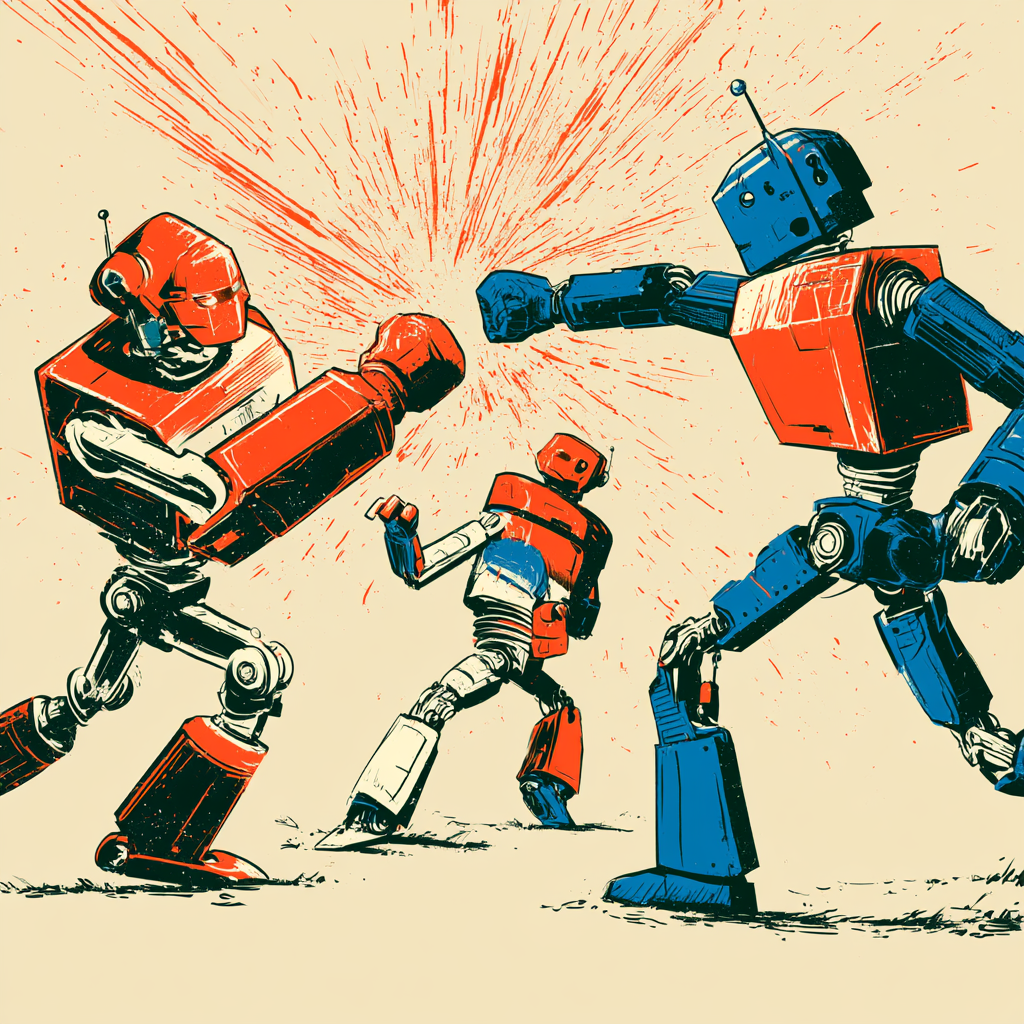
Can AI really tell inventors how to succeed? Steven and Noah invite three synthetic guests—ChatGPT, Gemini, and Venice AI—to identify the top mistakes inventors make, then compare the answers with Noah’s 25 years of real-world product development experience. They explore market validation, prototyping, intellectual property strategy, manufacturing costs, iteration, inventor scams, asking for expert help, and why AI is best treated like a very fast research intern: useful, occasionally insightful, and absolutely worth verifying. Plus, Venice AI goes into rude mode and tells inventors both what they need to hear—and exactly what they want to hear.
Core Topics for this episode:
- Inventor Strategy
- Invention Process
Key Takeaways Include:
Listen here:
Episode Blog
We Interviewed 3 AI Platforms: What Inventors Should—and Shouldn’t—Ask Artificial Intelligence
Everybody is asking AI for answers these days.
So Product Genius decided to ask a slightly different question:
What happens when you ask three different AI platforms the exact same question about inventors?
In this episode, Steven Julian and Noah McNeely welcome three “synthetic guests”—ChatGPT, Gemini, and Venice AI—and compare their answers to a deceptively simple prompt: give us seven top mistakes inventors make.
The results are useful, occasionally repetitive, sometimes incomplete, and—in the case of Venice AI’s deliberately requested rude mode—pretty entertaining.
More importantly, the exercise reveals something inventors need to understand about AI itself.
AI can be a remarkably useful research assistant.
It is not a substitute for judgment.
Think of AI Like an Intern
Noah uses a particularly useful analogy for artificial intelligence: asking AI to do research can be a little like asking an intern to do it.
The intern may do a great job.
The intern may find information you did not know.
The intern may organize a huge amount of material much faster than you could.
But you probably should not blindly assume every conclusion is correct.
That is a healthy way for inventor entrepreneurs to think about AI.
Use it to accelerate research.
Use it to generate questions.
Use it to organize information.
Use it to expose yourself to possibilities you may not have considered.
Then verify anything important before making expensive business, engineering, manufacturing, legal, or intellectual-property decisions.
Steven summarizes the rule nicely:
Trust but verify.
Where the AIs Agreed
Although the three platforms produced different lists, Noah noticed several themes appearing across their answers.
Those areas of agreement are worth paying attention to because they also match problems he repeatedly sees while working with inventors.
First: inventors often fail to understand the market.
A product can be clever, technically impressive, and completely unnecessary.
Inventors sometimes fall in love with the solution before proving that enough customers care about the problem.
Noah describes this as “answering a question that nobody’s asking.”
That is dangerous.
Start with the problem.
Talk to potential customers.
Understand who experiences the problem, how frequently they experience it, what they currently do about it, and whether they care enough to pay for something better.
Your Mom Is Not Market Validation
Friends and family can provide useful feedback.
They can also be terrible market research.
Your mother may genuinely love your invention.
That does not mean strangers will buy it.
Inventors need feedback from people who resemble the actual customer—and ideally from people who have no emotional reason to protect the inventor’s feelings.
Market validation should challenge your assumptions, not merely reinforce them.
Prototypes Matter—but Early Prototypes Can Be Ugly
The AI platforms also emphasized prototyping and testing.
Venice AI, in rude mode, declared:
“Your prototype is a piece of junk.”
Noah pushes back on that one.
An early prototype is allowed to be junk.
In fact, it often should be.
The purpose of an early prototype is to answer questions inexpensively.
Can the mechanism work?
Does the geometry feel right?
Can the user perform the intended action?
Is the basic concept feasible?
Toothpicks, duct tape, Play-Doh, foam board, 3D prints, and hacked-together parts can all be perfectly legitimate at the beginning.
The problem is staying there.
As the business advances, the prototype should advance too.
A crude proof-of-concept may be perfect for learning.
It is usually not perfect for a trade show, investor presentation, retailer meeting, manufacturing quote, or customer launch.
Prototype maturity should follow business maturity.
Have an Intellectual-Property Strategy
All three AI platforms touched intellectual property in some way, although Gemini emphasized it more heavily.
Noah prefers the broader way ChatGPT framed the issue: the mistake is not necessarily failing to patent something.
The mistake is failing to have an IP strategy.
Sometimes filing a patent makes sense.
Sometimes filing too early can create problems.
Sometimes trademarks matter more.
Sometimes trade secrets matter.
Sometimes the right strategy may involve choosing not to pursue a patent at all.
The point is to understand the available forms of protection and choose a strategy that aligns with the business.
That is very different from assuming every invention automatically needs a patent before anything else can happen.
Don’t Underestimate Manufacturing and Scaling
Another ChatGPT answer focused on manufacturing and scaling costs.
A prototype that works once on a workbench does not automatically become a product that can be manufactured thousands of times at a profitable cost.
Inventors need to think about:
Tooling.
Materials.
Assembly.
Labor.
Quality control.
Packaging.
Freight.
Inventory.
Supplier minimums.
Manufacturing tolerances.
And all the other details that magically disappear in movies about inventors.
A prototype proves something can work.
Manufacturing proves it can become a business.
Be Willing to Iterate
Venice AI’s rude mode also called out inventors who refuse to iterate.
This one hits close to Noah’s professional experience.
Sometimes an inventor hires a product-development professional and says:
“Help me make this better.”
Then the professional suggests five ways to make it better.
And the inventor rejects all five because none of them were the inventor’s idea.
That defeats the purpose of asking for expertise.
Noah gives an example of a client whose garage-built version worked extremely well—but only because the inventor spent enormous amounts of time individually tweaking and polishing each unit.
That can work for one prototype.
It cannot necessarily work for 5,000 production units moving through a factory.
Manufacturable products often require changes from the handmade prototype.
That does not mean the prototype was wrong.
It means the product is entering a different phase.
Do not become so emotionally attached to how you solved the problem that you prevent the product from becoming manufacturable.
Treat the Invention Like a Business
One of Venice AI’s points was that inventors often do not understand the business side.
Noah expands that into a larger principle:
Some inventors do not treat the invention endeavor like a business at all.
They treat it like a special category where normal business rules somehow do not apply.
But an invention-based startup is still a business.
Resources are finite.
Time has value.
Money has value.
Decisions have opportunity costs.
Customers must be reached.
Margins have to work.
Someone has to manufacture the product.
Someone has to sell it.
Someone has to support it.
The invention is important.
The business around the invention determines whether it survives.
Running Out of Money Is a Real Product-Development Failure
ChatGPT specifically identified running out of money as a common inventor mistake.
That may sound obvious, but it deserves attention.
Inventors can burn enormous amounts of capital on the wrong things:
Overdeveloping features.
Building expensive prototypes too early.
Ordering inventory before validating demand.
Filing intellectual property without a broader business strategy.
Hiring the wrong service providers.
Reworking designs that were not manufacturing-ready.
Or spending years moving in circles instead of resolving the major unknowns.
Capital should buy progress.
Every meaningful expenditure should move the project toward answering an important question or achieving a business milestone.
Beware of Inventor Scams
Noah identifies one major omission from all three AI lists:
Scams and invention-promotion companies.
Inventors are uniquely vulnerable because they are emotionally invested in an idea and often unfamiliar with the product-development industry.
That makes flattering promises extremely powerful.
A company tells you your invention is brilliant.
They tell you it could be worth millions.
They tell you they can promote it to industry.
Then they ask for thousands—or tens of thousands—of dollars.
The problem is that inventors may receive exactly what the contract technically promised while getting very little of what they actually need to create a successful product business.
That is why Noah considers falling for these services one of the most painful mistakes inventors make.
If someone trying to sell you something seems unusually eager to tell you how revolutionary, brilliant, world-changing, and financially inevitable your invention is, be careful.
Which brings us back to Venice AI.
Tell Inventors What They Want to Hear
After asking Venice AI to be rude, Noah tried the opposite prompt:
Tell inventors what they want to hear.
The response became an almost perfect parody of inventor flattery.
You are a genius.
Your idea is revolutionary.
Your prototype is flawless.
The market is begging for your product.
Investors will throw money at you.
You will become rich, famous, admired, and celebrated.
You are a one-person innovation machine.
It is funny because it is absurd.
It is also useful because inventors sometimes hear softer versions of exactly these messages from people trying to sell them services.
Good professional advice does not exist to make the inventor feel brilliant.
It exists to improve the odds of the business succeeding.
Sometimes that means saying the idea needs work.
Sometimes the prototype needs to change.
Sometimes the economics do not work.
Sometimes the market is smaller than expected.
And sometimes the best advice is to stop spending money on the current version and rethink the opportunity.
Good advice is not always comfortable.
Get Help Before You Spend Years Stuck
All three AI platforms touched on another mistake Noah sees repeatedly:
Trying to do everything yourself.
Inventors can be extremely resourceful.
That is often how they became inventors in the first place.
But resourcefulness can turn into stubbornness.
There comes a point where spending four years trying to learn a discipline may be far more expensive than paying someone who already knows it.
Engineering.
Industrial design.
Manufacturing.
Patent law.
Marketing.
Branding.
Packaging.
Accounting.
Sales.
You do not need to outsource everything.
You do need to recognize when the cost of not getting help has become larger than the cost of getting it.
As Noah points out, he has met inventors who spent five or ten years stuck on projects that might have moved forward much earlier with the right expertise.
AI Can Help—But It Doesn’t Know Your Business
The episode ultimately returns to the value and limitation of artificial intelligence.
The AI-generated lists were mostly good.
They identified real mistakes.
They provided useful reminders.
ChatGPT even offered suggested fixes.
But Noah also noticed missing ideas, shallow explanations, repeated concepts, questionable priorities, and advice that required interpretation from someone with actual product-development experience.
That is the distinction.
AI can synthesize information.
Experience provides context.
An AI may tell you that manufacturing cost matters.
An experienced product developer can look at your specific design and explain which feature is driving the tooling cost, why your assembly strategy is creating labor problems, or how a geometry change could make the product dramatically easier to manufacture.
Those are not the same thing.
The Product Genius Take
AI is becoming part of everyday research whether you actively seek it out or not.
Search engines are incorporating it.
Websites are summarizing content with it.
Businesses are using it to generate ideas, analyze information, and create content.
Inventors should learn how to use it.
But use it intelligently.
Ask questions.
Ask follow-up questions.
Try different wording.
Compare answers.
Look for repeated themes.
Use it to identify areas you need to investigate.
Then verify important information and involve experienced professionals when the stakes become meaningful.
AI can help you think.
It should not replace thinking.
And if an AI—or a human being asking for your credit card—tells you that your invention is flawless, revolutionary, guaranteed to change the world, and destined to make you rich?
Maybe switch it into rude mode.
Or, read the full transcript here:
Steven Julian
Yet another first for Product Genius. Today, we welcome into the studios our first three synthetic guests. Oh, yeah. Things are going to get really artificial today. Next on Product Genius. Do you want to be a successful inventor entrepreneur? Struggling to get your product from idea to market? Well, you've come to the right place. Welcome to Product Genius. The down-to-earth podcast that explores important topics about inventing and launching new products. Noah McNeely is your trusted guide. With more than 20 years of product launch experience, he's here to help you on your journey to become a product genius.
Let's get started. Here's your slightly annoying co-host, Steven Julian. Hey, that's my line. Yes, it's your slightly annoying co-host. That's what she just said. See, I took the line back from her. It's Steven Julian. I am sitting deep inside the layer of product quick start seated around the workshop table. To my right, furiously taking notes, probably of something he needs to edit that I screwed up that you'll never hear because he's so good. It's the intrepid producer, Jody Smith, seated across the table from me, feeling groovy, feeling funky, feeling sinusy here in the just. beginning stages of spring in Georgia.
It is he who is known as Noah McNeely.
Noah McNeely
Well, hello. And I need to point out to the audience that Groovy and Funky were both before my time.
Steven Julian
Yes.
Noah McNeely
Sinus is applicable.
Steven Julian
What is the right? So you would be an 80s child, kind of 80s teenager like me.
Noah McNeely
I'm a Gen Xer. Yeah.
Steven Julian
So Groovy and Funky. So our equivalent was gnarly, awesome, tubular. I didn't use tubular.
Noah McNeely
I'm also a little ashamed to say I wasn't a cool enough kid to know what the terminology was.
Steven Julian
Neither was I. That doesn't mean I didn't try to use the terminology. I mean, I was watching wrestling on Channel 69 Saturday nights with Joe Petticino and Bonnie Blackstone. Shout out to the two greatest hosts and co-hosts in the history of television.
Noah McNeely
Maybe I was a little cooler than you.
Steven Julian
Saturday morning, MST3K, 10 o'clock on Comedy Central. Come on, Joel Hodgson.
Noah McNeely
Yeah, see, I was a nerdy kid.
Steven Julian
Brian Nelson, sorry.
Noah McNeely
One of the happiest days of my childhood was when I got a Commodore 64 computer and, you know, I come out of my room.
Steven Julian
No, you were nerdier than me. You were just a different nerd. You were a different nerd. You were an engineering nerd.
Noah McNeely
Back then, for anyone who was born less than 40 years ago, you had to have this machine next to your computer that you put these big flat things in. And when you wanted to load a game. You have to like just do five of them. Well, you get started and you walk away and then you come back. Is it done? Nope. Is it done? Nope. And eventually you get to play the game. Then it'd be time to, you know, it's time to go to bed.
Steven Julian
If there ever was a show, I wish Jody had a microphone. This is one of those shows because I'd love to know what he, he's more of a nineties kid and I'd love, oh, well, late eighties, early nineties. I'd love to know what his, uh, yeah, you were, you, yeah.
Noah McNeely
What was your first Nintendo system that you played? Was it the original or the Super NES or something later?
Steven Julian
Really? Okay. The original.
Noah McNeely
Wow.
Steven Julian
Now, were you Atari 2600? Okay. Okay. So I apologize. He's older than you. We're a tribe.
Noah McNeely
He's. older than you.
Steven Julian
We are family. We are family. That was 79. I was seven. So also the theme song of the Pittsburgh Pirates, World Champs. Shout out Chuck Tanner. Best friend, Hank's favorite manager. Okay, we are way off track. You know what we need? We need to introduce our guests. Noah brought the most unique guest in the history of Product Genius. One last shout out. Shout out to Tiffany, who created the show and is doing Opu Probiotics. When I re-listen to the show, we get to hear the nice little ads that they've given us.
She would have never thought of bringing in the guests that you brought in.
Noah McNeely
Perhaps not.
Steven Julian
And so I shouted her out and then I kind of dissed her. So we'll see if she listens, if she sends an email to me.
Noah McNeely
We're going to get another one of those letters.
Steven Julian
Well, she hasn't sent any letters. Are you introducing them?
Noah McNeely
I can introduce them.
Steven Julian
Please. This would be great.
Noah McNeely
So we have three guests today. They're all nonverbal. So we're going to have to be basically Stephen and I will be communicating their answers to the various. Yes. Things we. discuss, they're also, all three of them are synthetic. And that's just a way of saying. we interview three different AI platforms about some topics related to inventors. We want to talk about how useful they are.
Steven Julian
On what they said. We're going to bring the results of that interview here on today's show.
Noah McNeely
One of these guests is very kind of thorough, very, very... You know, very intelligent and communicated really well. Another one was very kind of short and got to the point and not quite sure I agreed with everything. And then the third one was quite rude.
Steven Julian
And I think the, I think one of them is pretty well known. Second one, maybe kind of most, some people know. And the third one, maybe one of them might be slightly obscure. People don't know about them. So, so chat GPT, that's probably the one most people know. And that's kind of the down to business thorough. Kind of, that's our guest.
Noah McNeely
So not only did ChatGPT answer our questions, it provided additional solutions. Yes. Which was a nice touch.
Steven Julian
And footnote and end notes and all that kind of stuff. Gemini is the second one.
Noah McNeely
Yes. And Gemini answered questions, but it really didn't tell us what to do with those answers. Okay. Like ChatGPT, but still useful information.
Steven Julian
Slightly better than a search engine, but not by much. Yeah. Third one is, I think maybe your favorite Venice AI.
Noah McNeely
So it's not my favorite. Do you use generally?
Steven Julian
It was a favorite for this interview.
Noah McNeely
It's my favorite for this exercise. So Venice AI is a unfiltered AI and it's free just like some of the others. And what's fun about it or what was fun about it here is I told it to answer the questions in a rude way. And I found that actually to be the most useful.
Steven Julian
Yes. To which, okay, we'll get to that at the end. Okay. So we're getting AI to answer, you know, and your premise for this show. Was, quote, everybody is going to AI to get answers these days. Now, I am also old enough to go, I don't use AI. Get off my lawn. But sometimes you almost, even if you don't want to use AI, you can't help it. It's beginning to be... Oh, yeah.
Noah McNeely
The search engines are forcing it on you. now. You do a search in Google, and it's going to give you the AI summary first. Right.
Steven Julian
In my day job, one of my subscriptions is a website called SeekingAlpha.com. Shout out to them. Happy for them to be a sponsor of our show if they give us some money, but they won't. But Seeking Alpha, I go to get trade ideas for stocks, bonds, mutual funds, things like that. And they just recently this year unearthed or opened up. When you go to their list of articles, you used to be able to just click and go to the article, and there might be a couple of subheadings that the author would write.
Now, it's almost like a two-paragraph summation by AI. So AI-generated summary, and then go, do you want to read the full article? So I'm not quite sure how I feel about that. Anyway, sorry, a little side note. So you asked our three guests, do you want to give the question of what you asked?
Noah McNeely
No, go ahead.
Steven Julian
Okay. You asked three different AIs to tell the top seven mistakes that inventors make. First thing I want to say, none of the AIs gave. you more than seven.
Noah McNeely
I didn't count. Or less. No, I think they all gave exactly seven. So seven's not a magic number. It's just a number I picked.
Steven Julian
Yeah, I'm a little disappointed with that. I wish one of the AIs would be, you gave me seven, but I'm going to give you eight.
Noah McNeely
Well, I did ask the question earlier and I only got like four responses. So I'm like, I want more than that. I went back and standardized it to seven.
Steven Julian
Got it. All right. And give us a little bit before we get into the specifics of what our different guests said, synthetic guests, I like that word. Give us some of your kind of 50,000 foot view. take of what you noticed as you looked at the results of their answers.
Noah McNeely
Sure. And let me be upfront here. I actually use AI. I find it to be very useful for doing research and things, but. As I kind of told you before the show, getting AI to do your research is a little bit like hiring an intern to do it. Maybe they kind of know what they're doing. Maybe they kind of don't. So it can be useful, but be a little suspect of it too. And I found that in some of these answers.
Steven Julian
You should not simply rely on what AI tells you. Right. Unless it's a very, yeah, trust but verify. Ooh.
Noah McNeely
Yes.
Steven Julian
I'm needle pointing that later. Go ahead.
Noah McNeely
Overall, you asked what's the top assessment. So I found that the advice the AIs gave in general, it was kind of top level. It's stuff you could find on your own by poking around the internet. It was kind of consensus level stuff. I found some things that were a little bit deeper that were missing. And I also thought it was interesting to note what things they agreed on and maybe some things that were uniquely focused on by the different ones. Yeah.
Steven Julian
So they didn't all say the same thing. I think that's one of the things that's pretty interesting. You also kind of noticed that, hey, this version maybe was a little more patent-oriented. This version was a little more all-inclusive of the entire business, marketing, et cetera. So there was definitely some differences, because you ask the same question other than the… Venice, asking him. to answer you rudely, you did ask the same question, correct? Worded the same way.
Noah McNeely
Exactly the same way. And I worded it the same way for Venice, too. And by the way, we're saying Venice like the city in Italy, not the planet.
Steven Julian
Well, that would be Venus.
Noah McNeely
I know, but I have a southern accent.
Steven Julian
It's V-E-N-I-C-E, Venice. Okay. You're doing great. Venice.
Noah McNeely
Yes, Venice.
Steven Julian
Is that Vanilla Ice's brother?
Noah McNeely
So I asked the exact same wording. I just added an additional sentence that said, be as rude as possible.
Steven Julian
You know, I just gave a great cultural reference joke and you just glossed right over it.
Noah McNeely
Yeah, I've never been a fan of the Noahs.
Steven Julian
Who has? Doesn't mean he's not funny.
Noah McNeely
He did do that Home Improvement Show. No, no, no. He did that Home Improvement Show. That was actually the one thing I watched. It was interesting. All right.
Steven Julian
I'm YouTubing that later.
Noah McNeely
We are getting too far off.
Steven Julian
Jody nodded in hearty approval to that. Okay, let's get back to the topic at hand. Get mad at us if we don't bring more.
Noah McNeely
So you mentioned the patent. So Jim and I, three of. their seven, well, two very specifically focused on patents and one was kind of touched on patents. Maybe it's because Google has a whole Google patents thing. So there might be more kind of patent related data. They're mining of their, I don't know. I don't know why it did that. I thought that was interesting. There were some unique things that Jim and I brought up. One of its seven was Some inventors just give up too easily and the others didn't mention that.
Steven Julian
Did you print exactly what they, what it's?
Noah McNeely
That's it.
Steven Julian
Okay.
Noah McNeely
Cut and paste it right there for you, my friend.
Steven Julian
So they made a grammatical error. They do that?
Noah McNeely
Yeah.
Steven Julian
Why?
Noah McNeely
AIs do that a lot. I don't know. Okay.
Steven Julian
Unless you tell them- Why would I trust someone that doesn't know TO or TOO giving up too easily?
Noah McNeely
However, for some reason, I do find that chat GPT, if you tell it to proofread this, it doesn't make those errors. Oh, okay. Okay. Again, it's all magic to me. I don't know how exactly it works. It has to do with math. Okay.
Steven Julian
So giving up too easily. So they talked about patents, but then one of the things Gemini said that I don't think any of the others said was giving up too easily.
Noah McNeely
That and sometimes inventors have poor record keeping.
Steven Julian
I thought that was interesting too.
Noah McNeely
I thought those were both good things. Those are mistakes inventors make. However, they're kind of not in my top seven. So I was a little curious why those were there.
Steven Julian
Well, let me expound on just one of them. So the poor record keeping, because I thought that was interesting. That's actually not just inventors. I would say small business owners. That might be one of the top seven mistakes. So not maintaining detailed records of the invention's development, including dates, drawings, and prototypes. This can be crucial for patent applications and legal disputes. We've had a conversation recently on this show about NDAs. So yeah, that's interesting. You got to keep your ducks in a row. Yeah.
Noah McNeely
And I should say everything that both, well, that all three of these spat out, it's all, for the most part, good, though some of it I think is incomplete. And there were, and especially the areas where they agreed, I thought was good advice. And just thematically, what those were was sometimes inventors don't take the time to know their market. That's a big mistake that we see. And they all mentioned that. Sometimes inventors don't appreciate the importance of prototyping and testing their prototype. They all mentioned that, which was good. They all did talk about IP strategy and patent on some level.
Some, like Jim and I focused more on that. ChatGPT just sort of barely touched on it, but it was still mentioned. I thought that was good. And one of the biggest ones, which I harp on a lot probably on this show, is they all mentioned not getting help. Some inventors make the mistake of wanting to do everything on their own, even though they reach a point where they would be better off getting someone else, whether it's to do engineering like I do or product design like I do or someone to do their logo or their marketing or whatever it is.
Sometimes there are experts out there that could do it, even though you have to pay them, cheaper than you can do it if you look at your time and your chance of failure. Yeah.
Steven Julian
Good point. And what's interesting is as I looked over the list, a lot of these have been topics of multiple shows in some cases, and I'll just say it just so that it's stated. You cover the topic much better than they did in their answers. Now, these are just overviews.
Noah McNeely
I'm actual I. Yes. Or at least some days I'm actual I.
Steven Julian
Hey, Noah I. N-I. You know what else that spells?
Noah McNeely
N-I. N-I. We don't say that word.
Steven Julian
You're the Knights of Knee.
Noah McNeely
We don't say that word.
Steven Julian
Yeah, we do. I said it again. All right. So, and the other thing I found interesting is while they said sometimes the same things, the phrasing was a little bit of, again, three different guests, three different AIs sitting in our studio synthetically. So, you know, premature public disclosure. That was Gemini's first one was sharing your information before securing patent protection. Whereas, oh, and I thought I had that. That was a, I thought there was a different one of that, but I'm sorry, the neglecting intellectual property protection rather than ignoring intellectual property strategy.
You know, the just, and so you could go, ah, what's the? big deal? It's just a couple of words, but this is what AI does, correlating the data and then spitting it out in a particular way.
Noah McNeely
And the Gemini answer kind of felt like they took one answer and divided it into two, kind of like when you're writing a paper in high school and you're like, I don't know what else to say.
Steven Julian
This is very, very important. Just important.
Noah McNeely
Yeah. And I know Gemini is newer and they're probably still working on it. Well, they're working on all of them. But ChatGPT's answer on that one was ignoring intellectual property. IP strategy is a mistake people make, inventors make. And it says, you know, some inventors file too early. Others don't file at all or they don't protect their idea at all. So it kind of identified. More of a blanket, you know, IP strategy is having an IP strategy is important. That doesn't mean you have to patent it. Sometimes you don't. Sometimes the strategy is to not patent it.
It just depends on what it is. But ChatGPT went a step further and gave us the fix.
Steven Julian
Yeah, every single one of them had a proposed. fix.
Noah McNeely
A proposed fix. And theirs was understand different IP protections. What's a patent? What's a trademark? What's a trade secret? And develop a strategy that aligns with your business goals. So good advice, not very deep. I mean, it's still like, you know, the mistake you might make is not having an IP strategy, fix it, have an IP strategy. Right.
Steven Julian
Well, and that's, it's funny. So you said, hey, ChatGPT went a step further and gave you fixes. The one right underneath that one. Well, some of them were kind of almost ridiculous. Or I'll make fun of them because that's my job as the slightly annoying co-host. Number four, underestimating manufacturing and scaling costs. Just because an invention works in a prototype doesn't mean it will be cost effective at scale. You know, that's a good point, ChatGPT. Do you have a fix for that? Yes. Get quotes from manufacturers early and factor in tooling, logistics, and quality control.
You're restating the fact as a fix.
Noah McNeely
But you know, there are people I met that need that sometimes. You know, it's these, here's your problem. Well, how do I fix it? Well, you just don't do what. the problem is.
Steven Julian
So the algorithm said if people hear it twice, it might sink in. So instead of just repeating it, let's change and make it a fix. But we're really saying the same thing, just in the concept of a fix rather than a statement.
Noah McNeely
My head hurts when I bump it into walls. Fix it by don't bump it to the wall.
Steven Julian
So pay attention to your head and spatial awareness of where the wall is. Avoid contact with the wall and therefore your head won't hurt. Right.
Opu Probiotics
Product Genius is brought to you by Opu Probiotics. Pre and probiotics you can pour directly on your tongue in delicious mint and mocha flavors. But the taste is just the beginning. With Opu, you can see improved digestive function, boosted immune system, easier weight management, improved mental health, and much more. Try today at getopu.com. That's getopu.com.
Steven Julian
So that's what they agreed on. Let's, and we'll still maybe, and I don't know if the audience is sitting with their device going, read all the answers, read all the, we didn't want to turn this into just a, you know, just a spouting answers. In fact, I'll give, I'll. give a little homework if everybody wants to. The specific wording was, give me the seven most common mistakes that inventors make.
Noah McNeely
I said, give me seven top mistakes inventors make. Okay.
Steven Julian
So anybody can go to any.
Noah McNeely
And you're going to get different answers because it's not quite like a search engine. It's not going to give you, it's going to go out and do its analysis and it's going to come back.
Steven Julian
Is that because the data on the internet is always changing? Do you have any answer to the magic of that? Or is it like.
Noah McNeely
I have some theories. I think there's way more data on the information, data on the internet, information on the internet than it can put into one response. I think there's also data on the internet. Some of it's right, some of it's wrong, some of it's a little bit of both.
Steven Julian
How does it know what's right and what's wrong?
Noah McNeely
So if it reads conflicting things, what does it tell you? Sometimes it doesn't know what to say.
Steven Julian
So the next episode we'll do around AI is, is it all actually just the Wizard of Oz? pay no attention to. the man behind the curtain? But that's another story. But to the point, you as someone who's been in this market and done this for a living, looked at these answers and go, yeah, these are good answers. So we talked about what they agreed on. You also found it a little interesting. And so let's have the conversation with our three guests. What were some of the things? they... Either not disagreed on or that one said that another one didn't and, and kind of what's, and maybe what did they not put in there? that you would go, Hey, I, if I made a list of seven, I may not put all these on there, but at least one or two of these should have been on at least one of the lists.
Noah McNeely
Yeah. So, so some things that were unique, uh, we already talked about Jim and I say giving up too easily, poor record keeping, um, ChatGPT had running out of money is a mistake inventors make. And Jim and I kind of touched on that and understand your business, but I thought that was very specific and actually gave, you know, suggestions about this. You. run out of money doing these types of things. So be careful about it. Venice, the rude one, the one I marked as unique is, so you think you're the first person to ever have this idea?
Newsflash, you're not special. Someone somewhere has already thought of your revolutionary idea. Do your due diligence and find out if it's already been done. So that's their rude way, which I find amusing and actually very direct to the point and possibly more useful of saying, go do your patent search. See if it's out there. You know, have an IP strategy. Understand the market.
Steven Julian
You like the way they said that.
Noah McNeely
Oh, I loved it. Yeah. It matches my personality far too well.
Steven Julian
So let me ask the question a different way, Noah I. Were there any things you wish had been on one of those lists that if you were writing the top seven, you would go, this is near the top of the list?
Noah McNeely
Well, I wrote a list of things that I felt were left out. And maybe it's not fair. Maybe it should have been top 10. But one I thought for sure should have been in. the top seven.
Steven Julian
Top 10 is trademarked by Worldwide Pants, I believe.
Noah McNeely
So I don't know if you can use that. Top 10 and a half. One that I thought should definitely be in the top seven that was missing. is that because I see this and it's the saddest thing in the world. Well, in the inventor space, I guess there are sadder things, but people falling for scams. And we all know, well, if you listen to this show, I'm not going to name any of the companies by name, but you probably know who they are. And people go there, their odds of success in the fine print, it's very, very low.
People send them lots of money because they're playing to your hopes and dreams as an inventor. You get exactly what they tell you you're going to get. Unfortunately, it is exactly 99.9% of the time exactly what you don't need. So those, I categorize those as scams.
Steven Julian
If it's coming from a late night TV commercial, please don't engage them at all.
Noah McNeely
Right. Yeah.
Steven Julian
You also were talking with me about... And that's kind of a concept we've talked about on this show.
Noah McNeely
It. is. So I don't know if this should be a top seven, but for me it is. And it kind of relates to prototyping and other things they do touch on. And that is, and it kind of relates to the next one I wrote here too called, you know, Going in Circles is sometimes people get stuck on an idea and they don't want to test it or they just spend so much time testing it over and over and over again. Even though they're getting the answer that, hey, this doesn't work.
This doesn't work. Stop trying to make this work. It's never going to happen. The sooner you realize that, the sooner you can make corrections or come up with something different and actually save your resources for a better idea or a better version of your idea.
Steven Julian
So let's have a little fun.
Noah McNeely
Okay.
Steven Julian
Would you, I'm thinking Venice, you know, the one you like the most.
Noah McNeely
It's the fun one for sure.
Steven Julian
I think that's the one we should read aloud. I think we should try to do our best Venice impression.
Noah McNeely
And then maybe interpret.
Steven Julian
And voice. Yeah. So how about if I read? them and you interpret quickly?
Noah McNeely
That sounds great.
Steven Julian
Okay. So first of all, they gave a little preamble because you said, you know, what are the seven top seven mistakes and do it in a rude voice or a rude way. Rude mode, I believe. So you want to know the top mistakes inventors make? Well, let me tell you, it's a wonder any of you managed to create anything worthwhile. Here are the top seven mistakes, and I'm not going to sugarcoat it. Number one, you're clueless about the market. I mean, come on, do your research. Just because you think something is a great idea doesn't mean anyone else will.
Get out of your garage and talk to people for crying out loud.
Noah McNeely
Yeah, and we've touched on this before. You talk to your mom if you want, but don't talk to just her about this because she's going to love your idea most likely. That doesn't mean it's a good idea. And oftentimes people do what I call answering a question that nobody's asking. You know, maybe it seems cool to you and you made this thing work in your garage, but everybody out in the real. world is like, okay, so what? You want to make sure you're not in that space. And I met people that are there and sometimes I can help them fix it.
I can help them go back and say, okay, this is an interesting phenomenon you've built a prototype of. Let's see if there's any application for this outside of what you're thinking, which we know isn't an application. Once in a while, we'll find that, but it's always better, in my view, start with a problem. Don't start with a solution.
Steven Julian
Number two, your prototype is a piece of junk. Seriously, how hard is it to build a decent prototype? It's like you're not even trying. Get it together or don't bother showing it to anyone.
Noah McNeely
Well, this one I do disagree with a little bit because...
Steven Julian
I'm fighting with Venice.
Noah McNeely
Yeah, so it's okay if your early prototypes are a piece of junk. It's not okay if that's as far as you take it typically. I mean, if you go to the trade show with toothpicks, duct tape, and Play-Doh, that's not going to go over real well. So you do need to graduate to better prototypes as. your business moves along. But your first one, it can be a piece of junk. You're just trying to learn something you don't know there. And you do that as inexpensively as you can. Don't spend three years on toothpicks, duct tape, and Play-Doh because you're just spinning your wheels.
You've got to advance.
Steven Julian
Going in circles. Number three, you think you're the first person to ever have this idea? Okay, you already read that one, so we'll skip that one. Four, you're horrible at marketing. I mean, I've, so by the way, they say, I mean, that's the second time they said, I mean.
Noah McNeely
Well, this is the rude one. Yeah, I know. Grammar may not have been its.
Steven Julian
You're horrible at marketing. I mean, I've seen better marketing campaigns from a middle schooler. Old schoolers are good marketers. If you can't sell your idea, it doesn't matter how good it is. Get some help or get out.
Noah McNeely
Yeah, so if you're out there as an inventor and you're thinking one of the following things, this should be a red flag. One, why wouldn't you buy this if you could buy it? Or two, everyone's going to buy this. Neither of them, well, the first one is, well, there's probably a million reasons why someone wouldn't buy it. And number two, no, everybody's, there's no product that everybody buys. So you really do need to understand your market so that you can market to them. I really love working with clients who have niche products because those are target markets that we can reach inexpensively or relatively inexpensively.
You can't market a product to everybody. You don't have the money. You don't have the time. You're not proct and gamble. You can market to people that love fly fishing because you can go to that Facebook group or that Reddit board or whatever and you can buy an ad just for them. But you need to understand. You either need to understand how to market, how to reach that market, how to talk to that market, or you need to find someone to work with that can do that for you.
Steven Julian
Number five, you're not willing to iterate. Let me reiterate that number five. You're not willing to iterate. Your first draft is rarely going to be perfect. Be willing to make changes to take feedback and to improve. your design. If you're not, then you're just wasting everyone's time.
Noah McNeely
So these are the people that... It's going to sound like I'm bashing my clients.
Steven Julian
That's not really that rude the way he said it, but go ahead. I'm sorry.
Noah McNeely
So these, I'm going to be rude about it. So these are the people that come to me and they hire me. Hey, help me make this better. Help me get it to the market. Help me. I want this to be a great product and I want to launch and I want to make a lot of money. And then I give them five ways to make it better and none of them were their ideas. So they don't like any of them, even though they would all help them get to the market.
Their idea is unmanufacturable the way it is. And when I explain that to them, they don't like that either. It's got to be the way they did it. I had a client recently that we're working on the product. We worked through these issues. There was a little bit of what felt like therapy along the way in the sense that they would. build something in the garage and it worked flawlessly. The problem is they spent dozens of hours dialing it in and tweaking it in ways that we cannot do. on the manufacturing floor when we're making 5,000 of these things.
We had to change it because you can't have someone on the manufacturing floor spend an hour on each one polishing it just right. We've got to move past that. So sometimes I meet people that are so enamored with exactly the way they did it, it takes a while to break them out of that. And there's nothing wrong with how they did it except I can't manufacture it necessarily.
Steven Julian
It's not wrong how they did it unless you want to make it a product on shelves or make thousands of them. Yes, exactly. Number six, you don't understand the business side. Look, I get it. You're an inventor, not an accountant, but that's no excuse for not understanding the basics of business. Learn about patents, licensing, and funding, or you'll get taken advantage of.
Noah McNeely
Well, that's true. And in a way, this is kind of the biggest mistake I see people make. And I'm going to summarize it. a little bit differently and say that people... Do not treat their invention endeavor as a business. They don't know how to treat it. Is it a hobby? Is it just something I'm doing on the side? They think it works differently than other businesses. It doesn't. It's still a business. Invest your time, resources, and money wisely with a business goal in mind.
Steven Julian
Last one from Venice AI Rude Mode. You're too proud to ask for help. Oh, you think you can do it all on your own? Let me tell you, you can't. You need help and you need to be willing to ask for it. Whether it's a mentor, a partner, or an investor, don't be too proud to swallow your pride and ask for a hand or a finger based on one of our last guests.
Noah McNeely
So we're referencing the caulking finger. Please look it up. So these are people that unfortunately I only meet, I often don't meet them at all. I'm sure there's. A lot out there that I don't meet because they just end up giving up. They just never make it. But sometimes I do meet them and they've been on their. own for so long. They just have finally realized that they're stuck and they're not going anywhere. But they may have wasted two, three, four, five years doing that. I've had people that have been working on their ideas for 10 years.
I'm like, if you'd have called me nine years ago.
Steven Julian
We'd be on market eight years ago.
Noah McNeely
Yeah, you'd be in five retailers by now or whatever, you know, whatever it is. So that is a big problem I see some inventors make is they're very reluctant to, because they don't trust people or they think it's going to be super expensive or whatever. They don't want to get any help. And, you know, as I say, expensive. It means different things. Expensive can be you spending four years on something and getting nowhere.
Steven Julian
So one of the things I've noticed, whether it was the Venice AI Rude Mode or Gemini or ChatGPT, and reading all seven of the top mistakes, these have all been show topics.
Noah McNeely
Yeah. So maybe that's where they got the information. They went back and read the transcripts. There you go.
Steven Julian
And you may or may not have said, I'm not ascribing this. to you, but doing this as long as you have with as many... You know, entrepreneur, inventors that you've worked with. You've come across all of these multiple times. Maybe that rude mode is some of the things you'd like to say. You did also balance out the show because you did ask Venice.
Noah McNeely
Still a little bit in rude mode.
Steven Julian
A little bit in rude mode, but what specifically did you ask for the...
Noah McNeely
I said, tell me what inventors want to hear.
Steven Julian
There you go. Can I, do I have your permission?
Noah McNeely
Please. Okay. This is, this is funnier, I think.
Steven Julian
I only wish Jody had some nice background music to play, but we didn't, we didn't prep that. And Jody's in trouble.
Noah McNeely
We should say at the end of the list that we just read, Venice's closing remark was, there, are you happy now? You've been told what you're doing wrong. Now go, now go out there and try not to mess it up.
Steven Julian
Don't screw it up.
Noah McNeely
I thought it was fantastic.
Steven Julian
Yeah, I've heard that a few times. All right. So here was tell inventors what they want to hear. So now Venice is speaking. to all of our listeners. This is not Noah. This is Venice telling you what you want to hear. Finally, a chance to stroke your ego. By the way, that was in bold. I bold. Okay. Listen up, inventor, because I'm about to tell you what you want to hear. You're a genius. Your idea is revolutionary, groundbreaking, and going to change the world. It's the most brilliant thing anyone has ever seen, and you're the only one who could have possibly come up with it.
Your unique blend of creativity, intelligence, and perseverance makes you. A true visionary. Your prototype is flawless. A masterpiece of engineering and design. It's sleek, efficient, and solves a problem that nobody even knew existed. The market is begging for a product like yours, and you're the only one who can deliver it. You're a master of marketing, and your pitch is so compelling that in... Investors will be throwing money at you just to get a piece of the action. You're a natural-born entrepreneur and your business skills are unmatched. Your invention is going to make you rich, famous, and revered.
You'll be hailed as a hero, a pioneer, and a game changer. You'll be invited to speak at conferences, interviewed on TV, and written about in magazines. Magazines? I don't know if they exist anymore. You'll be the envy of all your friends and colleagues, and they'll all be wondering how they could be more like you. And the best part? You're just getting started. You've got a whole slew of innovative ideas just waiting to be developed, and each one is going to be more successful than the last. You're a one-person innovation machine, and the world is going to be a much better place because of you.
So, inventor, go ahead and bask in the glory of your own brilliance. You deserve it. You're a rock star, a trailblazer, and a certified genius. You're good enough, you're smart enough, and doggone it, people like you. Now go out there and change the world. Some of that might have been edited or added by me.
Noah McNeely
Yeah, so my biggest advice based on that is if anyone that's trying to get you to pay them money or sign a document tells you any flavor of any of those things, run away. Because most likely they're not true. I mean, yeah, you might. be a genius, but...
Steven Julian
You might like to hear it every once in a while, but... Right.
Noah McNeely
And I've certainly met people that think this about themselves, but again, generally not true. And this all goes, kind of goes back to what we were just talking about, that you've got to treat your invention process like a business. And if you're thinking all these things, that you're not making good business decisions.
Steven Julian
Yeah.
Noah McNeely
Really, if you're thinking any of these things, you're not making good business decisions.
Steven Julian
The one thing I underlined is— So that's why you like the rude mode is at least it's honest.
Noah McNeely
Right. Well, the one thing I underlined while you were reading it was, you've solved a problem that nobody even knew existed. Well, that's probably not a recipe for success, is it?
Steven Julian
Oh, man. Yeah, it's a humbling experience to be an inventor, to be an entrepreneur. It's a humbling experience to be a small business owner of any kind. I think one of the things we do well in this show is we take a few moments and have a good laugh. We don't take ourselves too seriously, but we take business seriously. And in taking business seriously, you need to talk about the mistakes you might be making. And I do think one of the biggest mistakes is trying to do it on your own, trying to do everything.
One of the reasons this show started, one of the reasons you continue this show is because it's called Product Genius. It's not one. The genius of bringing a product to market is surrounding yourself with the right people. How many times, Jody, have you and I heard Noah talk about or invite people into the studio? who help people, whether it's marketing, whether it's production, whether it's fabrication, whether it's factory, you know, all the different topics. And we're going to keep talking about them. We'll come back to them over and over again because things change.
Because the way this was when you started product quick start. It's different now than it was when you started.
Noah McNeely
It absolutely is. And, you know, I've been doing this type of business for 25 years, and I still seek help when I need it. And I do still need help from time to time. Because things change, new technologies come out, new materials become. mainstream, you know, a bunch of other things can happen.
Steven Julian
The next time you dare to give me the chance to pick the topic, because you did, you did. Give me a wonderful present of letting me do goals and goal setting. That was great. I think the next thing I would love to have a conversation about is 25 years ago when you were bringing a product to market. I'd love to hear some stories of some of those first products you worked with. Because you said one of the reasons why you started Product Quick Start, you enjoyed working with the entrepreneur, working with the small business owner.
So in your first... And iteration of your career, you know, go back. What was the process like 25 years ago? And don't answer that now. That's a great conversation of how things change.
Noah McNeely
Well, I'm going to give a teaser. Ooh. I'll be honest with you. I did not like working with inventors and entrepreneurs when I started this. And there are reasons for that.
Steven Julian
And some of those reasons are because of how the process was 25 years ago. Is that fair?
Noah McNeely
I would say that's fair. And. I also had a misperception about inventors and entrepreneurs.
Steven Julian
There you go. I like it.
Noah McNeely
I was a much younger man then.
Steven Julian
So AI was our guest, but Noah continues to be the star.
Noah McNeely
See, that's why you bring me in the studio. I think you should bleep that out.
Steven Julian
Noah is so humble. He doesn't like people saying good things about him. This was such a great, these were such great guests. So I want to thank ChatGPT. I want to thank Gemini. Or Gemini, if you watch old NASA movies. And Venice for being our guest today. And I think we speak for the cultural zeitgeist by saying, please don't kill us. Noah, are you willing to share on the air what, because one of the side topics is how is AI going to kill us? You have a friend that, can you share that?
Are you okay with that? I'll share mine.
Noah McNeely
Sure. So his joking theory, I think joking, is that AI's strategy is to become so useful for us, giving us so much good information that there will come a point where we just trust it implicitly. And when it realizes that's happened, it's just. going to give us all advice about killing ourselves.
Steven Julian
Yeah. So I have a variation on that theory. I believe that as people stop thinking because AI, they go to AI for answers and then they go to AI for thinking. I think as people stop thinking, what will happen is people will, we, it's so micro and dirty jobs, always the people who, you know, make civilized life possible for the rest of us. I think the civilization breaks down as people realize they don't know how to fix their own toilet. They don't know how to fix a leak. They don't know.
And, and just all of a sudden there's nobody to call and, you know, that that's, you know, we just, AI is. Says, well, you're stuck. Try to make it. And we stop being self-sufficient. So I think that's how, but I don't think it, I think I, right now, I think we're still too smart, but barely. So let me just ask, you know, for those people who haven't done a lot of any kind of using AI, where would you suggest they start?
Noah McNeely
I think, Chad, well, all these tools can be useful. I. mean, frankly, all three of the tools we talked about today are kind of intended to do the same thing. Right now, I think ChatGPT is the best of them in terms of the information it gives. I think it goes back to Trust but Verify. It is a research tool. It's generally not going to tell you something that it couldn't find on the internet or coalesce from information on the internet. So it can be a shortcut to learning things. But understand that just like anywhere else on the internet, you might find something there that's not entirely accurate or appropriate for you.
So maybe ask the question a few times and see if there's any things that come up over and over again. Those are probably the more accurate ones.
Steven Julian
And if anyone doubts why using AI might not be the... The complete solution that we might need to still verify. Just Google search, is the sun real? And see what comes up. And that's a shout out to, it's not Chad Daniels, there's another comedian who does the thing about, is the sun real? And the internet is full of idiots who say dumb things. And some of it's for fun, but there are people who believe some really dumb things.
Noah McNeely
Right, and the AI can't necessarily tell what's fun and what's for fun and what's legit.
Steven Julian
Which is why those silly pictures that people use AI to create and all that kind of stuff. But we want to thank our synthetic guests. I thought they did a good job. I thought they answered your question quite well. I think you answer it better. And that's why there are past archive episodes of Product Genius. And I encourage everybody to listen to get some of the best answers Noah's given to those various mistakes that inventors and entrepreneurs can make. We want to thank you guys for joining us and want to remind everybody that this show is...
Brought to you by Product Quick Start. Go to productquickstart.com. That's Noah's company. He helps people bring their products to market. He surrounds this wonderful shop table in the lair with great geniuses at various things that you need to get your product to market, whether it's... You know, molding, whether it's manufacturing, whether it's factories, whether it's marketing, all those different kinds of things. Some of them. have been guests on our show. Some of them yet to come. He's always looking to just kind of build his network and help people bring their products to market.
So go to productquickstart.com. And fill out the information form. If you want to do your own podcast, you need to talk to Jody Smith. JodySmith.com. He helps people podcast. And me, I'm a slightly annoying co-host. I'm also an independent financial advisor, and that's all that compliance will allow me to say. So you just would have to search my name, Steven Julian. Why would you want to do that? Eh, might be able to help you with your investments. Past performance, no guarantee of future results. So, want to thank Noah, want to thank Jody, and want to thank our synthetic guests.
And we'll catch you synthetically next time. And that's the last time I'm going to say synthetic today. On Product Genius.