Product Genius, the Podcast for Inventors, Entrepreneurs, and Startups
Honest advice for inventors—with obscure cultural references included at no extra charge.
Episode
235
Product Development Super Friends with Willis Whiteside
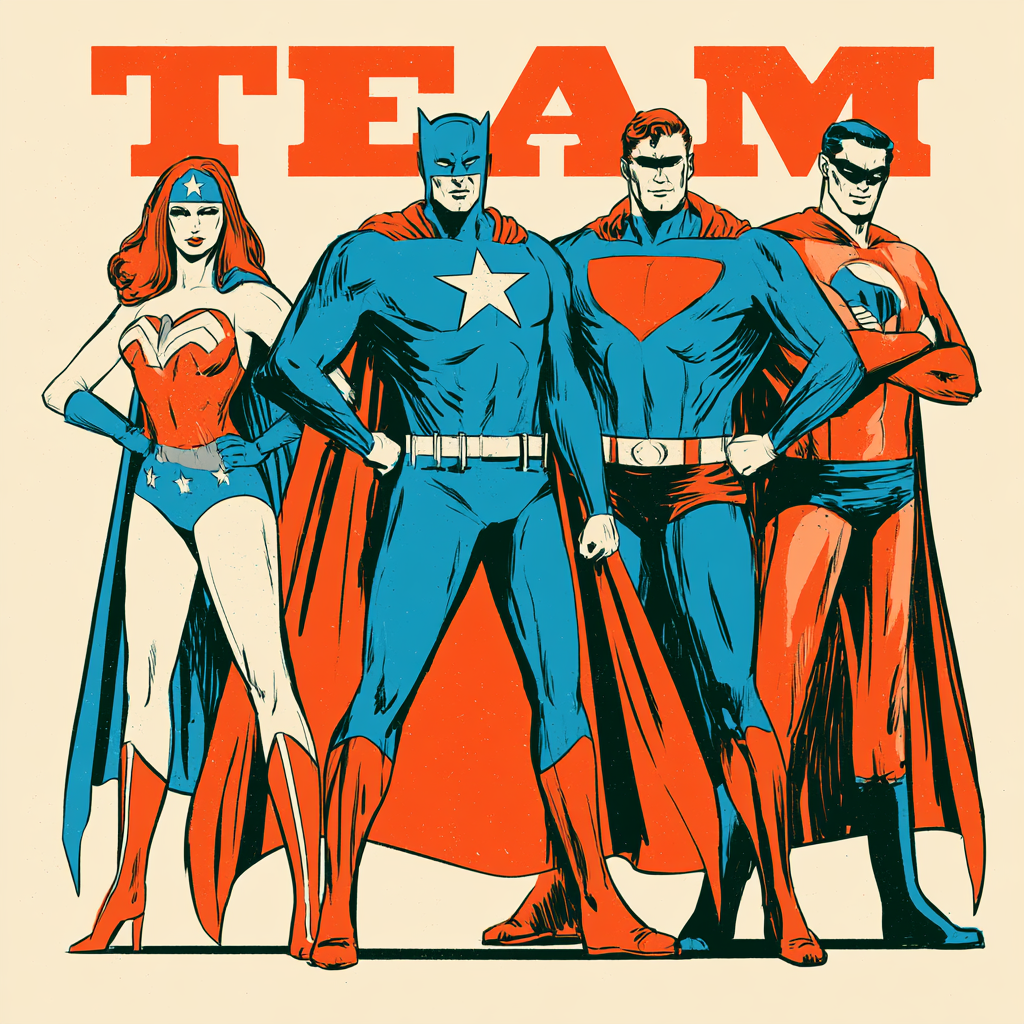
What happens when experienced product designers stop treating each other like competitors and start assembling the right experts for each invention? Steven and Noah welcome industrial designer Willis Whiteside of White Light Design to explore a flexible, collaborative approach to product development for inventors and startups. They discuss industrial design, mechanical engineering, proof-of-concept prototypes, manufacturing-ready CAD, avoiding costly invention-mill shortcuts, preserving startup capital, and why the best product development team may look less like a giant firm and more like a superhero team-up.
Core Topics for this episode:
- Invention Process
- Inventor Strategy
Key Takeaways Include:
Listen here:
Episode Blog
Product Development Super Friends: Why Inventors Need the Right Team
Inventing can feel like a solo pursuit.
You have the idea. You sketch it. You obsess over it. You explain it to friends who nod politely while wondering why you are suddenly talking about injection molding at dinner.
But getting a real product from idea to market is rarely a one-person job.
In this episode of Product Genius, Noah McNeely and Steven Julian sit down with industrial designer Willis Whiteside of White Light Design to talk about a different model for product development: assembling experienced specialists around a project without carrying the enormous overhead of a traditional large design firm.
Or, as Noah puts it, the superhero team-up model.
Batman and Superman may start out fighting each other. Eventually they figure out they are much more useful when they work together.
From Competitors to Collaborators
Noah and Willis have known each other for roughly 15 to 20 years.
Early in that relationship, they could reasonably have viewed one another as competitors. Both worked in product development. Both helped inventors and companies turn ideas into real products.
Over time, however, something became obvious.
Their skills overlap—but they are not identical.
Willis brings decades of industrial design experience, with particular strength in early creativity, ideation, sketching, rapid visualization, and building quick proof-of-concept models.
Noah combines industrial design thinking with mechanical engineering and production-oriented CAD development.
Instead of asking who gets the project, the better question became:
How can we combine the right strengths to make the project better?
That shift from competition to collaboration is powerful.
The Best Person Does the Work They Are Best At
Willis describes industrial design as the front end of the development process.
A client may arrive with a rough idea.
The designer explores possibilities, sketches concepts, solves usability problems, creates quick CAD models, and helps define what the product should become.
Eventually, however, that idea has to become precise.
Mechanical CAD has to define the dimensions, interfaces, tolerances, materials, assembly methods, and manufacturable geometry.
That is where the engineering side becomes increasingly important.
A good development team does not force one person to be brilliant at everything.
It combines specialists.
Willis may rapidly build a foam-core and dowel prototype to answer an early design question.
Noah may later translate the refined concept into detailed mechanical CAD suitable for prototyping and manufacturing.
An electronics specialist may handle circuitry.
A prototype shop may build functional hardware.
A manufacturing specialist may help prepare the design for production.
The inventor gets a team without pretending every team member has the same superpower.
The Problem With Traditional Design-Firm Overhead
Both Noah and Willis have experienced the traditional design-firm model.
You hire employees.
Lots of them.
Designers, engineers, prototype technicians, project managers, salespeople, and support staff all sit under one roof.
That model can provide significant capabilities.
It also creates significant overhead.
Whether every employee is fully utilized or not, payroll still arrives.
Noah describes having roughly 40 employees in a previous company. It was rare for every one of those people to be operating at full capacity simultaneously.
That unused capacity still had to be paid for.
The result is what Noah compares to the Sword of Damocles hanging over the company.
Projects have to keep coming.
Revenue has to keep flowing.
Rates have to cover not merely the work being performed for a client, but the entire organizational structure surrounding that work.
There is nothing inherently wrong with that model.
But inventors and startups often end up paying for more infrastructure than their particular project actually requires.
A Distributed Team Changes the Economics
The collaborative model Noah and Willis describe works differently.
The specialists are experienced professionals who already know how to work together.
But Willis is not paying Noah a salary when there is no mechanical engineering work to perform.
Noah is not paying Willis to sit around waiting for an industrial design problem.
The electronics engineer comes in when electronics expertise is required.
The prototype expert comes in when prototypes are needed.
That reduces fixed overhead while preserving access to senior expertise.
For an inventor, this can be a valuable middle ground.
It is not the same as hiring a giant consulting firm.
But it is also not the same as randomly hiring unrelated freelancers and hoping they can coordinate.
The team already understands how the pieces fit together.
That matters.
Why Senior-Level Collaboration Matters
Steven makes an important observation during the conversation: this model probably would not work nearly as well if everyone involved were 25 years old and just beginning their careers.
The distributed approach depends heavily on experience.
Senior designers and engineers know how their decisions affect the next person in the process.
An industrial designer understands that the beautiful concept eventually has to be engineered.
The mechanical engineer understands that the engineering cannot destroy the user experience.
The prototype specialist understands what the prototype is actually supposed to prove.
The manufacturer understands which design decisions create production problems.
That accumulated judgment allows the team to operate with less supervision and less organizational bureaucracy.
Experience becomes part of the infrastructure.
Prototype Before You Perfect
One example Noah shares involves a sporting-goods product he and Willis developed together.
Willis created an early proof-of-concept prototype using decidedly non-glamorous materials:
Foam core.
Wood dowels.
Duct tape.
And other quick-build materials.
It was not a production prototype.
It did not need to be.
Its job was to demonstrate functionality and allow the client to react to the concept.
The prototype worked well enough that the client could see where the shape and configuration needed to change before the team invested heavily in detailed CAD and higher-fidelity prototypes.
That is excellent product development.
Inventors sometimes assume progress means making everything look increasingly polished.
It does not.
Progress means answering the next important question.
Sometimes a $50 ugly prototype teaches you more than a $5,000 beautiful one.
CAD Is the Recipe, Not the Photograph
Willis emphasizes a point every inventor eventually needs to understand:
Manufacturers need engineering data.
A rendering can show what a product looks like.
A sketch can communicate an idea.
A prototype can demonstrate how something functions.
But when you want a manufacturer to produce hundreds or thousands of consistent parts, you need precise information.
That usually means mechanical CAD models and drawings.
Noah compares the difference to an apple pie.
A picture of an apple pie shows you what the finished result looks like.
It does not tell you how to make one.
The CAD data is the recipe.
Steven takes the analogy one step further: even a list of ingredients is not enough if you do not know the quantities.
Manufacturing requires definition.
How large?
How thick?
What material?
What tolerance?
Where does this feature go?
How does this part connect to the next one?
The CAD model turns the idea into information a factory can actually use.
Beware the Invention-Mill Shortcut
Willis also discusses a problem both he and Noah have encountered repeatedly: inventors who have already spent thousands of dollars with companies promising to promote or license their ideas.
The pitch often sounds wonderful.
Send us your invention.
We will present it to hundreds of companies.
Someone will license it.
You will collect royalties.
The inventor later discovers that thousands of dollars produced little more than a rendering or generic promotional material.
Willis has seen clients arrive with exactly that experience.
The larger lesson is simple:
There is no magical substitute for developing a real product and building a real business opportunity around it.
Shark Tank did not change that.
Even the entrepreneurs who appear on television usually arrive with prototypes, businesses, sales, customers, or other evidence that the idea has moved beyond imagination.
Be skeptical of anyone selling a shortcut around the difficult parts.
The Laws of Physics Still Apply
One of the funniest examples in the episode involves perpetual-motion-style energy inventions.
Willis has encountered inventors convinced they have discovered a way to create more energy than they put into a system.
Falling objects.
Floating objects.
Expanding gases.
Some clever arrangement that supposedly generates energy forever.
Unfortunately, mechanical engineers remain stubbornly attached to the laws of physics.
Sometimes the most valuable service a development professional can provide is explaining why an idea will not work before the inventor spends far more money trying to prove otherwise.
That may require analysis, calculations, or a feasibility report.
It may not be the answer the inventor hoped to hear.
But preventing someone from wasting tens of thousands of dollars can be just as valuable as helping another inventor successfully launch.
Good product developers should be willing to call the baby ugly when necessary.
Budget for More Than Product Development
Willis estimates that bringing an invention from essentially nothing to something packaged and ready for initial selling can easily require $50,000 to $75,000, depending enormously on the product.
But the more important point is how the budget is allocated.
Product development is only part of commercialization.
Inventors also need resources for:
- Manufacturing
- Tooling
- Packaging
- Inventory
- Branding
- Marketing
- Sales
- Distribution
- Websites and e-commerce
- Launch activities
- Working capital
Willis suggests thinking of product development as perhaps 25 percent of the overall commercialization budget, with the remaining resources needed to actually create demand and sell the product.
The percentages will vary dramatically from product to product.
The principle does not.
Do not spend every dollar creating the product and leave nothing for creating the business.
Flexible Teams Help Preserve Startup Capital
This is where the distributed-team model becomes particularly useful for inventors.
Noah gives an example of a project that needed only a couple of hours of advice from an electronics specialist.
A traditional structure might make it difficult to engage exactly that amount of expertise.
A flexible network can bring the specialist in for precisely the portion of the project where that knowledge matters.
That allows the scope to expand and contract with the actual needs of the invention.
For bootstrapped entrepreneurs, that matters tremendously.
Every dollar saved during development remains available for tooling, manufacturing, marketing, inventory, or the inevitable surprise nobody put in the original spreadsheet.
The goal should not be to make product development as expensive as possible.
The goal is to spend enough to make the right decisions and create a product capable of succeeding.
You Still Need a Plan
Willis closes the conversation with advice that sounds simple because it is simple.
That does not make it easy.
Inventors get overwhelmed.
There are patents to consider.
Design decisions.
Prototypes.
Engineering.
Manufacturing.
Funding.
Packaging.
Marketing.
Websites.
Sales.
Distribution.
The list gets intimidating very quickly.
The antidote is organization and action.
Write down the priorities.
Identify the next steps.
Look at them regularly.
Work on them consistently.
You do not have to solve every problem today.
You need to keep solving the next problem.
Leonardo da Vinci filled notebooks with ideas.
Henry Ford did not build an automotive company by merely imagining one.
Visualization matters.
Planning matters.
But eventually the inventor has to take action.
The Product Genius Take
Successful product development is not about finding one magical person who knows everything.
It is about assembling the right expertise at the right time.
Industrial design.
Mechanical engineering.
Electronics.
Prototyping.
Manufacturing.
Marketing.
Sales.
Each discipline contributes something different.
The smartest inventors learn when to do something themselves, when to ask for advice, and when to bring in someone who has spent 25 years solving exactly the kind of problem sitting in front of them.
That is the Product Development Super Friends model.
You do not necessarily need the Hall of Justice filled with salaried superheroes waiting for the Bat-Signal.
You need the right hero when the particular villain shows up.
Preferably before you spend $8,000 on a rendering of your perpetual-motion machine.
Or, read the full transcript here:
Steven Julian
What happens when two heroes team up to help get your product design to market? Well, we've got super friends around product design here in the studio with Noah and his friend Willis. Next on Product Genius. Do you want to be a successful inventor entrepreneur? Struggling to get your product from idea to market? Well, you've come to the right place. Welcome to Product Genius.
Willis Whiteside
The down-to-earth podcast that explores important topics about inventing and launching new products.
Steven Julian
Noah McNeely is your trusted guide. With more than 20 years of product launch experience, he's here to help you on your journey to become a product genius.
Willis Whiteside
Let's get started.
Steven Julian
Here's your slightly annoying co-host, Steven Julian. Hey, that's my line. Yay! It's your slightly annoying co-host, Steven Julian, busting everybody's eardrums, ready to have a fantastic show because you are here with us virtually listening while we are in the lair of Product Quick Start to do another episode of Product Genius. Seated to my right is the intrepid producer, Jody Smith. Seated to my left is my guest, who we'll get to in just a moment. Seated across from me. I think I said moment. I meant to.
Willis Whiteside
say moment.
Steven Julian
Seated across from me. Is the man of the hour, the man with the power, too sweet to be sour. It is the host of Product Genius, Noah McNeely.
Noah McNeely
Well, as usual, it's good to be here. And as usual, I have something to say about your introduction. There were hints of Good Morning Vietnam in that particular intro.
Steven Julian
Yes, there was a little bit of homage to Robin Williams. There was also a very famous, semi-famous wrestling promo style. Dusty Rhodes, you know, with the, you know, and I think maybe he was my brother's favorite wrestler. He was many people's favorite wrestler for a period of time. So shout out to the current WWE Universal Heavyweight Champion, his son, Cody Rhodes. So anyway, yeah, I thought I'd bring a little energy. and there is one of the reasons I love this show is you have me here to be silly, to be energetic, and then I do all that and you go, hello.
It was fantastic.
Noah McNeely
That's how engineers express excitement.
Steven Julian
Just the exact right amount. I don't want to, you know, yeah, I'm with you there. Not too much mirth for an engineer. So we're. excited. We have a very, we have a guest who is a very close friend, very close colleague, someone you've worked with many, many times.
Noah McNeely
Yeah, we've known each other for... Probably 15, 20 years. we've been working together pretty closely for the last several years and collaborating on things.
Steven Julian
So let me introduce him.
Noah McNeely
Please do.
Steven Julian
We are thrilled to have Willis Whiteside from White Light Design here in the studio. Willis, welcome to the studio.
Willis Whiteside
Thank you so much for having me. It's a pleasure. Noah is... A good partner and brings a lot to the table and he invited me here to share with you guys and we would love to do that. I know there's not a shortage of inventors or invention ideas out there and we want to try to help those people do that. We love the opportunity.
Steven Julian
So I think one of the, probably the first question is if you kind of do product design and Noah kind of does product design, there's probably a lot of overlap. Is there anything that the reason why Noah collaborates with you? Are there some things you kind of specialize in, a little more concentrated in, some areas of specialty that maybe Noah kind of needs your help on?
Willis Whiteside
Yes.
Steven Julian
Of course, Noah doesn't need help with anything, but we'll pretend.
Noah McNeely
Maintaining sanity is a big need here someday.
Steven Julian
Especially on recording days.
Noah McNeely
Well, after recording days.
Steven Julian
So what are you bringing to the table? What's kind of your areas of expertise in the way you work with design?
Willis Whiteside
I would say in general, the experience of doing it for 25 years, and then I think... My, as an industrial designer, so I'm an industrial designer from Ohio State, I got my master's from Georgia Tech, which was the School of Architecture Industrial Design Product. So I just had a dream to start White Light Design and help inventors and companies bring new products to the market. So my focus is really more on the upfront sort of creativity, new ideas, solving problems, and being able to sketch those out quickly. Communicate those through quick CAD models and color renderings.
I use different CAD programs than Noah does for the speed to ideate or bring the three-dimensional geometry to life. But we collaborate. that whatever I try to do from an industrial design standpoint, I'm thinking. like Noah, who is more of, let's say, the mechanical 3D CAD part of my equation or the way we help customers bring it to the market. So I work with mechanical engineers, 3D CAD engineers, which Noah is one of the best I've ever known.
Noah McNeely
One of the best.
Willis Whiteside
Well, no, I've been fortunate to work with some other good ones, too.
Steven Julian
By the way, that's the most excited I've ever or engaged I've ever heard of. Man, that was an emotional response from Noah McNeely. Holy cow, you got him riled up there, Willis. Well done.
Willis Whiteside
Well, the fact that you're an industrial designer as well gives you the edge on the other mechanical designers I work with. So you bring that to the table. I know that when I work with engineers, You have to direct them or communicate what you want them to do, okay? You can't just sit down at the table and say, do me a CAD model. You've got to give them the drawings and the dimensions sometimes down to the thousands of an inch, you know? And then you communicate it and then they draw something up or sketch it up and. go, oh, you know, that's not what I wanted.
So it's a back and forth. My job is to try to get it right the first time. So to communicate the design through the drawing or the sketch. Or the quick CAD model, so Noah can quickly translate that to the mechanical CAD programs that we have. that gives much more power to the customer to make changes to the CAD model and we can take those CAD files and bring it to the market. But the ability for him to make those 3D CAD models on top of our ability to use the creativity and sort of upfront design work speeds the process up.
So we can take a product very quickly to market.
Steven Julian
As the other tech alum, although not an engineer, listening to that great answer, somewhere there's a lot of tech engineers listening to the... Show. And when he goes, you got to tell him exactly the engineers are going, yeah. And what would you point? Of course, that's what you should do. You have to be precise.
Noah McNeely
That's why, that's why I call myself a recovering engineer. I, you know, I try to read between. the lines a bit more than I was taught, at least in undergrad.
Steven Julian
So, so Noah, I want to, so let me ask you in one of the things you kind of wanted to talk to with Willis here in the studio is. I think some people might have a preconceived notion of how you guys come at it or the model that you guys are following. You were kind of talking ahead of show about there's, again, you guys are different and unique and do things different than your typical, you know, engineering office. So talk a little bit about that.
Noah McNeely
Yes, I'm probably going to give some analogies like I usually do. At one point in time, Willis and I probably viewed each other more as competitors than anything else. But over time, it kind of became more of like the superhero team-up movie. Remember that movie, Batman vs. Superman? Yes. But then they became friends. They started working together.
Steven Julian
Was there someone named Martha that brought you together? that got the fans all mad? I'm sorry. That's a side nerd. The nerd topic has been done for the day, so you may continue.
Noah McNeely
Do I need to? give more analogies to get you back?
Steven Julian
I'm already on. I'm in. I'm in. Let's go.
Noah McNeely
So we kind of have this more superhero team up kind of approach than always being in the same building at the same time. So the traditional model for companies that help other companies develop products and inventors help develop products is you'd have a team of five people, 12 people, 40 people, 200 people, and they're all sitting in your building. Whether they're busy or not. So that ends up with a lot of overhead. I used to run a company like that. It's just a different business model. It's not bad. It's not wrong.
It's just different. It does tend to lead to higher costs. And there are certainly benefits of companies like that. But the other analogy, which you called out on my notes earlier, is that overhead. If you remember the story of Damocles, the sword of Damocles from Greek mythology, he's the king of wherever. Syracuse or something. I don't know. But anyway, there's the sword hanging above his head on a really thin string. And the message there is there's a lot of pressure on the person that's. kind of in charge. or in the case of these companies like the one I used to run and the one, you know.
Other companies like this, you've got all this overhead. that's a huge amount of pressure on the company to keep selling projects left, right, and everywhere, and you have to charge a lot of money for those projects to pay for that overhead. At one point, I had 40 employees in my previous engagement. It was very rare that all 40 of them were at full capacity all the time. So usually, we always had some extra weight, and that extra weight still has to have a salary. It's very different now. As Will's and I met each other or got deeper into working with each other, and we actually have other people in our team that are like this, we're more of a collaborative or a cooperative or a distributed model where we're all senior people.
We all have a lot of expertise. We all bring that to the table. But Willis isn't paying me to sit here if he doesn't have something for me to do and vice versa. And the other people on our. team, our electronics engineer and our prototyping experts and et cetera, that we have all this vast wealth of knowledge at our fingertips, but we're not paying super premium level salaries across the board all the time.
Steven Julian
And Willis, this model that you guys have kind of worked your way into relationally over time. I don't think this is a model that would work if you guys were in your mid-20s and kind of starting out, right? So how has, you know, Noah kind of laid that out as what's happened? You got a particular story or you got a, or just kind of advice that as you've walked this with someone who to Noah's word, you know, at one point was seen as a competitor. Now it's more coopetition or it's more, hey, we actually are partnering.
What was it like to walk this path and kind of find a partner without having to join your businesses together?
Willis Whiteside
Well, back in early 90s when I started White Light Design, I sort of, you know, I guess focused on the inventors and all that stuff. But I then got locked in, or not locked into, but the opportunity to work. for a couple small design firms, small to medium size, say five to ten designers. I knew what it was like to go in and have to fill out the time card and say, I worked on this project for eight hours, and then you add that up, I worked on this project for 40 hours, and everybody in the building's doing that.
And of course, the paycheck's going out the door. But at each one of the firms, the... So design firms, corporations, we were all trying to make winners, right? We wanted to survive. We wanted to get projects. We all wanted to do that. A couple of them even had full-time salesmen. So, you know, we were trying to do the thing. But what we found out was that overhead of paying all the employees and when the projects get slow, you're going in the hole real quick. So it's from that.
Steven Julian
Yeah, so you both kind of, it was a different journey, but there were some similar mile markers along the way, both inside the office.
Noah McNeely
Yeah, we both experienced the same phenomenon, just in a different company.
Willis Whiteside
Yeah, so I thought, you know, hey, you. can do this yourself. I was fortunate enough to hook up with a couple of large corporations, Coca-Cola and Georgia Pacific, doing industrial design and prototyping work, which fed my business to grow as it was. But then, you know, as... Noah knows. I couldn't keep two or three engineers full-time in my business, the way it was going. So I hired contractors. We hire them as we need them. And the engineers are happy. We're happy. So we get the job done. But not having that overhead, we can streamline the economies to our projects.
And I know from how Noah and I quote Project, we are way below what those corporations I worked with were charging customers per phase. Sure.
Steven Julian
Yep. We're speaking with Willis Whiteside. He is with White Light Design. And Willis, I'm also going to assume, and please correct me if I'm wrong, but you, much like Noah here at Product Quickstart, you've probably got stories of inventors, entrepreneurs that have met you and you bring them from design idea all the way to market, whether you involve Noah or other geniuses around the table that you bring. You've got stories just like Noah has. stories of people that have met you when it was just idea and you help that inventor kind of bring their product to market.
Willis Whiteside
Yes. So as an industrial designer, we have the capabilities to take you from idea or sketch. We may get something very crude and say, go on the internet and I want something that works like this. So we can start from a sketch, but then we're able to take it to the full development of making it a 3D model. Typically, we use the proof of concept prototype. So let's mock this thing up. Let's get it mechanically functioning, prove it out. Then we'll go in and try to design it for mass production, which is typically where the mechanical engineers or like Noah come in and help us do the 3D CAD model.
And once you have that 3D CAD model, you can go to prototyping, you can go to manufacturing, or you can come back to the design table and say, we need to make some changes and do that. Very quickly. But the capability of taking it all the way is what we specialized in. You know, packaging, display, exhibit, whatever else. the customer needs to help brand their product and promote it. We try to fill in the blank. We don't specialize in that, but if we're called upon, we'll help you do it. Primarily, we're product development.
Full prototype shop. But it's helping those customers get from no idea or I don't know where to start to. let's put a prototype on the table. That's what we do the best. Product Genius is brought to you by Opu Probiotics.
Steven Julian
Pre and probiotics you can pour directly on your tongue in delicious mint and mocha flavors.
Willis Whiteside
But the taste is just the beginning. With Opu, you can see improved digestive function, boosted immune system, easier weight management, improved mental health, and much more. Try today at getopu.com.
Steven Julian
That's get O-P-U dot com. As the slightly annoying co-host, I think it's now about time for a little bit of comic relief. So Willis, if I put you too much on the spot, you're allowed to decline and then I'll have to do some song and dance to try and get at least myself to laugh.
Noah McNeely
Oh, I want to see this.
Steven Julian
Yeah, exactly. No, no. You better save that because there's only. going to be that. It only happens once. So one of the things we joke about on this show is that for all the great... Ways that Noah and other geniuses he's brought to the table have been able to help people bring their product to market. There's a couple of long-running jokes. One is the contact us form that says, I have a great idea, call me, right? So that's just silly in and of itself. But we've also enjoyed, and hopefully I'm fighting for the merch for Frank's Cheese Hammers, the product idea that just makes no sense.
When cutting the cheese just isn't enough, still one of the greatest tag marketing lines for a product that doesn't yet exist and shouldn't exist because there's no use. Do you have, in your years, you've got to have at least one that you can share enough detail while, so that the guilty can remain anonymous. You've got to have at least one. really good, somebody came to me with this dumb idea and, you know, you had to call the baby ugly. You had to, one of the ways you help them. Financially was by keeping them from wasting. their money going down this road of this particular product.
Do you got at least one comic relief story you can share?
Willis Whiteside
We've got a couple of those.
Steven Julian
I figured you got a couple dozen of those, but yeah.
Willis Whiteside
I think the one that may come across the table is the virtual energy machine. Nice.
Steven Julian
Tell me more.
Willis Whiteside
So they've come up with some idea, some method of capturing the energy of something falling or something floating or something coming to the surface, expanding gas, whatever it is that they think they can replace on energy or create more energy than they put in. Okay. Now I have several mechanical engineers that have told me that's... That's pretty difficult to do. But I have to convince the client and charge them a fee to say, I've got to tell you and show you why you can't do it. So we put together a two or three page report, which sort of goes down the basic logic of the physics of why this is really going to be a challenge.
So those projects are tough to commit. Tell the customer, you shouldn't spend a lot of money in doing this unless. you've got a lot of money to spend.
Steven Julian
Please stop here.
Noah McNeely
And I don't care how much money you have, the laws of physics still apply to you.
Steven Julian
The virtual energy machine. That might top more vegan options.
Noah McNeely
This virtual energy machine is going to lead to a virtual business.
Steven Julian
But what won't be virtual is the amount of money they waste going down that path.
Noah McNeely
Yes, you'll be virtually bankrupt when you're done.
Steven Julian
Noah, you have obviously partnered a lot with Willis and you even kind of hinted like, hey, this is going to be an interesting show just because you've worked with him so much. It's like, I already know everything.
Noah McNeely
Yeah, it's a little different.
Steven Julian
So I'm going to ask you to give me and to give our audience a testimonial of, you know, let us come behind the curtain of a way that you. That Willis brought something that you couldn't bring or that you knew he would enhance what you were doing and working with a client or just bringing him on the team and saying, we need him as part of this to kind of help.
Noah McNeely
Yeah. So I can't give the details specific.
Steven Julian
Of course not because of, yeah.
Noah McNeely
The CIA and the whole nine yards. It's a sporting goods product we worked on recently and actually just finally shipped to the client not too long ago. And one of the things that I brought Willison for that he was really a lot better at than I am is that early proof of concept model. Because he was able to very quickly, and thus saving budget for the client, create a semi-working prototype just out of foam core and wood dowels. Duct tape and stuff like that. And frankly, it looked pretty darn good for just duct tape and foam core.
And it worked. It demonstrated the functionality. It helped the client realize, okay, we're looking at this a little bit wrong. Let's change this shape. Let's change that shape. So that industrial design thought process at that stage, that's something that Willis excels at. So that's where he became the Batman to my Superman or the whatever to my, you know. The Iron Man to my Captain America, you know? So that team up was important.
Steven Julian
Let's keep it in the DC universe.
Noah McNeely
Yeah, but I thought it pompous to say I'm. Superman, so I wanted to change that. I'm not Superman.
Steven Julian
Right. No, no. More Green Lantern.
Noah McNeely
Okay, I'll take that. Yeah, yeah. I'll accept that.
Steven Julian
Okay.
Noah McNeely
We'll have to talk about which Green Lantern.
Steven Julian
Hal Jordan or, oh wait, Jon Stewart?
Noah McNeely
Just not the...
Steven Julian
Guy Gardner?
Noah McNeely
Not Guy Gardner. We talk about a lot of nerdy things here, Willis.
Steven Julian
Do you want to jump in on the nerd conversation at all?
Willis Whiteside
As soon as I see a fit.
Noah McNeely
I am very much looking forward to Nathan. Doctor Who fan?
Willis Whiteside
I'm sorry?
Steven Julian
Or Doctor Who fan?
Willis Whiteside
I'm not a fan.
Steven Julian
I'm sorry.
Noah McNeely
I am very much looking forward to Nathan Fillion playing Guy Gardner. That's going to be fantastic.
Steven Julian
Ooh. Wait, is he? Are they doing a movie?
Noah McNeely
Yeah. And the Superman movie that's coming up, he's playing Guy Gardner.
Steven Julian
Oh, I did see that. Okay.
Noah McNeely
Sorry.
Steven Julian
Listen, I am a nerd on many levels. I'm not a nerd on the upcoming movies because I've been disappointed to me. Anyway, back to the topic, we're talking with Willis Whiteside here of White Light Design. Now, Willis, you shared this a little bit pre-show and this is a little nuance that I. enjoy. So Noah has this, we have a podcast called Product Genius. Noah's company is called Product Quick Start, which I always appreciate because It's product quick start. We get a quick start on getting your product to market. I liked a little bit of the creativity you were sharing about the name White Light because I thought you were just trying to torture people because your name is Willis Whiteside of White Light.
And I thought, well, they probably don't say Willis Whiteside of White Light very often. So White Light Design, that's a really cool story. Talk about how you came up with the name White Light Design.
Willis Whiteside
Well, thank you. Well, of course, being a white side, I'm partial to the color. So I use that as sort of an... I think when I first started thinking about creating a design company, you go out there and look at the design world and there's lots of logos of people trying to project, I guess, their initials or some sparky name, which I thought, great, but I wanted something that was closer. And then I brought together the logic of using a light bulb, the flashing light bulb, white light, light up the room.
So the concept of the white light bulb became the sort of icon that I wanted to focus in on to represent the company. So I probably went through three or four logo designs. It started, you know, very simple up to the one we have now. But that was, I guess, the influence of inspiration, creativity. I'm a Christian, so I think my creativity comes from the Lord. Sure. And I express it, and I try to bring it to the table with grace. And so White Light sort of encompasses that as an ability to use it.
Steven Julian
There's layers to it. There's layers to why you use it. I like that. So, Willis, we've, on this show, over many shows, no, one of the audio— On earth. I was, I was wondering if you would pick up on that.
Noah McNeely
I am a pleasure to be with you.
Steven Julian
You are an absolute delight. One would say Turkish delight. Shout out the Lewis and Chronicles of Narnia. That's a deep cut nerd. And it was a joke. Yeah, I know. Let's get back to the main question. So, so Willis, an ongoing conversation in. this show that, that Noah really wants to bring to the table. when we talk about all the time is we try to let people. Let people know about what's going on in the whole process from idea to invention to bringing it to market. Noah has talked about this.
I'm excited to ask someone else who's worked alongside him and with him and sometimes even just in a whole separate project of you doing your own business. Can you pinpoint one or two major pain points or one or two major obstacles? Where does, in your experience, where do the works get gummed up? When people are trying to go from idea to market, where are the main pressure points? Where are the places where people, you know, where do you see people trip up in getting from idea to market most?
Willis Whiteside
Loaded question, right? Of course.
Steven Julian
So I also tried to make it as broad as possible to say whatever you want.
Willis Whiteside
The public, there were inventor groups and there were some commercials or invention companies that say, we'll help you promote your business, okay? And then the InfoMotor came along where now we've got the invent companies, the light bulb companies that say, we can take your idea and we'll put it in front of 200 companies and we're going to give you a nice big royalty, okay? That's one thing I've never heard of taking place in my business of somebody doing that.
Steven Julian
So the scamming of that. Correct.
Noah McNeely
At least no one doing it successfully.
Steven Julian
Yeah, there's no work to this at all. Just give us your idea and we'll turn it.
Willis Whiteside
Many of our customers or some of our clients are customers that have went to these invention companies. Then they come back and show me the rendering that they got and say, that's all I got for my $8,000. So it's that story. But then Shark Tank came along, okay? And everyone's now dreaming of, I can bring my invention to the market. Of course, you know, on Shark Tank, you've got to have some proven sales before they're going to think about biting on you and investing in it. So the trick for the inventors now is, I think, maybe not knowing of or understanding the importance of using industrial designers and upfront product design companies like Product Quickstart to help them. come to the market, and they try to do it themselves.
Through the garage or people I know, yeah, I have a buddy that does this or my son did the website for me, which is all good.
Noah McNeely
My nephew watched YouTube and knows how to do CAD now.
Willis Whiteside
So there's a lot of, you know, I have my own printer and I'm printing my own prototypes and that's all good and banked, but you have to bring everything together. And you have the expertise or the experience to know how to bring it to get to that mechanical CAD model. Everyone needs that.
Steven Julian
So let me let you focus on that a little bit. So the mechanical CAD model, everybody needs that when it comes to putting a product. I'm going to ask the question as someone who's never brought a product to market, why? Why does everybody need that mechanical CAD model? Why is that so important?
Willis Whiteside
Because that's where the manufacturers need to work from drawings. Or 3D virtual CAD models that they can scroll around on the screen, or they can go inside that model and pull a dimension they need, but they use that 3D. CAD model to then say, well, I'm going to injection mold this, so I have to make it into clamshell halves, and then I got to create the molds for those two halves. Well, unless you have the data, even if it's a simple dowel stick, I need a CAD model of that to go to the...
Shop and say, make me 500 of these and make them all exactly the same. So it's the quality control. You have to have that data or that information to go to the manufacturers. You know, you can't even get a quote from an injection molder until you have the CAD model. So injection molders send us clients and say, this customer needs your design, needs the CAD model so we can mold it for them.
Noah McNeely
It's kind of like the difference between having a picture of an apple pie and having a recipe for an apple pie. You can't, you don't know what ingredients to buy if you don't have the recipe.
Steven Julian
Or, or take it a step further. I've got the list of ingredients, but I don't know how much.
Noah McNeely
Right. Yeah.
Steven Julian
I know I need to add brown sugar. Is. that a, or vanilla? If that's a teaspoon or a cup, it'll change the. Yeah.
Noah McNeely
Well, the bag of Doritos lists the ingredients. It just doesn't tell you the, the quantities and how you, you're not going to make your own Doritos.
Steven Julian
Yep.
Willis Whiteside
And the bag's way smaller now too.
Noah McNeely
That's true.
Willis Whiteside
That's true.
Steven Julian
And it's filled with air when you open it up. You're like, there's eight chips in here. Somebody's trying to tell me something.
Willis Whiteside
If you're an inventor out there and you want to bring your product to market, we know it's difficult to go get funding at interest rates of 5% to 7% to 10%. I have an associate of mine that's in a small business. He's got a small business loan of $7,000 a month due on his small business loan every month. He goes, I can't do it. So we know it's difficult. So the main thing to do is not to underestimate how much it takes to bring that product to market. I give an estimate of $50,000 to $75,000 from nothing to. maybe I have something that's in a box that I can then start to sell out of my garage in. a website.
So the people that can bring it to the garage and get it made, you know, they understand that budget. Now I got to pay some, I get the molds. You got to understand 25% of your total product development budget may be into product development, but you need 75% of that budget to then start promoting it, to create the sales, to get your return on investment.
Steven Julian
And let me ask you as someone who, again, you know, and the way Noah has described it on the show before is he will walk with them through that whole journey. Even if he isn't doing everything, he brings other people to the table. So you've kind of helped people bring the... Bring the product and get a design and we find a manufacturer. Are there specific things you do with your clients that you're like, I'm going to help in getting this product launched and help you beyond just giving advice? Do you actually handhold a little bit at times? or are you like, I've got people that I've partnered with that I want to hand them off to. that'll help them launch those sales and get those. sales growing?
Willis Whiteside
If it's regarding product development. Standard promotional materials, we can help. We can jump in and do a brochure for you or something like that. But if, you know, we're not going to do a website for you, we're not going to help you go out and do marketing and sales. So we're not a marketing promotion company that can take your idea and help you find an investor.
Steven Julian
Yep.
Willis Whiteside
So that's probably the main. I love it. Just to know that.
Steven Julian
And Noah, I think, so as we're talking with Willis, I think I can see why you guys partner together so well. A lot of his answers are similar and at least in the same passion and help.
Noah McNeely
We've learned a lot of the same life lessons in our careers, I think. Do what you're really good at and find other people that are really good at the things that you aren't good at. I think that's, you know. You naturally gravitate toward people that have similar philosophies, and I think that's why we work together.
Steven Julian
And I wanted to ask you this question, and then Willis, if you want to jump in and comment, you. certainly can. But, you know, I think one of the, and again, it's a repeating theme of this show, but it's good to go back to it, and it's good to say it in different ways and in different contexts. One of the things that Willis is describing that you guys work together and that there are other people who will do other certain things, website design or marketing help. One of the benefits of an inventor, I don't want the inventors and entrepreneurs listening thinking, oh, woe is me.
How can I overcome this huge thing? You guys are able to help them be more nimble, agile, flexible. Talk a little bit about that.
Noah McNeely
Agile and flexible ourselves in the sense that...
Steven Julian
I'm going to go do some stretches while you keep talking.
Noah McNeely
Okay, not that kind of flexible. Oh, sorry. Okay. But because we're agile and flexible, we can kind of adjust our scope to meet their needs. And let's say they just need a little, you know, work on a project right now where I just needed our electronics partner just to give me like two hours worth of advice. We're able to do that. They didn't. have to go out and hire... Hire an electronics engineer for a week at a time or anything like that. So that's all things that we can massage the programs to best meet the needs of those clients, which are typically bootstrapping things.
And even if they're fully funded, our ideal clients in those situations are still the ones that are savvy enough to know, like Willis was talking about, they need to save a lot of their funding for. That big role, that big marketing launch, et cetera. Even if it's a real small thing and it's a $20,000 get to market path, or if it's a big thing that's hundreds of thousands of dollars to get to market, there's expenses beyond what we do. And the more we can help them conserve those resources at this stage, the greater our chance of success, their chance of success.
I think Willis would agree with this. We're both at a position in our careers where We're not trying to finagle people to do projects just to do projects. We're both at a point where we're really looking for those success stories that we can put on our shelf and talk. about and be proud of.
Steven Julian
Well, and it comes back to that model you were talking about. You don't have 10 engineers sitting in an office with overhead. We got to get them projects. We got to get stuff done. You guys are able to pick and choose a little bit of who you work with.
Noah McNeely
And on the opposite end of that, we're also not just freelancers. You go out and hire and become the general contractor for. We have that senior level of experience and expertise also to know how to work with each other. So we're sort of between both ends of that spectrum.
Steven Julian
You're very agile. I was trying to go for the second point of comic relief. I clearly failed.
Noah McNeely
Sometimes I'm just a speed bump in your conversation.
Steven Julian
You were clearly professional. You were so professional in how you handled that and just plowed right in. Jody smiled. I didn't know if it was a sympathy smile or not. But you know what? We'll talk about that off air. Clearly, I have relational issues that we must discuss, which is why I'm – I don't know. Anyway. Okay. Sorry. All right, let me wrap. it up. So Willis, I'm just going to, so I'm going to give you one more broad question. It's very loaded. So just acknowledge it and move on. You've gotten a chance that we have a wonderful audience.
We're always growing, but there are people who've been with us for a while and they've heard Noah kind of talk about all the different aspects of bringing your product to market and mistakes and pitfalls to overcome and all that kind of stuff. You've got a room full of inventors and entrepreneurs. You've got them listening to you. You've got one chance to – you talk a little bit about being a person of faith. You're not going to preach a sermon, but you're going to give that closing. You're going to finish it well.
And so you've got all these inventors and entrepreneurs. If you could give them one message, if you could kind of make sure they hear one thing from you, what would you want to tell them?
Willis Whiteside
All right. So I think the big thing I know as an inventor and someone – Helped many people bring their business to market. There's the big question mark. Okay. So then you go out and try to do it and you quickly get overwhelmed. Okay. There is so much you have to do in order to try to bring a product to the market besides bringing in. Product Quick Start and White Light Design to help you just do the design part of it. So you get so overwhelmed and you just don't know where to turn.
You may have friends. But the thing I've learned as a designer is you got to be organized. You got to have a plan and you got to take action on it. OK, here's a secret. If you write it down and put together a five or ten. List, priority list of what's most important to you. And every day you think about or act on that goal, we have to look at it every day. The Lord will bring it to you or the creative energy, whatever you want to call it.
Steven Julian
The virtual energy machine will bring it to you. Sorry, go ahead.
Willis Whiteside
That's coming. It's alien-based, though. Right, right.
Steven Julian
See, that's good comic relief. Okay, I've done my job. I so apologize. But I like that. So it will. come to you.
Willis Whiteside
Yeah, you have to understand the principles of materialism, okay? Ben Franklin. Henry Ford, they had to visualize it first, okay? But then they had the people behind them that could help make it happen, to write it down. You know, Leonardo's books are full of the ideations that then people were able to bring to life. But you, as a person, have to focus and you have to take action. And until you do those two things, you're not going to get anywhere, okay? Now, you can take small actions or big steps, you want a thing.
In or it's like as a sportsman, they say, you know, you're supposed to visualize making the basket 100 times. OK, you need to visualize getting your invention goal up there on the stage and you're winning the invention of the year award or whatever it is. You have to visualize it and you have to feel it. And it's like, what would it feel like if you achieve that goal? Oh, my gosh. You know, I get goosebumps sometimes when I think about what it would have been like if. I was up there.
And you just have. to feel that and then keep striving towards that feeling. And that's how I would tell any entrepreneur. It's not in what you do. It's how you do it and how you think about it, how you plan it, how you action.
Steven Julian
I love it.
Noah McNeely
And for our younger listeners, I just want to clarify, he's talking about Leonardo da Vinci, not Leonardo DiCaprio.
Steven Julian
Good comic relief, Noah. Well done.
Noah McNeely
For an engineer, right?
Steven Julian
I like that. Well, you delivered it in that. Great Noah Tone. And by the way, fantastic advice. And if most people are like me, as they're listening to that advice, that's a great starting point. And then you can spend hours, months, weeks, years. Going through all of what that means. Oh, I make a list.
Willis Whiteside
The dreaded business plan. Correct.
Steven Julian
And you check this box, but you got to put an X in this box because that didn't work. But that leads to these other sub steps and just constantly keep working on it. Be willing to adjust. Be willing to take good advice from. From trusted counsel, and there's wisdom in many counselors, if I can quote the book of Proverbs as we're. sitting here.
Willis Whiteside
If you try to do it yourself, even though there's many tools out there that you can be very powerful and promote social media and promote your invention, there's tools that you can do it fairly easily. But if you want results, trust me, you need to bring in the experts that do it for a living.
Steven Julian
And speaking of experts that do it for a living, just in case people didn't pick up at the beginning, how can people find out more about white light design?
Willis Whiteside
I think the easiest way is just go to the website, to thewhitelightdesign.com, and we have an overview of the services we offer, ranging from invention development support to full product development, mechanical, electrical engineering. Some of the tools we use sometimes are the feasibility studies. Or a design assessment where you want to consult with us and just get our opinions on stuff. So those sort of services we're offering, contact at whitelightdesign.com email. We'll take your telephone call anytime during normal business hours, and we're happy to answer questions. I may spend 15 or 20 emails on a customer upfront or a potential client to get them comfortable that. you're in the right place, we're going to help you, the monies you're investing, we're not going to let you down.
Yeah.
Steven Julian
And I like whitelightdesign.com, one of the cool design features on your website. There's a click to call button. Uh, just, or, or a bar and it just stays on. So, so like you said, during normal working hours, you can just call right away or find their email. So, uh, Willis Whiteside of White Light Design, go to whitelightdesign.com. Thank you so much for being here today.
Willis Whiteside
Thank you, sir. We appreciate it. And all those inventors out there, we wish you luck. And we, we know it. I think the economy is going to turn around. So get out there in 2024 and do your thing. And we believe in it.
Steven Julian
Keep moving forward. I like it. Noah, I can see why you wanted Willis in the studio.
Noah McNeely
Yeah. Willis and I enjoy working together. And yeah, like you heard, we think a lot alike. Yeah.
Steven Julian
And there are times as we've spoken and as we've kind of done this show together. You always catch yourself from going, feeling like you're Don Quixote alone against the. world. I think halfway you brought Willis in to prove that I'm not the only person out here doing this. There are other people who, you know, and I love your admission at the beginning that at one point, you know, and still to an extent, you guys are competitors.
Noah McNeely
I'm not a lunatic on an island by myself. Most of the time.
Steven Julian
Most of the time. After show days, you might be.
Willis Whiteside
The island's really small. The island's really small in Atlanta. Sure. As far as available design firms. There's not many. Yeah, there's a couple bigger groups. Yeah. But if you want somebody that's tailored to your budget, we're probably worth a look at.
Steven Julian
All right. I like it. Willis jumping in, giving us some more knowledge. So, yeah. So, again, I was halfway joking. But I think long-time listeners of this show. It's good to know that you're not the only one. And you've said it. There are many good people trying to help inventors, entrepreneurs get to the market. There are also people just trying to take your money.
Noah McNeely
Yeah, we've done all shows.
Steven Julian
We've done shows on that. Yeah, yeah. So it's good to talk. about the good people doing good work. And Willis of White Light Design is one of those. Another one is you, Noah. And people can go to productquickstart.com, right?
Noah McNeely
Yep, it's still up.
Steven Julian
And there's no click to call button. There is a contact us form.
Noah McNeely
We don't have the level of technology.
Steven Julian
No, no, no, no, no, no, no. You know what it is? You know what it is? You're more of a, you're more, that's the old English from Georgia Tech. You only take a couple of English classes, but you made a pact with someone at some point. You said, I'll make people type things out and do a contact us form. Please don't put, I have a great idea. Call me.
Noah McNeely
Right. And I don't speak emoji. Just use actual words.
Steven Julian
An all emoji. Have you had an all emoji submission?
Noah McNeely
I don't think the forum takes emojis, fortunately.
Steven Julian
I like that. And you will help people get their idea to market. You'll at least have an initial conversation with them and all that kind of stuff. So all that kind of stuff. Wow, that was very unprofessional. Great show today. Thank you for bringing Willis. into the studio. Thank you for the work that you do. I also want to take this moment to remind everybody. You need to go, if you ever want a podcast, if you ever want to show me how bad I am at this and how good you can be at this, you need to go to JodySmith.com, get in touch with our intrepid producer, Jody.
He can help you podcast. He can show you how you can be a much better podcaster than your slightly annoying co-host, Steven Julian. Now, you can't be a better product design helper than Noah McNeely and Willis Whiteside, but you can go to JodySmith.com, find out how to podcast. For Noah, for our guest Willis, this is your Slightly Annoying host, Steven Julian, wanting to remind you all that you will catch us next time on Product Genius.