Product Genius, the Podcast for Inventors, Entrepreneurs, and Startups
Honest advice for inventors—with obscure cultural references included at no extra charge.
Episode
226
Inventing Is Like an Eclipse—and Noah Reveals His Alter Ego
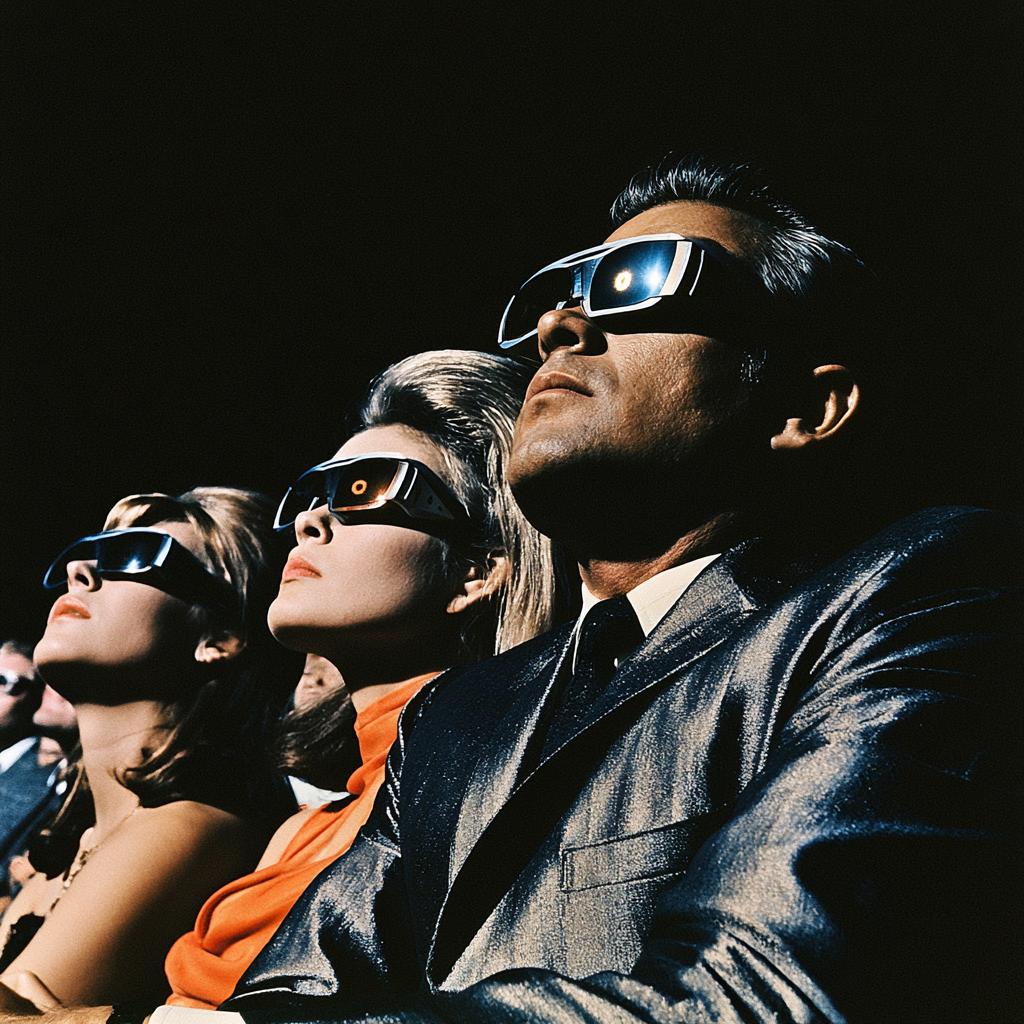
What can a total solar eclipse teach you about developing an invention? More than Noah probably should have been allowed to discover. Noah and Steven explore how successful product development depends on timing, strategic sacrifice, using good advice at the right stage, and getting your product, pricing, market, brand, and business model into alignment. Through pandemic-era invention stories, Ferrari-powered Big Mac delivery, Care Bears jackhammers, and the debut of Noah’s supervillain alter ego—The Analogizer—this episode shows why a great idea can still fail when the pieces don’t line up, and how inventors can improve their odds of reaching their own moment of totality.
Core Topics for this episode:
- Product Development Process
- Product Strategy
Key Takeaways Include:
Listen here:
Episode Blog
Inventing Is Like an Eclipse: Timing, Sacrifice, and Getting Everything Into Alignment
Apparently, almost anything can become a product-development analogy if you give Noah enough time.
T-shirts? Absolutely.
Dating? Of course.
And after driving his family from Atlanta to Vincennes, Indiana, to experience a total solar eclipse, there was really only one possible outcome: the eclipse was going to become an invention lesson too.
In this episode of Product Genius, Noah McNeely and Steven Julian explore three surprisingly useful parallels between a total eclipse and successfully developing an invention: recognizing the right moment, understanding that good advice can become bad advice when used at the wrong time, and getting all the pieces of your product and business into alignment.
Along the way, Noah also reveals his superhero—or perhaps supervillain—alter ego: The Analogizer.
Use the Opportunity While It Exists
A total eclipse is all about being in the right place at the right time.
You can prepare perfectly, buy the glasses, pack the car, and understand exactly what is going to happen. But if you arrive a day late, you missed it.
Products can work the same way.
During the COVID pandemic, Noah saw a flood of invention ideas related to masks, sanitation, and other suddenly urgent needs. Two inventors illustrate very different approaches.
One inventor had a mask concept with numerous features she wanted to develop. Some of those features would have taken substantial time.
But the core innovation was relatively simple.
Instead of waiting until every possible feature was finished, she agreed to simplify the initial product and move quickly.
The result?
She reached the market while demand was enormous.
The product continued selling afterward, but the extraordinary market window existed during the pandemic. By sacrificing some features, she was able to take advantage of it.
Another inventor faced a similar opportunity with a sanitation product.
His core concept could potentially have reached the market quickly, but he insisted on adding numerous bells and whistles—Wi-Fi, Bluetooth, and other features that dramatically extended development.
The window passed.
Years later, after significant spending on patents and development, the product still had not reached the market.
The lesson is not that products should always be rushed.
The lesson is that timing is part of product strategy.
Sometimes Perfect Later Is Worse Than Good Now
Inventors naturally want their products to be complete.
That is understandable.
The danger appears when “complete” becomes an ever-moving target.
Every added feature consumes something:
- Development time
- Engineering effort
- Testing
- Tooling
- Certification
- Software development
- Manufacturing complexity
- Capital
Normally, those tradeoffs can be evaluated patiently.
But when a market opportunity is temporary, time itself becomes one of the product requirements.
If your invention addresses a fast-moving trend, seasonal event, regulatory change, emerging technology, or sudden customer need, the opportunity may not wait for your perfect version.
That may require sacrifice.
You might sacrifice:
- Features
- Margin
- Product variety
- Packaging sophistication
- Initial production volume
- A broader launch
The important question is not, “Can we add this?”
It is:
“Is adding this worth missing the opportunity?”
Sometimes Patience Is the Sacrifice
Timing can work in the opposite direction too.
Suppose you developed the world’s greatest baseball-card organizer during a period when almost nobody cared about collecting baseball cards.
The product might have been excellent.
The timing was not.
If the market later becomes popular again, the old idea may deserve another look.
That means the necessary sacrifice is sometimes patience.
Inventors often assume that once an idea fails to gain traction, it has been permanently rejected by the market.
Not necessarily.
Markets change.
Technology changes.
Customer behavior changes.
Distribution channels change.
Costs change.
An idea that was premature ten years ago may be perfectly positioned today.
The key is distinguishing between a bad idea and an idea that arrived at the wrong time.
Good Advice at the Wrong Time Can Be Bad Advice
Everyone preparing for an eclipse hears the same warning:
Do not look directly at the sun.
Excellent advice.
Until totality.
During the brief period of complete totality, the sun is covered and observers can safely view the corona without eclipse glasses. If you follow the “never look at the sun” advice without understanding the exception, you miss the defining experience.
Inventors can make the same mistake.
They hear a legitimate piece of product-development advice and turn it into an absolute rule.
For example:
“You need a patent.”
Often true.
But patenting too early can mean spending thousands of dollars protecting a design that later changes significantly.
“You need a brand.”
Absolutely.
But building an elaborate brand before understanding the product and target customer can waste time and money.
“You need a manufacturer.”
Eventually.
But selecting a factory before you even know the product architecture, materials, or manufacturing processes is premature.
“You need product liability insurance.”
Yes—and this is one you definitely want before selling the product, not after somebody discovers an unexpectedly creative way to misuse it.
The sequence matters.
Product development is not simply a checklist.
It is a sequence of decisions where the value of one step often depends on what has already been learned in earlier steps.
Do the Right Thing at the Right Stage
One of the most valuable skills an inventor can develop is learning when to act.
The same decision can be smart at one stage and wasteful at another.
Early in development, your money may be better spent answering fundamental technical questions.
Later, the priority may shift to manufacturing.
Then intellectual property.
Then packaging.
Then insurance.
Then marketing.
The exact sequence varies by product, but the principle is consistent:
Do not let one piece of advice become so dominant that it overrides the larger development process.
Or, as Steven’s Thanksgiving story illustrates, do not keep cutting the turkey in half simply because Grandma once had an oven that was too small.
The original advice may have been perfectly sensible.
The circumstances changed.
Successful entrepreneurs understand the reason behind the rule rather than merely repeating the rule.
Everything Has to Align
A total eclipse happens because the sun, moon, and observer briefly align.
Product success requires a more complicated version of the same thing.
Your product may need alignment among:
- Features
- Manufacturing cost
- Selling price
- Target customer
- Brand
- Market size
- Investment
- Distribution
- Timing
- Marketing
- Product performance
If one of those pieces is dramatically out of position, the business becomes harder.
Noah gives a deliberately absurd example: imagine developing a Ferrari specifically for DoorDash drivers to deliver Big Macs.
Would it perform the job?
Extremely well.
Would the driver enjoy it?
Probably.
Would the economics make sense?
Not remotely.
The product is overengineered relative to the value of the task.
That is a common invention problem.
An inventor may create an extraordinary technical solution for a problem customers simply do not value enough to pay for.
The engineering may be brilliant.
The business is still misaligned.
Change the Product—or Change the Business Model
Steven then accidentally improves Noah’s ridiculous Ferrari example.
What if customers were not paying extra merely to have a Big Mac delivered in a Ferrari?
What if they were paying for the experience of being picked up in the Ferrari, driven to McDonald’s, and enjoying the novelty themselves?
Suddenly the economics might look different.
The Ferrari did not change.
The business model did.
This is an important product-development principle.
When something does not align, you have multiple options.
You can change the product.
You can change the customer.
You can change the price.
You can change the market.
You can change the distribution model.
You can change what value you are actually selling.
The goal is not to defend the original business plan.
The goal is to create a combination that works.
Brand and Customer Must Align Too
Alignment goes beyond manufacturing economics.
Your branding needs to make sense for your target customer.
Noah offers several examples that probably should never escape the podcast studio, including a percussion-grenade-branded sippy cup and a Care Bears jackhammer.
Although, admittedly, both sound interesting enough that somebody would probably buy them.
The joke illustrates a serious point.
Customers bring expectations to brands, categories, price points, colors, materials, packaging, and messaging.
A premium product with bargain-bin presentation feels wrong.
A rugged industrial product with overly delicate branding may create confusion.
A children’s product with aggressive military styling is probably targeting the wrong emotional response.
Every piece does not have to be predictable.
Sometimes unexpected branding is exactly what creates differentiation.
But the choice should be intentional.
Align Investment With Opportunity
Another critical alignment is the amount of money invested relative to the size of the opportunity.
Spending $100,000 developing a product for a tiny market is not automatically wrong.
If that small market supports a high selling price and strong margins, the economics may work beautifully.
But spending $100,000 to develop something aimed at a small market that will only pay $10 per unit is a very different situation.
Inventors need to evaluate the business as a system.
How much will development cost?
How large is the market?
How much will customers pay?
What margin is available?
How many units must be sold to recover the investment?
The closer those numbers align, the stronger the opportunity becomes.
Honesty Helps Create Alignment
One theme running underneath the episode is the importance of hearing uncomfortable information.
Noah describes situations where he has told prospective clients that he likes their idea but sees serious problems in the business model.
Some people appreciate that feedback.
They rethink the problem, adjust the concept, and sometimes return with a much stronger opportunity.
Others become angry because the feedback conflicts with what they already decided to believe.
Product development requires optimism.
But optimism without critical thinking can become expensive.
A good development partner should not simply tell an inventor what they want to hear.
The goal is to identify misalignment while it is still relatively inexpensive to correct.
The Product Genius Take
Successful inventing is not just about having a clever idea.
It is about getting enough things into alignment at the same time.
The product needs to solve the right problem.
The features need to fit what customers actually value.
The cost needs to support the selling price.
The brand needs to fit the market.
The investment needs to make sense for the opportunity.
And sometimes the timing has to be right.
You may need to sacrifice features to catch a temporary market window.
You may need to wait patiently for the market to catch up with your idea.
You may need to ignore good advice until the stage when it actually becomes useful.
The closer everything gets to alignment, the closer you get to the product-development equivalent of totality: that rare moment when the product, market, timing, and business model all come together.
And if you need help finding an analogy for any of it, apparently The Analogizer is available.
Or, read the full transcript here:
Steven Julian
Did you get caught up in all the latest astrological hype around the last eclipse? Maybe somebody found you reading conspiracy theories about it at 2 a.m Well, our show is a little bit like that. I reveal something weird at the opening of the show. Noah reveals his alter ego that I can't wait for you to hear about. And we learn how inventing is like an eclipse. Next on Product Genius.
Noah McNeely
Do you want to be a successful inventor entrepreneur?
Steven Julian
Struggling to get your product from idea to market? Well, you've come to the right place. Welcome to Product Genius, the down-to-earth podcast that explores important topics about inventing and launching new products. Noah McNeely is your trusted guide. With more than 20 years of product launch experience, he's here to help you on your journey to become a product genius. Let's get started. Here's your slightly annoying co-host, Steven Julian. Hey, that's my line. Yes, it's your slightly annoying co-host, Steven Julian. Welcome to another edition of Product Genius. Seated to my right is the intrepid producer, Jody Smith.
Seated across the table is the genius of this show because he is the head of Product Quick. Start and the main host of Product Genius, helping people get their products to market, helping ventures and entrepreneurs walk the road of... Getting their product to market. I just said that already. I'm a little messed up. It's Noah McNeely. Noah, I have a confession.
Noah McNeely
I'm all ears.
Steven Julian
I was a little distracted in my opening because I have this confession. I listened. I re-listened to our intro, which has done so well. Jody did such a great job as our producer.
Noah McNeely
It's amazing how he can make his voice sound that feminine.
Steven Julian
It's so good, isn't it?
Noah McNeely
It's very impressive.
Steven Julian
And as it starts, I was wondering if for the person who finds our show for the first time and that wonderful voice comes on and says, Are you an inventor, entrepreneur, looking to get your product to market? And I'm just imagining something like, yeah, uh-huh, yeah. Are you struggling with it? Uh-huh, yeah. Well, Noah McNeely has a, oh, man. And they get their notepad out, they get their laptop, and they're ready to take notes. I can't wait. This is going to be great. And then they listen to me, and I'm just shocked that. they're still here.
So that's my confession.
Noah McNeely
I really don't know how to respond to that.
Steven Julian
Well, good, because you don't have to, because I gave that confession because we're going to kind of talk about once in a lifetime things. I, once in a lifetime, kind of let everybody behind the curtain of my false bravado and loud, obnoxious, slightly annoying co-hosting skills to tell you my thing. And we are going to talk about the eclipse today.
Noah McNeely
Yeah. So I had the... I was able to go see the Total Eclipse with my family, so I packed the kids up and my wife, and we drove up.
Steven Julian
Did you play Total Eclipse of the Heart by Bonnie Tyler?
Noah McNeely
You know, it was being played. Every place we were, we went to eat in this restaurant in Louisville, Kentucky the night before, and yeah, it was on. Where we were actually watching, they were playing it on the speakers. There was no need for us to play it.
Steven Julian
I heard it. I did hear a stat that the streaming of that song went up by 4,000%. Yeah.
Noah McNeely
I'm sure their income has doubled.
Steven Julian
Bonnie is doing well. Thank you. Shout out to Bonnie Tyler. It was a great song for my teenage years. So you went to see The Eclipse.
Noah McNeely
Right.
Steven Julian
And you have a story about it.
Noah McNeely
Well, I'll just... Well, there's more. So we drove from Atlanta up to a little town called Vincennes, Indiana. And I want to give a special shout out to Vincennes. Beautiful town right there on the Wabash River. And it was the home of, not that this has anything to do with our topic today, but the home of William Henry Harrison, who was the shortest lived American president. He was president for 31 days and very elderly by standards of the 1800s. President when he took office.
Steven Julian
This show is just being full of random, rare, weird facts. I like it.
Noah McNeely
If it weren't for random stuff, I would be bored. Yeah, absolutely. So anyway, Vincent's absolutely beautiful town. Kind of out of the way. You probably wouldn't, you know, it's not near an interstate. It's just on the river and it's absolutely gorgeous. We had, I also want to do a call out to a restaurant where we ate. And I don't know how to pronounce this and I'm. a little ashamed of that, but it's. Bobi's Pizza, B-O-B-E. And people that are fantastic. Pizza was good. But one of the things I found interesting is there was actually two.
There's Bill Bobi's Pizza and Bobi's Pizza. And they're like close to each other.
Steven Julian
They're in a split.
Noah McNeely
Yeah. So we were talking to the waitress. Hey, what's the deal here? And she was like, yeah, like 30 years ago, there were these two brothers and they disagreed on the right recipe for the sauce or something. There's a... Very reasonable chance. she made all this up. I don't know. But so they split, but now everybody's friends. So it's all good. So now there's just these two restaurants and the, and the recipes are still different, but we went to Bobie's, just Bobie's and it was great. So we had a good time, special call out to Vincent's and all the people there.
We had a great time.
Steven Julian
I like that. And you are telling us your eclipse story because inventing can sometimes be like an eclipse.
Noah McNeely
Yes, because I analogize everything. That's one of your secret gifts. It is. If I were a Avengers villain, I'd be. the analogizer or something like that. Destroying the universe with the power of analogy.
Steven Julian
And actually, so it's...
Noah McNeely
Thanos is like a glove.
Steven Julian
So instead of... So instead of monologuing as the villain so that the hero can recover, you would just continue to- Analogy after analogy until they just crumpled into a ball. Until they're like, I can't take it anymore. And you're like, you've won. Just like- Okay.
Noah McNeely
Yes. So to get back, or actually to get to the subject of today's podcast- I just want to thank our listeners for hanging with us.
Steven Julian
It will pay off in the end, I swear.
Noah McNeely
I'm going to- It will be like a good lesson. I'm going to relate inventing to an eclipse in a couple of different or three different ways. So one, you know, we had to make some sacrifices to get to the right spot at the right time. You know, there was this, you know, we could drive all the way there. You know, I had to get up early. You know, actually friends of ours, we actually drove up the day before, but some friends of ours actually got up at four o'clock in the. morning.
And drove from Atlanta to Indiana. So they made that sacrifice. So it was like a little vacation for us. So when I'm on vacation, I like to sleep in. I like to have a leisurely, slow breakfast. And who doesn't like to do things like that?
Steven Julian
But we had to get up early.
Noah McNeely
I had to get everything packed, get in the car, go get all set up, drive, hurry, yada, yada, yada. All the sacrifices, drive for hours to get there and set up and be ready. It occurs to me that sometimes you have to make sacrifices to get to the right place at the right time with your invention process as well. And sacrifices can sometimes be what you give up in terms of the invention. So we can all remember the pandemic, I'm sure, unless, you know, that's...
Steven Julian
I don't like to speak of it.
Noah McNeely
Unless you've dug this tape out of some sort of archaeological file thousands of years from now, you remember the pandemic. During the pandemic, I and a lot of people in my industry, we just got inundated with people who had products related to the pandemic. I saw more. ideas for face masks than I can possibly remember. And almost all of them were pretty much just a face mask. But with some unique, it's got this, it's got that.
Steven Julian
It uses spaghetti as the loops, so it's also a food source.
Noah McNeely
Right, right. So you never know. So in any event, having the right idea at the right time was what these ideas were all about. So I want to talk about two separate inventors. I'm not going to say specifically what they came up with. This one lady had this face mask idea, and she wanted all these things on it. And I was like, you know, these types of things. Some of the things you want, they're going to take a long time to develop. But the core of your idea is this part over here.
That's real easy. So we were actually, I was able to convince her that, you know, now's the time to strike. You know, the eclipse is coming. Got to be at the right place at the right time. When that moment of totality occurs, when everything goes, you know, when everything's perfect, everything's lined up and the world goes dark. Bad analogy, but. During the middle of the pandemic, you can get your product out really quick. So we did that in her case, and she was at the right spot at the right time.
Steven Julian
And was willing to make the sacrifices of some of the features that she may have wanted, but she put those aside so she could get it to market at a time when everybody wanted to buy face masks. And of course, she didn't know that a year and a half later, no one would care about, or 99% of the people then would go back to not caring about face masks because they didn't need them.
Noah McNeely
Yeah, well, she actually does, you know. Of course, you do still see people in face masks. So she actually does still sell this product, just in not as many as she sold at first, which she expected. So she's like, yeah, it's a good, healthy little business.
Steven Julian
Yeah, I like that.
Noah McNeely
Good. And she got on the market. She did it quick. Right spot, right time. She was ready for that eclipse. Another gentleman. Okay.
Steven Julian
Same time frame.
Noah McNeely
Same time frame. However, he had this idea for, let's call it a sanitation, a piece of sanitation equipment. And he also wanted all these bells and whistles on it. I'm using examples that aren't really what was there because I don't want him to call me up and yell at me for talking about him on the air. But it's got to have Wi-Fi and Bluetooth and this and that and the other.
Steven Julian
And a cheese hammer attached to the side.
Noah McNeely
Everything you want to do, sir, that's a three-year development cycle to do all this stuff. you're trying to put into this thing. The pandemic is going to be over by then. He's like, no, no, it's got to do it. It's got to do it. It's got to do it. I'm not willing to sacrifice any of this stuff. But look, the core of your idea is this. You can get on the market in three months with this and make a big splash. That's still a huge improvement over anything that's out there.
No, no, it's got to have this and this and this and this. So, you know, we went down that path. And sadly, he is still, you know, he's paid tens of. thousands of dollars to get all these patents on all this stuff. Still not on the market, unfortunately, when he could have been there. He could have made the sacrifices to see the Eclipse, to see his product on the market. Instead, it's like he showed up in the zone of totality a day late. So where's the Eclipse? Well, you missed it.
Or he almost got there and you could see a partial Eclipse, which is still kind of okay, but it wasn't what he was shooting for. He's not on the market now. He may someday make it to the market. I don't work with him anymore because... Of a variety of reasons, but perhaps because of my honesty. And some people don't appreciate honesty.
Steven Julian
So I know I clearly get the lesson of possibly needing to make some sacrifices to get your product to market. I think there's another lesson there of kind of paying attention to what's going on around you. Your two references that you gave are in the middle of the pandemic. So that's an extreme example, but every single person who's getting any kind of product needs to kind of know what's going. on in the market. I'll give you a great example. I grew up collecting baseball cards in the early 80s. Baseball cards had this massive spike into the late 80s, early 90s, and then they kind of went away.
They were there. There was always cards, but the collection craze stopped. And they went back to being a small niche until... It kind of came back again almost as an investment idea and there was this huge flood. So you got to pay attention to what's going on in your particular market that you're trying to get into. And sometimes you can see the eclipse happening in your market, right? That's kind of what you're saying.
Noah McNeely
Yeah, absolutely. And sometimes it's important to recognize, let's take your baseball card example here. So in that lull period of... What, a couple of decades, right? Yeah. So maybe you had this great idea for the, it's the holy grail of baseball card organizers. Never in the history of the world will there ever be a better product for organizing baseball cards. That may not, probably not have been the best time to release that. Whereas now, I don't know anything about baseball. cards. I'm assuming you're telling the truth here. Boy, the look of cautious.
Well, as I started talking, I began to get a little concerned that, hey, is this really true? Is he pulling my leg with baseball cards?
Steven Julian
Got some trust issues on the show.
Noah McNeely
So a couple of things. One, maybe you did try to launch that idea 20 years ago and got no traction on it. Right. Now the eclipse is here or everything's starting to line back up. Right. Maybe try it again. Maybe now's the right time. Maybe now's when the iron is hot.
Steven Julian
You still have the idea. You kind of shelved it, bring it back out and try again. So yeah, that's absolutely. All right. So that kind of covers the first thing. Be aware that you might have a right time, right place scenario and pay attention to those and be willing to make sometimes sacrifices, sometimes different decisions.
Noah McNeely
Right. And it could be sacrificing a lot of different things. Maybe you sacrifice some of the amount of margin you can make on that product in order to actually make more money by achieving a bigger market share. You know, sometimes it. can be sacrificing those bells and whistles. Sometimes it can be sacrificing, like in the baseball card thing, some patience. Let's wait for the time to be right. You know, it could be any number of things, but just be open to that.
Steven Julian
All right. Second lesson you learned from the Eclipse. that applies to inventing.
Noah McNeely
Yes, so the right advice at the wrong time can still be bad advice. So what did everybody tell you leading up to the event, to the eclipse? It's like, don't look at the sun, right? Okay, so what if they told you that after you've been staring at the sun for 30 minutes? Well, A, still good advice, but now your eyes are already damaged, right? Or what if they told you that with so much emphasis that you're like, You know, you get to the equips and even in that four minutes when it's safe to look at the sun and you can see this wonderful thing that's just remarkable, you still don't look because you're like, oh, they told me not to look at the sun, so I'm not going to do it.
Those can both be bad. And, you know, I see you'd miss out on that experience if you didn't look at the sun because of that. Because that is taking that piece of advice in total isolation. You're missing the except when aspect of the advice. And inventors, I think, will do the same thing, or I don't think, I know, I've seen inventors do the same thing of, you know, they will take a piece of advice. Hey, they may just get it too late or whatever. They listen to it too late. That's, you know, that can happen.
But a lot of times they will take that piece of advice and that will, that one piece, that becomes their driving mantra. It's like, you got to get a patent. Well, that may well be true. And for a lot of inventions, that is true. And that's a good idea. However. That's sort of secondary to developing your product. I mean, you might, you might get, I've met people that they go out and they get that patent like right away and they patented the wrong thing. So yes, it was good advice, but they executed that advice at the wrong time.
You got to have a. great marketing plan, a great brand, et cetera. I've met people that do all that up front before they even really have a product or they know who they can sell that product to or et cetera. So again, great advice, wrong time. You got to find a factory to manufacture this thing. Some people are like, I want to know who I'm going to manufacture this with before we even know what it's going to be made out of. Again, great advice, wrong time. Now, this next one's bad on the other end.
You've got to get product liability insurance. You don't want to be told that after someone is suing you because they misused your product, which is typically what happens. It's not because you made an unsafe product. It's because somebody chose to use it in an incorrect way. You can't design for stupid. It's what I tell people sometimes. And, uh, I don't know if I've told this on the show before or not, but, uh, we got a scoop. We may, I may have, I've told this to a lot of people. So if I've, anyway, I worked with a guy who used to be. a employee of the Electrolux years and years ago.
And they once get Electrolux once got sued because this gentleman decided, you know, he was, he was refurbishing a 1960 something Corvette and he decided it would be great. A great idea. To use the Electrolux vacuum cleaner to pull the gasoline out of the engine of the car.
Steven Julian
No, he did not.
Noah McNeely
He absolutely did. It's a terrible idea because the vacuum cleaner has sparks and et cetera. So, and you're aerosolizing gasoline. So, unfortunately, the gentleman did not survive. Neither did the car. Neither did the garage. Neither did the house. So, in any event, you got to have product liability insurance to cover things like that. that really is not your fault. So, anyway, sidebar. Good advice, but that's the advice you want to take before you start selling product.
Steven Julian
So I think you've committed a podcast sin here. That is a great story to illustrate your point, but I will forget the point because that is such a fantastic story and fantastic in the way of fantastical. Like seriously, that really happened?
Noah McNeely
I'm going to put, well, I will be honest. The person who told me. the story did drink a lot. So it may have been embellished and or slightly untrue, but it sounds – It wasn't the – Sadly, it blew up.
Steven Julian
It was only the garage.
Noah McNeely
Yeah, so the entire state of Ohio is gone. You know, it may have been exaggerated a little bit.
Steven Julian
Well, and also the Electrolex reference does tell us that this probably happened, you know, 80s, 70s, somewhere around. So it's been around.
Noah McNeely
If it happened at all.
Steven Julian
And if you have told that story on this show, then I apologize because I don't remember it. And if one of our listeners can find it and reference it on a show and put it – Get in the contact us form at productquickstart.com.
Noah McNeely
First person who knew that, I'll give you a free t-shirt.
Steven Julian
Yeah. Yes. Yes. Speaking of which, our team t-shirts, which may be in the merch store at some point.
Noah McNeely
Possibly. I was imagining.
Steven Julian
We got to get a good marketing plan and we got to get that in place and a business plan. You're right. Sorry. I was giving the good advice at the bad time.
Noah McNeely
I'm going to correct for the sin, the. podcast. sin there and use another analogy.
Steven Julian
The analogizer strikes again.
Noah McNeely
Good advice at the wrong time. So let's say you got a kid and you tell your kid, you've got to wear pants. Good advice, right? Well, it's too late to tell him if he's walking around McDonald's in his underwear, right? Yes, correct. So you missed it. No shorts, no shoes, no service. That's what the sign says, but pants are implied. So you should be wearing pants. On the other end, you could tell your kid, you got to wear pants all the time. Maybe he takes it a little too literally, a little too strong, and then you find him wearing pants in the shower.
So either side, good advice, wrong time, or too much emphasis. You got to be careful.
Steven Julian
Yeah, we got it. Yeah, absolutely. Sometimes you need to clarify the good advice to make it even more.
Noah McNeely
My son, if you're listening, you never did either of those. So don't think it's about you.
Steven Julian
Right. Okay. So inventing like an eclipse, you got to be at the right place. Sometimes you got to be at the right place at the right time, be. willing to make those sacrifices. Right advice can still be bad advice if it's given at the wrong time. And then. You finished with a car tip, something about alignment. And a cough.
Noah McNeely
Yes, and a cough. So you need to align your air passages with your lungs. Yeah, so what Eclipse is really about? It's really this sort of kind of almost bizarre cosmic coincidence where these things come into alignment. The sun and the moon and where you're standing on the Earth is in a direct line for a brief moment of time, three to four minutes, if you're lucky. It's just perfect. You know, the moon covers up the sun. It's like it's nighttime, except there's this really bright white ring around the moon. You're like, yeah, I can only imagine like, you know, if I were a caveman picturing this. and all of a sudden they're like, what have we done to anger you, son?
Please come back. Please come back. And then four minutes later starts to come back and then, you know, whatever they did to try to appease the sun, that kind of becomes their religion for the next hundred years. So we. killed a rabbit and the sun came back. So now we're killing a rabbit every day.
Steven Julian
I peed behind a different bush and now we have to...
Noah McNeely
Exactly. For us, we ate Skittles and the sun came back. Oh, good. But we're not making that a spiritual custom.
Steven Julian
Well, and remember, if you ate Skittles while the sun was gone and it came back, you'd have to wait for the sun to be gone again to eat those Skittles.
Noah McNeely
To be fair, we ate Skittles all day.
Steven Julian
Oh, okay. Yeah. And Bobo's Pizza.
Noah McNeely
And Bobo's, Bobay, Bobo. I really don't know, but it was good pizza. Yeah. Okay. So things have to be in alignment in your product development process too, in your invention process. And that, that means a lot of different things. So your product cost and features have to align with the size of the property. I once had a, had this non-client that I'm going to give a metaphor instead of telling exactly what they were doing. Yeah, I know.
Steven Julian
Analogies only analogizer.
Noah McNeely
I know. No. Well, I don't even know.
Steven Julian
Can you turn a metaphor into it?
Noah McNeely
I don't even know the difference anymore.
Steven Julian
That's. another show. Go ahead. Give your illustration.
Noah McNeely
So this had absolutely nothing to do with the thing I'm about to say, but imagine basically they wanted to develop a Ferrari for DoorDash drivers to deliver Big Macs with.
Steven Julian
Got it.
Noah McNeely
Yeah. So would that get the Big Mac there? Absolutely. You get it there fast. Would that DoorDash driver have a great time delivering that Big Mac? Absolutely. Are you willing to pay an extra $100 for your Big Mac to supplement the cost of that Ferrari? No way. No, absolutely no.
Steven Julian
Or would the DoorDash driver be willing to take a loss of $70 per delivery to deliver that? It's a great experience, but it doesn't.
Noah McNeely
Either way, yeah. So there's probably a small group of people that would pay that extra $50 or whatever for that Big Mac, but it's not enough to justify it. So anyway. So sometimes, you know, you have to align your product costs and features with what the market really needs in terms of the cost of that product. So, you know, all the bells and whistles, and we talked about this earlier, maybe too many for the product's purpose.
Steven Julian
By the way, just as you're kind of collecting your thoughts there. to finish your point and your analogy, Mr. Analogizer, I don't know if I'd say Mr. Analogizer, but...
Noah McNeely
The Analogizer.
Steven Julian
So I would... I would tweak the idea to align it better. I would pay $50 to be picked up by the Ferrari, driven to McDonald's, get the Big Mac, drive the Big Mac on the way back to my house. That I would pay.
Noah McNeely
See there, now you get into my next point. So what did I tell this guy? is that I told him the truth. It's like, hey, look, I like what you're trying to do. I like your idea. You're trying to solve a problem. Here's the issues with it from a business plan standpoint. You need to solve these problems. And if you can, then let's talk again. So that would have been a solution. So, okay, well, I'm changing the business plan instead of selling the Ferrari. I'm selling the experience and the Ferrari becomes a way to make money.
Okay, well, that could work. That would have been a different discussion. Unfortunately, and if you listen to this show, you know that I always. try to be honest. I tell people, I call it the way I see it. And people that listen to this show. I think by and large, they would appreciate that. And about half the people I have to give this, you know, bad diagnosis about their product to, they're very appreciative. And a lot of them, some of them go off, they fix the problem, they come back and we do business together.
The other half get really pissed off about it. And they tell me, you know, I don't know what I'm talking about, which sometimes I don't. I'll acknowledge that. And then, you know, I never hear from them again or whatever. And this was one of the cases in this particular instance. I did not work with this person because they did not appreciate what I was telling them. And to the best of my knowledge, they never did anything with it. But to be fair, I don't always call things right. There are things that are in that gray area of, I don't know if this can make it or not.
I'm still going to tell you that here's the potential challenges I see here. I'm willing to proceed with you. I'm still willing to work with you, but you need to understand here's the risks that could happen.
Steven Julian
So in the analogy of the alignment, in order to get your product to market and to build a successful business, everything has to line up to create that totality eclipse that you got to experience in Indiana after enjoying Poe Bay's pizza. I don't know why you didn't go to Bobe's Pizza House as well to double up. But anyway, the analogy of the eclipse is that total eclipse, that being in totality, that's like everything lines up perfect. And you bring your product to market and build a successful business. There are also other, there are also, well, we got to a partial, we're getting something.
We got Gen 1 on the market. But if you don't get right alignment for all that kind of stuff, you're going to go, well, the eclipse never happened. You didn't get everything lined up. Right.
Noah McNeely
Or it wasn't that impressive or whatever. So back to the caveman, if it were only a partial eclipse, he might not even notice. There's a big difference between a 50% eclipse. and a totality, but there's not that big a difference between a half eclipse and nothing because it's just a cloudy day and then you go about your business. But I think that totality zone, that zone of totality, that's like everything is perfect. That's your best opportunity. To extend the analogy, you can still have a successful business outside of that zone.
It's just, I think your odds of success, you know, kind of diminish the further from it you get. And there are a lot of, we could talk all day about different things that have to align. So I gave the example of your, really your product cost with what the market can justify for that. Other things, your brand and your target market need to align. You know, you can't have...
Steven Julian
You can't sell cheese hammers to people who are lactose intolerant.
Noah McNeely
Well, there's that. I was going to say, who's going to buy the...
Steven Julian
By the way, that's my quota of cheese hammers references. I'm just trying to keep it in the zeitgeist.
Noah McNeely
So no one's going to buy, probably not many people are going to buy the percussion grenade sippy cup. Now, I wrote. that down earlier, and then I got to thinking about, it's like, actually, that sounds pretty freaking awesome. I would buy... The Percussion Grenade branded sippy cup just because it's awesome. So, you know, that may or may not be a good analogy. On the other end of the spectrum, probably not a lot of people would buy the Care Bears branded jackhammer. Although it would be pretty amusing to go by a construction site and see all these big burly people using Care Bears jackhammers.
That's probably not a big market.
Steven Julian
As the furry population rises and gets into the trades.
Noah McNeely
Well, that, you know, exactly. So again, maybe it's just not the right time like the baseball cards.
Steven Julian
Yeah, getting right. 20 years.
Noah McNeely
Maybe all construction site workers will be wearing furry costumes.
Steven Julian
Yeah. And using CareBear brand.
Noah McNeely
It might even be a mandated law. Yeah. For all we know. Yeah. Who knows? The world can change.
Steven Julian
Not if I can help it.
Noah McNeely
Sorry. So other thing, you know, size of the market to the size of your investment. Now, if you're, you know, invest $100,000 developing something for a very small market, they can't afford it. You. know, you know, it's, there's so many things that have to align. So that's really the, the ultimate analogy of. The Eclipse and product development and invention is, you know, the closer you can get things into. alignment is, and it's more complicated because there are a lot of different ways to slice inventions that have to align. But the more of those you can get in alignment, the greater your chance of success.
Steven Julian
The story behind how this show came about is Noah sent out an email either right before or right after he had had this wonderful experience. He was like, clearly we have to do a show and tie it in with the Eclipse. Because the eclipse doesn't happen all that often. And what's interesting is your experience was in Indiana. We experienced it here in Atlanta and my wife and I and our youngest son, we kind of, and my oldest son was around too. And we were like, you know, hey, it's happening. And so we walked outside.
There was a difference. It wasn't near as much as it had been when we went to the North Georgia mountains a few years ago and experienced. totality. So you're right. It is a different thing. Okay. So I'm glad you took advantage of this, you know, once in a lifetime, once in a...
Noah McNeely
You almost said Blue Moon, didn't you?
Steven Julian
I did, but then, yeah, pre-show, you corrected me. And I'm sure there's an analogy for it, too. But I'm trying to keep the analogizer at bay. So instead, I believe you need to sum up your points today.
Noah McNeely
Yes. So to sum up the invention slash eclipse metaphors, number one, sometimes you have to sacrifice to get to the best opportunity or the best chance of success. Getting to this eclipse, if we missed it, yeah, we'll have other opportunities. I can wait. I think next 20 years is there's going to be another one in Montana, but that's a much bigger sacrifice to drive all the way to Montana. And plus, I might be dead by then. Who knows? Hopefully not, but we'll see. Or I could fly to Europe in three years and see one.
Steven Julian
I do have a good friend who runs a travel company. And they're planning the next one in Egypt. So they are doing a tour. I believe it's. in two years. So yeah, it requires more sacrifice now.
Noah McNeely
For most people, it's much harder to get to Egypt than to get to Indiana. Most people listening to this show, it's probably harder to get to Egypt than to get to Indiana. So number two, good advice is not always good if you don't use it at the right time or you overuse it at the wrong time. Again, I see inventors make that mistake a lot and I have to try to get them back on track. And then last and the most obvious one about eclipses is alignment. The more things you align with, and this is with any business or anything you do, the better your chance of succeeding is.
And you got to think about your business, your invention, your business from all the different angles you can look at it. Am I marketing it to the right people? Is the price point right for that market? And then the functional things, does it work, et cetera. All these things coming into alignment, the closer you are to the perfect alignment, the better your success chance.
Steven Julian
In honor and respect of the Analogizer, your new. alter ego that you've brought on this show, can I try to give an analogy and a story, an allegory, if you will, to sum up the last two points you made?
Noah McNeely
Absolutely. All right.
Steven Julian
There's a great story told of this young lady who's being taught, who's hosting Thanksgiving dinner for the first time. And she's got her mom there to help her. Her grandmother's also there. Her grandmother had hosted Thanksgiving dinner for years. Her mom, of course, had hosted for years. And this is the first time the young daughter is going to be hosting Thanksgiving dinner for the entire family. And her mom is helping her. and she asks her mom about the turkey. and her mom says, well, we cut the turkey in half and then we put it in the...
Pan this way and put it in the oven. And the daughter later is saying, mom, why do we cut the turkey in half? I don't get that. I didn't find that in any of the cookbooks I was doing and referencing. And mom goes, well, that's the way my mom taught me. And so that's the way we've always done it. And so she decided, I don't know if it was a few months later or whatever, but she was talking to her grandmother and she goes, by the way, grandma, I did the turkey and I was so cool to host Thanksgiving dinner and be kind of head of it.
Let me ask you, why did you cut the turkey in half? And her grandma said, well, sweetie, at the time in the house we were in, that was the only way it would fit in the oven. So alignment, there was an alignment there and that alignment was no longer needed. The alignment things changed and that advice became bad advice because you don't need to cut the turkey in half. Anyway, that's a, that's a story. I can't remember where I heard that story, but I was thinking of that as you were summing up.
I'm just trying to steal your thunder and just trying to beat the analogizer at his own game.
Noah McNeely
It does remind me of another joke slash anecdote I heard about Thanksgiving. So you know what a turducken is?
Steven Julian
I do. Thanks to John Madden.
Noah McNeely
It's a, I guess a duck inside a chicken, inside a. turkey and all cooked. And so apparently this. Family was cooking that, but they didn't tell the youngest daughter who was actually preparing the meal. And then she goes to serve it and then the chicken kind of plops out of the turkey. And then the grandma goes and says, Sally, you cooked a pregnant turkey. And I'm sure that's just a joke, but it's a pretty funny one.
Steven Julian
Nice.
Noah McNeely
For those who don't know anatomy, turkeys do lay eggs. They do not give. Live birth to chicken.
Steven Julian
And now we're on this contest to see who's going to get the last word. because if you're going to do that, one of my favorite jokes is, and I'll butcher it, I'm sorry, but an old Norm MacDonald joke that he had about Thanksgiving. He goes, in Thanksgiving, I need glasses to see my family, specifically two glasses of scotch. So anyway, so great show about the eclipses. If people want to hear your analogy of the day or your analogy of the week or see if the analogizer can help you bring your product to market, where can they go and what can they do?
Noah McNeely
Best to go to productquickstart.com. and you can use the contact us form. Just tell me a little bit about what you want to talk about. There is also a self-assessment form, which actually gives me a lot more information to prepare for a call with you. And, you know, we'll get on the phone and we'll talk about it.
Steven Julian
Fantastic. The other thing people can do is, of course, listen to all these episodes. Noah does these episodes as an educational tool, as a give back to the inventor entrepreneur community. Check out past episodes, learn more about bringing your product to market, avoid some of the pitfalls. Get some good advice. It's all on there for you. We also encourage you to check out JodySmith.com if you want to get into podcasting for yourself. Maybe one day you can take on the analogizer himself. Go to JodySmith.com. He helps people podcast. And me, I'm just a slightly annoying co-host.
I'm also an independent financial advisor, but that's all compliance will allow me to say. So for all of us around the table, we hope you enjoy your journey and get farther in your journey of bringing your product to market here. On Product. Genius.
Noah McNeely
Product Genius is brought to you by Opu Probiotics. Pre and probiotics you can pour directly on your tongue in delicious mint and mocha flavors. But the taste is just the beginning.
Steven Julian
With Opu, you can see improved digestive function, boosted immune system, easier weight management, improved mental health, and much more.
Noah McNeely
Try today at GetOpu.com. That's GetOpu.com.