Product Genius, the Podcast for Inventors, Entrepreneurs, and Startups
Honest advice for inventors—with obscure cultural references included at no extra charge.
Episode
221
From Nuclear-Powered Submarines to Water Fountains with Nasoni Founder Steve Waddell
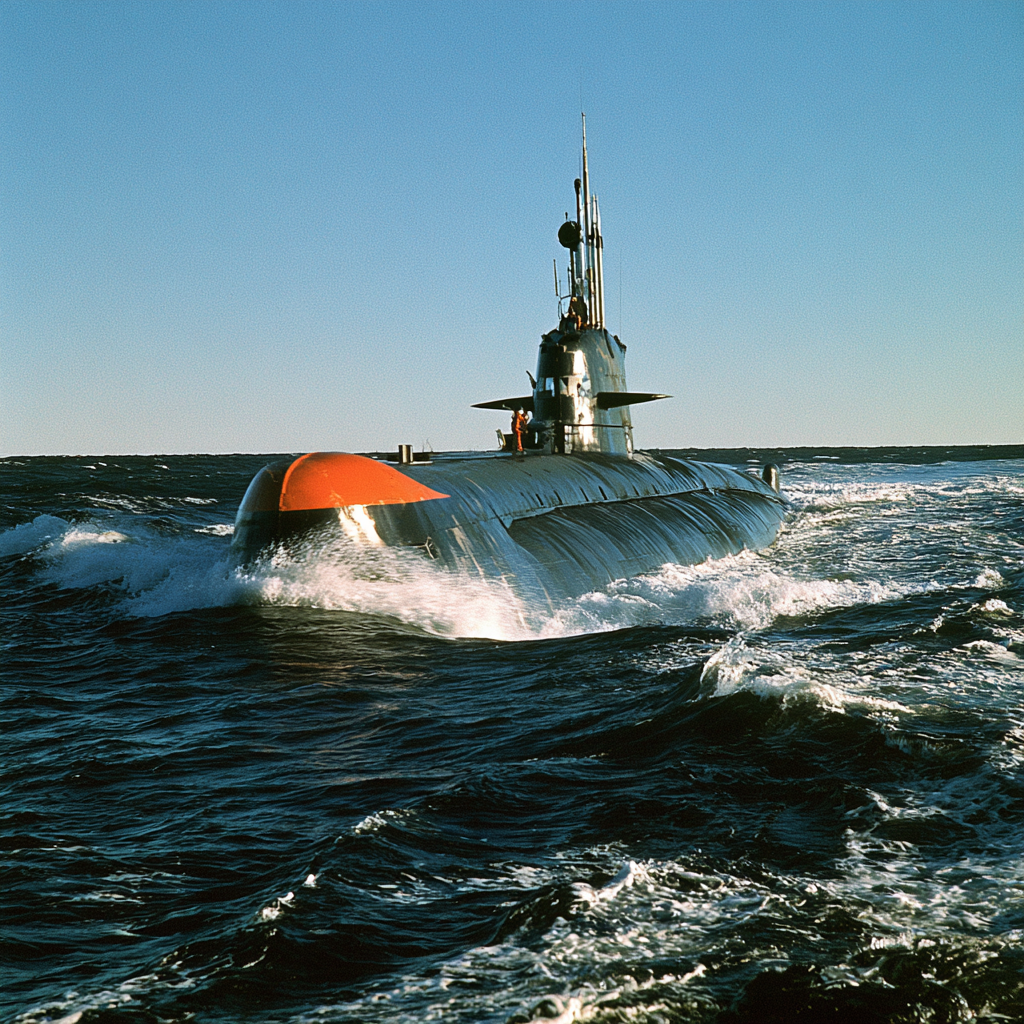
What can building nuclear-powered submarines teach you about developing an invention? Quite a lot, apparently. Noah and Steven welcome Nasoni founder Steve Waddell back to Product Genius to explore how disciplined product development turns risky ideas into valuable businesses. Steve shares the unlikely journey from a garage-built fountain faucet to NIH-funded accessibility technology, why inventors often patent too early, how to decide between licensing and launching, and why bringing in the right experts can save enormous time and money. It’s a fascinating look at entrepreneurship, strategic pivots, and the step-by-step process behind turning a clever idea into something people can actually use.
Core Topics for this episode:
- Product Development Process
- Entrepreneurship
Key Takeaways Include:
Listen here:
Episode Blog
From Nuclear Submarines to Startup Success: Building Better Products Through Process
Great inventions often begin with a simple question: why does this have to work this way?
For Steve Waddell, founder of Nasoni, that question came while thinking about something most of us do every day—rinsing after brushing our teeth. Instead of cupping water in his hands or awkwardly leaning under a faucet, Steve wondered why a bathroom faucet could not also function like a drinking fountain.
That small observation eventually became Nasoni, but the path from idea to product was anything but simple.
In this episode of Product Genius, Noah McNeely and Steven Julian talk with Steve about developing Nasoni, winning startup competitions, navigating manufacturing, pivoting during COVID, securing major NIH funding, and turning years of experience into a step-by-step product development framework.
The biggest lesson is not about faucets. It is about process.
Ideas Are Cheap. Execution Creates Value.
Most inventors begin with excitement. That is useful, but excitement by itself does not reduce risk.
The real work begins when an idea is tested, refined, prototyped, validated, engineered, manufactured, branded, and launched.
Steve’s product development philosophy centers on moving deliberately from high uncertainty toward higher value. Every stage should answer important questions and reduce the amount of risk attached to the product.
That sounds obvious, but inventors frequently reverse the order.
They spend money on patents before the design is mature. They build expensive prototypes before validating whether customers care. They create branding before deciding exactly what they are selling. They commit to manufacturing before understanding what the market actually needs.
A disciplined process helps prevent those mistakes.
Patent at the Right Time
One of the strongest lessons in the conversation concerns patents.
Many first-time inventors assume the patent should come immediately after the idea.
It feels logical: protect the invention before anyone can steal it.
The problem is that early concepts often change dramatically during development.
An engineer may discover a simpler mechanism. A prototype may reveal that the original geometry does not work. Customer feedback may push the product toward a different configuration. Manufacturing limitations may require a completely different approach.
If the patent was filed too early, the inventor may have spent thousands of dollars protecting a version of the product that will never exist.
Steve’s process recommends delaying the major patent investment until the concept has matured enough that the inventor understands what is actually worth protecting.
A provisional patent can create a useful window while development continues, but even that step should happen strategically rather than reflexively.
At Product Genius, this is a recurring theme: intellectual property should support product development, not dictate it.
Prototype to Learn, Not to Impress
Steve began Nasoni with a basic proof of concept assembled from readily available parts.
It was not beautiful.
It did not need to be.
Its job was to answer one question: could the fountain concept actually work?
That is exactly what an early prototype should do.
Inventors sometimes feel pressure to make the first prototype look like a finished product. That can waste enormous amounts of money.
Early prototypes should be inexpensive experiments whenever possible.
Can the mechanism move?
Will the water flow correctly?
Does the geometry make sense?
Can the user reach the controls?
Once those questions are answered, the next prototype can address new uncertainties.
This layered approach lets the inventor buy knowledge gradually instead of placing one giant bet.
Know When to Bring in Experts
Steve’s background is unusually technical. He spent decades working around nuclear-powered aircraft carriers and submarines and had extensive experience improving complex processes.
Yet one of his strengths as an entrepreneur is knowing what he does not know.
When he needed product engineering, he worked with Noah and Product QuickStart.
When he needed specialized grant-writing expertise for an NIH proposal, he hired someone experienced in that exact area.
When his accessibility project required clinical expertise, he collaborated with researchers and clinicians.
Being technically capable does not mean doing everything yourself.
Strong entrepreneurs identify which work they can perform effectively and where an expert can dramatically reduce risk.
That is very different from outsourcing every task. The entrepreneur still needs enough understanding to manage the process and evaluate the work.
The goal is not independence. The goal is intelligent collaboration.
Pivot When the World Changes
Nasoni launched into a challenge nobody could have reasonably planned for.
Its inventory arrived around the beginning of 2020.
Then COVID hit.
Trade shows disappeared. Events were canceled. Marketing plans evaporated. Money intended for growth had to support basic operations.
This is where many entrepreneurial stories end.
Instead, Steve looked for another path.
A relationship with researchers at Old Dominion University led to an entirely new application of Nasoni’s technology: helping people with spinal cord injuries use faucets more independently.
That idea evolved into a sensor-enabled system with options such as voice activation, motion sensing, temperature control, and even eye-gaze interaction.
The project eventually received a Phase I NIH grant and then more than $2 million in Phase II funding.
The pivot did not abandon Nasoni’s original concept.
It expanded the value of the underlying technology.
That is an important distinction.
Good pivots are not random changes made because something became difficult. They use existing knowledge, technology, relationships, or capabilities to solve a newly recognized problem.
Think Beyond the Product
Steve’s experience eventually led him to develop a broader framework he calls value-driven product development.
The idea is straightforward: each stage should increase the value of the opportunity while reducing uncertainty.
That means thinking beyond engineering.
A product business also needs:
- Customer discovery
- Market validation
- Intellectual property strategy
- Licensing decisions
- Prototyping
- Business-model development
- Branding
- Trademark decisions
- Manufacturing planning
- Launch strategy
- Customer feedback
These topics are frequently taught separately.
That can create a distorted picture.
A branding expert may understandably make branding sound like the most important step. A patent professional may focus heavily on intellectual property. An engineer focuses on making the product work. A marketer focuses on customer acquisition.
The entrepreneur has to see the whole system.
That is why sequence matters.
The question is not simply, “Do I need this?”
It is also, “When do I need this?”
Know When Licensing Makes More Sense
Not every inventor needs to build a company.
That is another important decision Steve includes in his framework.
Once an invention has been developed far enough to understand the opportunity, the inventor should deliberately evaluate whether to:
- License the technology
- Build the business
- Partner with another company
- Continue development
- Stop entirely
Licensing can be an excellent option for inventors who do not have the capital, time, skills, or desire required to build manufacturing, marketing, distribution, and operations.
There is no prize for choosing the most difficult route.
The goal is to find the path that creates the best opportunity for the inventor and the product.
Build Something That Matters
Perhaps the most interesting part of Steve’s story is how his definition of success evolved.
Nasoni began as a convenience product.
It still provides that benefit.
But its technology is now being developed to help people with serious physical limitations gain greater independence.
At the same time, the fountain feature can dramatically reduce water consumption compared with running a conventional faucet at full flow.
Those opportunities were not necessarily obvious on day one.
They emerged because the product continued evolving.
That is one of the best arguments for treating product development as a process rather than a single act of invention.
Every stage teaches you something.
If you remain open to those lessons, the final opportunity may be larger—and more meaningful—than the original idea.
The Product Genius Take
Inventors love the moment of inspiration, but businesses are built in everything that happens afterward.
A strong process does not eliminate uncertainty. It helps you confront uncertainty in the right order.
Validate before spending heavily. Prototype to learn. Patent when you know what is worth protecting. Bring in experts where they add real value. Stay flexible enough to pivot when new opportunities appear.
Most importantly, remember that product development is not simply about reducing risk.
It is about converting risk into value—one smart decision at a time.
Or, read the full transcript here:
Steven Julian
Have you ever wondered what it would be like to develop a nuclear-powered water fountain? Well, you might be thinking about it, but that seems impossible. But both of those topics will come up, and a lot more, when we talk to the founder of Nasoni, Steve Waddell, next on Product Genius.
Steve Waddell
Do you want to be a successful inventor entrepreneur? Struggling to get your product from idea to market? Well, you've come to the right place. Welcome to Product Genius. The down-to-earth podcast that explores important topics about inventing and launching new products. Noah McNeely is your trusted guide. With more than 20 years of product launch experience, he's here to help you on your journey to become a product genius. Let's get started. Here's your slightly annoying co-host, Steven Julian.
Steven Julian
Hey, that's my line. Yes, indeed, it is Steven Julian, your slightly annoying co-host. Welcome to another hopefully one day award winning edition of Product Genius. With me as always, sitting in the producer's chair is Jody Smith. But more important than that, across the table from me is the host of Product Genius. He who makes it all go round when it comes to quick starting products. and being a genius of helping people get their products to market. It is Noah McNeely from Product Quick Start. Welcome to your own show.
Noah McNeely
Well, thank you. It's good to be here. And you know, when you say he makes things go round, I think about, you know, that I'm kind of in shape and that shape is round.
Steven Julian
Yes.
Noah McNeely
So thank you for bringing that up.
Steven Julian
I am the king of round shapes when it comes to body shapes. But yeah, so we are in your lair again here at Product Quick Start. And we've got a guest on this show. I'm very excited. A two-time appearing guest on this program.
Noah McNeely
And he keeps doing such wonderful, cool things that we had to bring him back.
Steven Julian
He is doing a new cool thing, and we want to talk about that new cool thing, but we're going to talk about all the things he does. It is my pleasure to introduce into the studio and into the show, Steve Waddell with Nasoni. Steve, welcome to Product Genius.
Steve Waddell
Hello, Steven. Hello, Noah. I'm honored to be here. Thank you for the invite. Yeah, absolutely.
Steven Julian
Now, we are going to talk. about the new thing that you're doing, but before we do that, let's talk about, let me just let you tell everybody about Nasoni and your company and what you guys do and what you've been doing for a while now.
Steve Waddell
Absolutely. I'm happy to. So, I'll start, really, Steven, with a question. When you go to rinse your teeth after you brush, do you cup your hands, use a cup, or tilt your head?
Steven Julian
I cup my hands.
Steve Waddell
You know, I used to do that, but then I started tilting my head under the faucet, and I got really tired of doing that. And so I decided there's got to be a better way. And one day I ran across a video of a little girl over in Rome, and she was drinking from a fountain called a Neistoni. And these things sit on the street side. They look like a fire hydrant. And water comes close from the Apennini Mountains through the Roman aqueducts and up through these Neistoni, and they come out a little tube hanging down the side.
When you plug the bottom of that tube, water pops up like a water fountain. And I happen. to see that. I'm thinking, my gosh, why isn't that in the bathroom in our faucets? And so that's the genesis of the name of the company, Nasoni, and the idea that I set out to put in place and make happen.
Steven Julian
And when did that idea happen? When did it kind of first start? And when were you able to kind of get it onto the market?
Steve Waddell
So that's a great question. And what a fascinating journey it's been. Back in 2014, when I saw that, New Year's Day of January 2014, I went to Lowe's, and I decided I would try to make a proof of concept. You ever see those little fiberglass things they have in Lowe's. you can get for a washroom or something?
Steven Julian
Absolutely.
Steve Waddell
Yeah, I bought one of those. I bought a cheap faucet, and I bought a shutoff valve that I could screw in place where the water comes out. I took it all home, put it together in my garage driveway, and I hooked it up to a garden hose. I drilled a hole in the top of the faucet. And when I turned the water on and I turned off the. shawl valve, it popped out the top just like the Roman Nasoni fountains. And so I was really happy with the idea and so blown away by it, I was encouraged.
And I made a little video and I took it over to my stepfather. Now, keep in mind, my stepfather was 83 years old at the time, okay? But he's been very big in my life, my entire life, literally and figuratively. He's 6'3", I'm 5'8", on a good day. And so I show him this video and he goes, what the hell are you going to do with that? And I said, well, you know, when you rinse after you brush, you either got to cup your hand, tilt your head, or use a cup, right?
He looks at me and goes, no. I said, no. I said, well, what do you do? He goes, oh, heck, I just take my teeth out and put them in a cup.
Steven Julian
Not your target market for sure.
Steve Waddell
Exactly. So that's a great point. Not my target market. And that's an extremely important thing that everyone understands. When you have a product, you got to know who your customer is, right? So when he told me I'd never sell one. That just made me encouraged to go. prove him wrong, right? So what I did, as all entrepreneurs, you need to find funding because most of us don't have extra money just to lay around and throw in an idea. So I entered startup competitions and I started winning them. Ultimately, I won over $80,000 in startup competitions. $50,000 was on a TV show called Steve Harvey's Plunderdome.
I competed against another entrepreneur on stage for the audience vote. And when I won that, I ended up meeting Noah, Noah McNeely, and hiring his company to help me develop the first MVP of that, if you will.
Noah McNeely
Yeah, we've known each other for a long time. And one of the things I always thought was super cool about you, Steve, is you do enter all these. Business competitions. And, you know, I just thought that's just something you like to do. But I think there's actually some process behind that, which we may talk about in a little bit.
Steven Julian
Now, one of the things I want to do is I want to say, and I said at the very beginning that, Steve, you were on Product Genius. Back when Tiffany was hosting along with me and Noah invited you because you guys have been working together. So I want to encourage everybody, go back, find that past episode. It's a great episode and it's more in-depth of the actual development of Nasoni. But Noah, I do want to say that one of the reasons you asked Steve back is some of the kind of current developments around Nasoni.
But before we get to that, let me let you... Kind of regale us with a story of working with Steve and maybe one of the ways that, you know, you always, we, on this show, we talk a lot about how you help entrepreneurs. Here we have one of your entrepreneurs on the show with us. What specifically were you able to help Steve with in developing his product through Product Quick Start?
Noah McNeely
Well, I mean, in the first product, I was mostly doing the design and some of the engineering with Steve, and we looked at different manufacturers, and one didn't work out, and you ended up with a different one. And really, it was helping give some vision, I think, to—or really, Steve has a great vision from the start. So it's sort of helping Steve finesse his vision of the product. So that was a lot of fun. And then he got on the market, and I didn't hear from Steve for a little while.
But then I heard from him again, not— Not too much later. Now he's working on this whole new thing that I've been collaborating with him on. A whole new type of product based off the Nasoni technology. But I don't want to steal his thunder. But there's multiple millions of dollars involved in this. So I'll let Steve talk about that. Look at that.
Steven Julian
What a great tease. Back to the guest. Well done by the host, Noah McNeely. So Steve, Nasoni's been developing a product quick start. And Noah, we're helping you kind of. Tweak a couple of things and get it to market. And then here, so we go from a product that helps people in their residential bathrooms, and it sounds like maybe there's some new development. So what's been happening lately with Nasoni?
Steve Waddell
Okay, great. So let me give just a brief background. I spent 25 years building nuclear-powered. aircraft carriers and submarines. So I've got a lot of background in process development from that work that I did. And then 11 years helping grow my wife's company from... A small business to a multi-million dollar government consulting business. And again, more process development, process improvement capabilities came out of that. But, you know, when we launched with Nasoni, it was a tough time, right? Because our product arrived in our warehouse. And what happened? That was around January, February 2020.
What happened in March of 2020 was COVID, a hundred-year global pandemic, right? And so all the trade shows we had planned were canceled. The Minnesota State Fair was canceled. Basically, we ended up consuming a lot of our marketing budget as operating capital. And so, you know, my wife had said to me, you ought to look at getting an SBIR grant. And I'm thinking, what am I going to do with a faucet and a grant? It just didn't dawn on me how I could turn that into something. But one day, Dr.
Nancy Gurdon at Old Dominion University introduced me to Dr. Lisa Kaperna. Lisa is the clinical director for Old Dominion University's Monarch Physical. Therapy Center. And she deals with spinal cord injured patients on a daily basis. And she saw the faucet and she goes, oh my gosh, if I had a sensor version of this, we could really help our spinal cord injured patients. So I went, voila, there's my grant application, right? So like I normally do, I use a lot of freelancers to fill some of the gaps I have sometimes in the business.
And I went and found an expert on grant writing. Now I've written a lot of government proposals and I've won multi-million dollar contracts for my wife's company doing so. But writing a grant proposal is entirely different. And so I hired a guy that knew all about writing grants for the NIH. And we set to work putting together this grant application, which I won last June. And it was for about $314,000 combined for a phase one. And the phase one has really developed what I would still call a proof of concept that you can make this work.
And it included a clinical trial. So I hired Noah's team to help me. I hired a bunch of other people, a number of PhDs, and we went to work building this prototype. And then back in around March, we started doing a clinical trial first with 10 of the clinicians from Dr. Caperna's staff. And then we actually had about 15 to 20 actual patients, spinal cord injured patients, to use the faucet. And the clinical trial was extremely successful. And so much so that we developed a phase two grant application to continue that development further.
And that application was submitted in March. And I'm happy to say that this week we were notified. coming on Monday, we will be awarded a little over $2 million contract to finish developing that product for the market. And there's a huge need. If you think about all of the people that you know that are in wheelchairs, that have spinal cord injuries and so forth, wounded veterans even, there's so many people that can benefit from this. And just to explain in a high level, we have three different types of function. One, you can use Alexa and just say, hey, Alexa, I want to get a drink of water.
Or Alexa, I want to rinse, I want to shave. And it would automatically turn. the fountain feature on and then warm it to your desired temperature through a thermostatic mixing valve. So that's one way. The other way would be motion sensors. We have motion sensors on the faucet to do all the same functionality. And the third way is eye gaze. Say you were a wounded veteran in Iraq, you hit an IED. Lost the function of your arms and your voice, but you still had trunk control, meaning you could lean forward in a wheelchair.
You could stare at the faucet and actuate the fountain mode and use it to do just like the other modes as well.
Noah McNeely
That's some pretty science fiction-y stuff to me, but it's cool.
Steven Julian
It sounds very cool.
Steve Waddell
It's unbelievable. We're excited to land the FACE grant. Many companies don't ever get to that stage. But for us, you know, we talked about pivoting earlier. There's a chapter in my book on pivoting. And this is one of the things you do as an entrepreneur, right? When you hit a road bump, you find another way to go around it. And that's what we're doing now.
Noah McNeely
And as exciting as the multi-million dollar grant is, believe it. or not, that's not even why we have Steve on the show today. Because Steve is taking, you know, a lot of the lessons that he learned and processes he developed. getting to this point. And tell us about your book, Steve. Did I just steal your thunder, Steven? I'm sorry. I just overwrote what Steven was going to say. I apologize.
Steven Julian
So I'm going to go out to my car, and I'm going to turn on some Dave Matthews band. Noah just took my job. I'm sorry. Just kidding. That actually was another great pivot, great leading of the guest. Well done.
Noah McNeely
We're going to be doing an episode on AI taking people's jobs one day. So you're just starting early.
Steven Julian
Let's get out of Mr. Waddell's way. Steve, tell us about the book that you're writing and have written and are ready to put out into the public.
Steve Waddell
Absolutely. Happy to. So, you know, what I learned in bringing this product to market is I could never find a step-by-step process that says, Here's how you go from product idea to selling. I looked for it. I bought many books off Amazon, found nothing that really did what. I wanted to do. And so what I've basically done is written the book that does just that in five stages and 15 steps. The five stages are idea, concept development, prototype development, MVP development, and then launch and market introductions. And I put all that into a book.
The book I originally called Legends Execute. And the reason I did that was because, you know, ideas are a dime a dozen. You've heard that phrase, right? It's the execution that counts. Can you execute? And maybe you've even heard the phrase from Mark Cuban, a wantrepreneur, right? That's somebody who has an idea and they never take a step forward. And they don't because they're afraid to. They don't know what to do next. They don't know what the steps are. So this book sets out to fix all of that. I was on a call with Jason Pfeiffer.
Jason is the editor-in-chief of Entrepreneur Magazine. And I was telling him about my book and the title of the book. And he goes, I think you need a different title. I said, well, okay, why is that? He goes, have you ever heard of the book called The Third? Door? I said, no. He said, picture this, you're standing in a line to get into a bar and the bouncer may or may not let you in. And he goes, there's always another entrance and that's the VIP entrance. And unless you're a VIP, you're not getting in there either.
If you're in the know, there is a third door. And he goes, the guy that wrote that book now has a business he can build around that. So as I thought about it, I thought, what's different about my process than any other? Instead of Legends Execute, what else can I call it? If you look at the graphic, what we show in the graphic is that when you're at the idea stage, it's full of risk. And as you work through the steps and go around the process, deuce risk, and you add value.
So you get to the 15th step, the final step. And it's all value and all the risk is just about gone. And so as I thought about the name of the book, I had recently read another book on marketing. And in that book, it talked about taking two words and putting. them together to form a new meaning. So as I thought about it, I thought, okay, what's different about process is it's all about adding value. So if we take the word value and add it to entrepreneur, what do we get?
Valuepreneur. So that's what I named the book, Valuepreneurs. And in a plural, make it plural. And you can actually find my website. It's just valuepreneurs.com. So that's how we got to the name of the book and what it's about.
Steven Julian
Yeah. So the book is, as he said, the book, I said book because I'm looking at the title. The book is called Valuepreneurs. The subtitle is The New Rules for Launching Products, Building Your Business, and Achieving Your Entrepreneurial Dream. And like you said, one of the central tenets, central themes is this value-driven product development. The five areas and the 15 steps, you go from risk to value. Let me just ask you this. Of the 15 steps or of the five stages, I know they're all important. Is there one that you think more people than not will read it and go, yeah, that's the key.
That's the main one. Is there one or? two that kind of stand out. or anecdotally, as you talk to people about this and as you've worked through the process, you're like, this is something that almost all entrepreneurs will. It'll resonate with them.
Steve Waddell
You know, one of the big questions I think everybody has as an entrepreneur, I know I had this when I started out, was I've got this great idea and I come up with a design for how to do it initially. And I think, oh man, I've got to protect that idea, right? I've got to go get a patent. That's the first thing I need to do is jump out and get a patent. Well, what you'll learn in the process is you're not anywhere near the right time to get a patent.
It's not until we get to what? Step five is where we file a provisional patent, which is at the end of the concept development stage. And that gives us that window, that one-year window, to do the prototype development. And when we finish prototype development, at that point, we should fully understand what it takes to build our MVP. So once we know that, now we know how. our design is going to be, now we can go do and get our full patent. So the real big message there is most people patent their idea at the wrong time.
And when they do that, other people come up with better ways to design around it.
Noah McNeely
Sometimes I'm the one that comes up with a better way to design around it in the first five minutes of meeting with them, and they're very distraught about the $10,000 they already spent on the wrong patent.
Steve Waddell
Exactly. So you know it from a real front perspective.
Noah McNeely
Twelve times a year.
Steven Julian
And Steve... And Steve, I think actually I'd like to go back and rephrase my question because rather than one or two steps, just the fact that you lay out the steps in a particular order, as you've been kind of telling this one. So that's one of the biggest thing is that the process is a process for a reason. There are different ways to go through these steps. Let me try to, because Noah has done the last two of these really, really well and made me very, very self-conscious and I have a very fragile self-esteem.
We're. going to try to recover a little bit and ask this. I believe along with the book, and again, valuepreneurs.com, right now pre-launch, they can see the table of contents, I believe get a preview of maybe the first chapter, but you're also kind of building a community online around this book and around this topic. Talk a little bit about that.
Steve Waddell
Yeah, you know, it's really cool. One of the things that I've learned from a guy named Sam Ovens, Sam is a founder of a website called school.com. So S-K-O-O-L.com. And I have a site in there for valuepreneurs. What's happened is a lot of companies do their training. They have training on their website. And then in order to have a community, they send people to a Facebook group. Well, what happens when you go to Facebook? Are there any distractions? Do people's birthdays pop up? Or, you know, somebody else sends you a message?
All of that stuff is disruption and it loses your focus. So what Sam has built in school.com, you can have a community where people go in just like Facebook and you can dialogue with other entrepreneurs. You can also have your. calendar for online training. You know, you can have people collaborate amongst themselves on how they're using the process. So, you know, the term a rising tide floats all boats. You know, there's always other ways to do things and we learn from each other. As we build this community. So we're just getting started with the community.
So it's small right now, but, you know, we're just starting it.
Steven Julian
Yeah, well, let me let you cast the vision a little bit, because obviously it's just started because you're still pre-launching the book. But what would you like this community on school to become? I'm obviously discuss things that come out of the book, but it's... Obviously, you want it to be bigger than just a book club. Let's talk about the book. What are you hoping people will get out of this community as you move forward?
Steve Waddell
One of my goals for this is when we launch in January, my plan is to have both free and paid courses in school.com. So you can learn how to implement what you've learned in the book. And we also probably will make a giveaway of one of our paid courses for. people that pre-register or pre-order the book. And you'll get the course for free. So that'll be one of the values we're going to plan to offer for that. And, you know, when you think about the process, there's so many things you can learn in the process itself.
And we can communicate in school.com how others are using that and benefiting from it. And I'll give you another example. When you file your provisional patent in step five, the very next step is you've got to make a license decision. People don't think about this. You may not have the skills it takes to go build your prototype. And design a prototype and iterate that prototype until you're ready for an MVP and all of that. And you may not want to go hire Noah or may not have the funds to go hire Noah and do all the rest of those things.
Noah McNeely
Wait, wait, wait. What now? Of course you don't want to hire me.
Steven Julian
But, but, but. Let him finish.
Steve Waddell
That's right. You may just be at a point where you should go licensed. You may be better off licensing your idea. And so that's an off-ramp. avenue. However, if you have the funds and you want to go build that and make your product, and maybe you can't do it yourself, then you can go hire Noah. But at least you have a process to follow prototyping, customer testing, and so on as you go around the process. And we've included even things in there, like step 10 is branding and trademarking. We do that when?
Before we make our MVP. Why do we do that? Because part of making your MVP is the materials that go with it, such as the box. And the instructions, what do you got to have on that box? Your branding, right? So you need to understand all this in a process-oriented approach.
Noah McNeely
Yeah, so Steve, one of the things that you and I were talking before that really I think is cool about your process is that, as you said to me, there's a book about branding. There's a book about creating an idea. There's a book about selling an idea. But your process kind of hits all that and talks about what should come first and what you should strategize at different stages. Because you go out and. you read any of those other books, and they're the most important thing ever because that's the perspective they're written from.
But you're really talking about the process as a whole, I think. Is that fair?
Steve Waddell
Yeah, spot on, Noah. And, you know, we have a big problem within the entrepreneurial community. And you can read about it in Forbes and other places where Nine out of 10 entrepreneurs are failing going to market.
Noah McNeely
Yeah, probably much higher with products.
Steve Waddell
Yeah, products are as much as 95% fail. That means only 5% are being successful. Well, we've had tools like Steve Blank's customer development model been around for years. The business model canvas has been around for years. What's the problem with them? Well, they're not granular enough for a step-by-step process on how to go from idea to selling. So what I've done with entrepreneurs is, I've integrated both of those tools into this process. So now, as you go through and you're going to do discovery interviews in step two, you're going to identify who that customer is.
You're going to fill out a customer persona. So you're doing part of the Steve Blank customer discovery. When you. get into step four, customer validation, you're doing hypothesis testing. Again, that's part of the Steve Blank development model. But at the same time, we have you also go into the business model canvas. And start filling out those sections of your business model canvas as well. So by the time you're at Step 15, you've just about built your business model. You've interviewed all your customers. You've validated your hypotheses. And you've built a solid product.
Steven Julian
So, Steve, let me just – we're kind of wrapping up here with Steve Waddell. He is with Nasoni, and he's also written a book, Valuepreneurs. Let me kind of let you market your book for a little bit. Tell everybody when it's coming out. Give kind of all the details because this – for our audience of product geniuses who are trying to bring their products to market or have and working on developing them further. I mean, this sounds like a clear must read, especially if the process is a little bit of a struggle or you kind of feel like you're haphazard at times.
And I think 100 percent of the audience would raise their hand at some point. I've. been there, done that, you know, got the T-shirt. Tell everybody about how they where they go to find the book and all that good stuff.
Steve Waddell
So, again, this is what I've learned over the past 10 years in bringing the Sony to life. But at the same time, it's all of my process improvement experience from 25 years building nuclear powered aircraft carriers. And submarines at Newport News Shipbuilding, best ships in the world, and 11 years at my wife's company. And so, you know, what we're talking about is, Diapreneurs is a groundbreaking book designed to be the definitive guide for entrepreneurs eager to transform a brilliant idea into a successful product. And in today's competitive landscape, it's not enough to have an innovative idea.
What matters is how well you can execute that idea and bring it to market. And as you know, if you don't have a process to follow, What do you do? You end up doing steps over and over again, and you fail, and you add more risk to your process, and that adds cost. So we want to do it as lean and as affordable as we can. So the core principles. are you have an idea stage. That's where you learn how to brainstorm effectively and ensure that your product idea aligns with market needs.
Then we have a concept development stage. That's where we understand how to develop your idea further through customer discovery interviews and initial customer validation. Then we have the prototype development stage. That's where we dive into the specifics of creating a design model and gathering feedback through customer testing. Then we have the MVP development stage, and that's how we discover to build your minimum viable product with just the essential features needed to satisfy early customers. And then lastly, but not least, is the launch and market introduction stage. That's where we gain insights into successfully launching your product and generating initial sales.
So the 15-step process. Is what's crucial in the VDPD process or value-driven product development process. From brainstorming your initial product idea to selling your final product. Who should read it? Any aspiring entrepreneur looking for a comprehensive guide to product development. Business leaders and product managers aiming to streamline their development process. And anyone interested in understanding the challenges and opportunities inherent in bringing a product idea to fruition. One. thing I'd like to add is... You might have heard of the guy Chris Heidly. Chris was the co-founder of MapQuest. MapQuest sold for $1.2 billion.
And he's also author of what's called Build the Fort. It's a book about how do we build startup communities to help entrepreneurs grow and prosper. And he goes around the country at all these startup communities and he helps them in speaking about it. And I met Chris at a One Million Cups event here in Hampton Roads. And told him about the book. He ended up writing the forward for the book itself.
Noah McNeely
Cool.
Steven Julian
Yeah. So people can go to valuepreneurs.com. The book actually comes out in January of 2024. And they can also join the valuepreneurs community on school.com. Just search for valuepreneurs on school.com. And let me also say that if you need a fantastic faucet. That will keep you from cupping your hands or leaning your head, tilting your head and giving yourself a crick in your neck. Nasoni is N-A-S-O-N-I dot com. They can go to that website, see all the different stuff that you're developing. By the way, just kind of circle back quickly, the grant and. the phase two and all that.
Is any of that viewable of what you guys are doing on Nasoni? or because you're still in the development phase, we can't really show that to the public yet.
Steve Waddell
So two things. Let me back up. You can find Nasoni also on Wayfair. So if you like to shop on Wayfair and want to buy it on sale, just go to Wayfair and type in N-A-S-O-N-I in the search bar.
Noah McNeely
It is a beautiful faucet whether you want to brush your teeth or not.
Steven Julian
Yeah, just stand there and look at it. Watch it do its thing. It's amazing.
Steve Waddell
That's right. So thank you. And then as far as the award goes, when that gets awarded next week on Monday, we'll be issuing a press release. And so when you go to our website, there's a section on awards and you'll be able to see the announcement there. If you go there now, you can see our phase one award and a link to the NIH website where they posted more details about what we're doing there. Right.
Noah McNeely
And since we're recording this episode in the past, by the time people hear it, it will already be posted.
Steven Julian
So go to nasoni.com and read the press release. I mean, I think it's so cool that, and I got this, Steve, the last time we talked to you. Entrepreneurship is the American dream. I think it's one of the dreams everybody chases. And if you do it long enough and if you do it well enough, and you can also do this from the beginning, but it's amazing how the longer you do it, the more opportunity you have to give back. And so I know there's probably, you know, we could, you know, there's so much that you guys have been able to do and so many ways you've been able to give back, but for your product.
To actually now pivot and develop to a point where it's giving back to those in need in terms of those in wheelchairs and those who are dealing with all kinds of injuries. And your product that originally was functional for brushing my teeth is now functional for brushing my teeth for people who can't do it the way we can do it, but still can do it. What a great way to give back. directly through your product working. And so kudos to you and hats off and all that kind of stuff. And this is incredibly not, you know, this is not professional at all, but I'm going to get out of your way.
Is there anything we missed? Is there anything you want to say at the end? Because I usually let people kind of wrap up and go, hey, go here and all that. And now I just gave you a compliment about your product and giving back and how your product is developing. But let me get you to let you get the last word.
Steve Waddell
Yeah, no, see, this is great. Here's the thing. I'll be turning 60 in October, which is when this is out. And I look back on my life, 25 years of building the aircraft carriers, which went fantastic, had a great career, and 11 years of my wife's company, Reed Integration, that went great as well. But at the end of the day, I didn't feel like I made enough difference in the world. And so at this point in life, my goal is to develop products that make people's lives better and save water. to benefit the planet.
And along the way, be a good role model to other entrepreneurs and our two sons. And both Valiapreneurs and Masoni set out on that path. You know, Valiapreneurs is going to help other entrepreneurs be more successful than the 90 to 95% failure rate we've been talking about. This is my solution to give back to the entrepreneurial community to help everybody be more successful. That's one of my goals. And then Masoni, on the other side. Is again, helping those in need as we talked about, but also just anybody in their everyday life, making their daily life easier.
Not only can you, you know, rinse with it after brushing your teeth. I watch my wife every night. She used to turn the water on, cup her hands and splash her face to rinse makeup remover. Now she turns the hot and the cold handles at the same time, gets a warm, gentle fountain stream and just dips her face into it to rinse makeup remover. And she's not even trying to, doesn't realize it. But she's saving as much as 88% water, so it's better for the planet. Because the screen coming out of the top is about up to 88% less than the downward flow of a normal faucet.
So, you know, as you all know, when we reach the year 2030, demand will exceed supply by 40% for fresh water. So we've got to make changes. Here's a change you can make. that just makes your life easier. You're not even trying to save water, but you're doing it.
Steven Julian
Love it. Steve Waddell with Nasoni. Thank you so much for being here and shout out to the Hampton Roads area and, you know, Portsmouth, Virginia Beach, Norfolk, and Hampton Roads, man. Great place. Lived there for four years. So a little jealous that you are still up there, but they do make the best ships in the world. There's no question about that.
Steve Waddell
The last thing I'll say too is... You can find me at swaddell.com, S-W-A-D-D-E-L-L.com. That's my online bio if anybody wants to see it. Love it.
Steven Julian
Steve Waddell, thank you very much for being here.
Noah McNeely
Thank you, Steve.
Steve Waddell
Thanks, guys. I appreciate the invite, Noah, Steven.
Steven Julian
Absolutely. Noah, you continue to amaze by bringing very intriguing and interesting guests.
Noah McNeely
Well, I know some cool people.
Steven Julian
You do. You. do. It's not Jody and I, but the cool people you know you bring on, and hopefully they rub off on us over time.
Noah McNeely
Well, I don't know what that means, but yes, hopefully we learn a lot from the guests that we bring on.
Steven Julian
Yeah, absolutely. And, you know, as someone, it's interesting, as he was kind of describing the book and talking about what it does, I was thinking, you know, if people read this book, some people who, you always say at Product Quick Start, you know, hey, tell us a little bit about your product. You kind of want to make sure people get the most out of their time with you. This book, Can help them get to a better place before they come talk to you. Well, right.
Noah McNeely
Just like what we were talking about with the patenting too early issue that Steve addresses in the book. You know, I meet so many people that have done that and now they're $10,000 poor and they have a, that's a lovely patent of a product that will never exist on their wall, which is, you know. A lesson learned, but it's an expensive one.
Steven Julian
And I remember from the first interview with Steve, you talked about he was different from a lot of other people who've come to you because of his engineering background, because of his development background with ships and things like that. And yet, you said it here at the beginning, you didn't have to hold his hand as much as you have with others, but there was always a value you were able to add.
Noah McNeely
Right. So Steve, if you're an expert in something, Like Steve is in engineering, on one end of the spectrum, sometimes experts tend to think they know everything about everything. That's not so good. But Steve's on the other end of the spectrum. You heard him say that he goes out and he hires experts when he needs them. I think for some people that are fantastic engineers or fantastic doctors, lawyers, whatever it is, they're sort of that micromanagement. I want to control everything. And I'm guilty of this occasionally myself. I'll admit that.
But that personality works its way through and that can be a detriment. But Steve, and I think he probably covers this in his book, takes it from the other perspective. It's like, you know, I know what I know, but I know I don't know these things either. So he brings those people in and, you know, fortunately... I'm fortunate to have been one of those people.
Steven Julian
And you were fortunate to do the exact same thing by bringing him on this show and telling people, he can tell people and our listeners about valuepreneurs. Certainly go to that website, pre-order the book. You'll learn from it. Join the school community group, learn from it. But the other thing you can also do, if you haven't done it already listening to this show, go to productquickstart.com, fill out the... What's the word? Analysis. Fill out the Get to Know Me page where they can tell you what they're working on and you will tell them how you might be able to help them or what they need to do before you can help them.
Noah McNeely
It's not a dating profile. It's really just some basic questions about where you are in your invention process, what you're trying to do. And that's really important because it helps me prepare for the call with you so we don't spend 30 minutes of just. dead air trying to figure all that out. And it's also not, hey, just call me, which I do get that from time to time. And I can't prep for that call because I don't know, are you trying to sell me cleaning services or do you have an invention you want to talk about?
Steven Julian
I can confidently say to wrap up this show that neither at productquickstart.com or jodiesmith.com, who he helps you podcast, or on my website that I'm not allowed to give because I haven't gotten compliance approval as an independent financial advisor. None of us. Or asking for dating profiles. I can confidently say that. What we can say is that Jody will help you podcast. I might be able to help you with your investments. And Noah can help you bring your product to market. And one of the ways he did it is by telling you to order the book, Valuepreneurs, and go to his website, productquickstart.com.
So for Jody and for Noah, this is Steven saying no dating profiles here. Instead, what you'll get here is to become a product genius.