
Product Genius, the Podcast for Inventors, Entrepreneurs, and Startups
Honest advice for inventors—with obscure cultural references included at no extra charge.
Episode
219
Using AI to Help with Your Inventing Endeavors
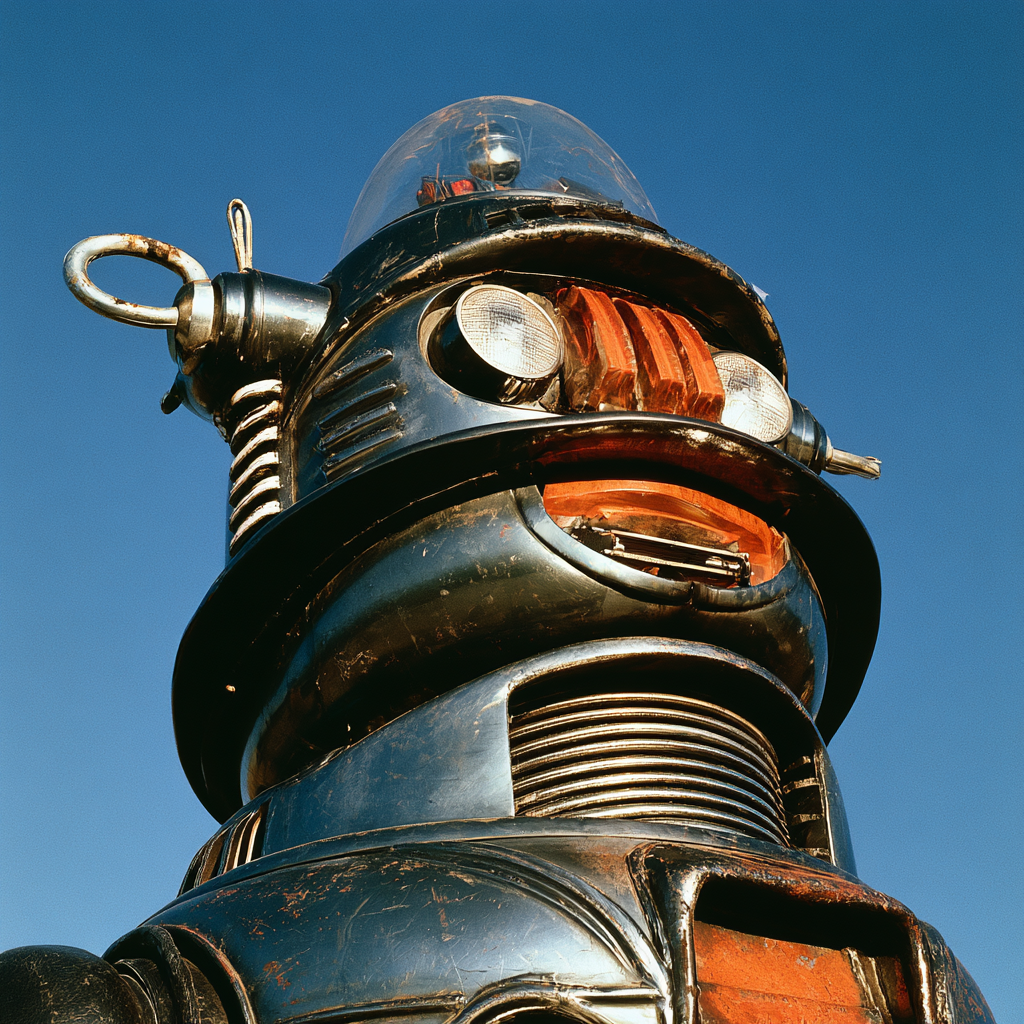
Is AI preparing to replace inventors—or become their most useful creative sidekick? Noah and Steven sit down with AI entrepreneur and author Zach Rattner to move beyond the hype and explore practical ways inventors can use AI tools to analyze information, challenge assumptions, improve presentations, and tackle tedious work. Along the way, they discuss why successful product development still begins with a real problem, how entrepreneurs can break intimidating challenges into smaller experiments, and why artificial intelligence should support human judgment rather than replace it. Learn how to use AI as a thoughtful critic, brainstorming partner, and productivity tool while keeping creativity, purpose, and decision-making where they belong: with the inventor.
Core Topics for this episode:
- Artificial Intelligence
- Inventor Productivity
Key Takeaways Include:
Listen here:
Episode Blog
Why AI Should Be Your Toughest Critic—Not Your Replacement
Artificial intelligence can write headlines, analyze spreadsheets, generate images, and make the occasional inventor wonder whether the robots are quietly updating their résumés. But the most useful question is not whether AI will replace inventors. It is how inventors can use AI to think more clearly, work more efficiently, and make better decisions.
In this episode, Noah McNeely and Steven Julian talk with Zach Rattner, co-founder and CTO of Yembo and author of Grow Up Fast: Lessons from an AI Startup. Their conversation moves beyond the hype to explore practical ways AI can support product development without replacing the judgment, creativity, and intuition that successful inventors still need.
Start With the Problem, Not the Technology
One of Zach’s central lessons is that AI should be treated as a tool rather than a destination. A business does not become valuable simply because it uses artificial intelligence. It becomes valuable when it solves a meaningful problem.
Yembo provides a clear example. Moving companies traditionally send estimators into homes to identify furniture, boxes, equipment requirements, and other details needed to prepare a quote. The process is slow, repetitive, and vulnerable to human oversight. Yembo uses computer vision to analyze videos of a home and identify its contents, allowing estimators to spend more time building relationships with customers and less time counting objects.
The technology matters, but the customer outcome matters more.
Inventors should follow the same sequence:
- Identify a real problem.
- Understand why existing solutions are inadequate.
- Determine which tasks are repetitive, expensive, or difficult.
- Then evaluate whether AI can improve the process.
Starting with “How can I add AI?” often creates a gimmick. Starting with “What problem am I solving?” creates the possibility of a useful product.
Use AI for the Tedious Work
AI is particularly effective at analyzing large amounts of information, identifying patterns, summarizing material, and completing repetitive tasks.
For an inventor entrepreneur, that might include:
- Reviewing large spreadsheets
- Organizing customer feedback
- Summarizing research
- Comparing competing products
- Drafting early outlines
- Generating alternative headlines or product names
- Identifying recurring complaints in reviews
- Preparing questions for customer interviews
These activities still require human supervision. AI can misunderstand information, invent facts, or confidently present a bad conclusion in a very tidy paragraph. Treat the output as a useful first pass, not a final authority.
Make AI Argue With You
One of the most interesting ideas from the conversation is using AI as a critic rather than asking it to do the work for you.
Suppose you are preparing an investor presentation. Instead of asking ChatGPT to create the entire pitch, provide your outline and ask it to respond from several perspectives:
- Give this presentation a one-star review.
- What objections would a skeptical investor raise?
- Which claims lack evidence?
- What parts are confusing?
- What would make this more persuasive?
- Now explain what the presentation does especially well.
The same approach can help with product names, packaging concepts, marketing claims, website copy, pricing strategies, and feature lists.
AI becomes a low-cost sparring partner. It allows you to expose weak thinking privately before presenting the idea to customers, partners, investors, or manufacturers.
Break Big Problems Into Smaller Ones
Zach also describes a principle that applies far beyond artificial intelligence: successful entrepreneurs break intimidating problems into smaller, testable challenges.
His experience helping develop a battery-powered Volo hair dryer illustrates the point. A cordless hair dryer initially appears impractical because heating air requires enormous power. Instead of treating the entire product as one impossible problem, the team identified the key technical constraint: the heating element.
By exploring a different technology—an infrared heating approach rather than the conventional solution—they reduced the power requirements enough to make a battery-powered product possible.
This is how strong product development works. Inventors do not solve “the whole invention” in one dramatic flash. They identify the risks, isolate the unknowns, and test them one at a time.
AI can assist with that process by suggesting assumptions to test, identifying missing questions, and helping organize experiments. But the inventor still decides which problems matter and which solutions are worth pursuing.
AI Cannot Supply Your Why
The episode repeatedly returns to something AI cannot provide: purpose.
An algorithm can suggest ideas, but it does not care which problem you solve. It can generate a list of possible products, but it does not understand your experience, values, frustrations, relationships, or ambitions.
Those human elements often lead to the strongest inventions.
Zach’s advice to entrepreneurs is simple: know why you are doing what you are doing. That purpose becomes the filter for deciding which opportunities to pursue, which features to build, which customers to serve, and which shiny distractions to ignore.
Without that filter, AI can help you move very quickly in no particularly useful direction.
Transparency Matters
The conversation also addresses the growing difficulty of knowing whether writing, images, and other content were created by people or generated by software.
Zach’s book carries a “Made by Humans” label because he believes people should be transparent about how AI was used. He did use AI to critique portions of the manuscript, but the writing and artwork were created by people.
That distinction matters. AI assistance is not inherently dishonest. Presenting AI-generated work as entirely human, however, can damage trust.
Inventor entrepreneurs should establish their own standards. Be clear when AI-generated material affects customers, investors, safety decisions, or important claims. Verify the facts. Protect confidential information. Keep qualified humans responsible for final decisions.
The Product Genius Take
AI is not your replacement, your co-founder, or the mysterious oracle that will reveal what you should invent.
It is a tool—and potentially a very powerful one.
Use it to eliminate tedious work, analyze information, challenge your assumptions, and prepare stronger ideas. Let it play the skeptical investor, the unimpressed customer, or the brutally honest reviewer. Then use your own experience and judgment to decide what the feedback means.
The most successful inventors will not be the ones who surrender their thinking to AI. They will be the ones who use AI to think harder, test faster, and create better products while keeping the distinctly human parts of invention firmly in human hands.
Or, read the full transcript here:
Steven Julian
Are you prepared for the coming AI apocalypse? Or are you actually really going to use AI to help with your inventing endeavors? You'll learn one of those two coming up next on Product Genius.
Noah McNeely
Do you want to be a successful inventor entrepreneur struggling to get your product from idea to market?
Steven Julian
Well, you've come to the right place.
Zach Rattner
Welcome to Product Genius. The down-to-earth podcast that explores important topics about inventing and launching new products.
Steven Julian
Noah McNeely is your trusted guide. With more than 20 years of product launch experience, he's here to help you on your journey to become a product genius. Let's get started.
Zach Rattner
Here's your slightly annoying co-host, Steven Julian.
Steven Julian
Hey, that's my line. Yes, it is Product Genius. I am your slightly annoying co-host, Steven Julian. Welcome to another, hopefully one day, award-winning edition of Product Genius. We are broadcasting from the lair of Product Quickstart. With me, as always, is the passive-aggressive producer, Jody Smith. And across the table from me is the man of the hour, the man with the power, the man who makes... The world go round. Well, actually, no.
Noah McNeely
That sounds a lot like I'm an evangelist, a TV. evangelist. I'll take that back.
Steven Julian
Yeah, I'll take that back. I'll take that back. I said, yeah. Well, actually, it's superstar Billy Graham. He used to say the man of the hour, the man with the power.
Noah McNeely
That's why I made that connection.
Steven Julian
Exactly. So it is Noah McNeely of Product Quick Start here on Product Genius. Noah, how are you, sir?
Noah McNeely
I'm doing great. I'm also well-known for being passive-aggressive, so we don't want to let Jody have that title all to himself. We're getting close to the end of the year. The holidays are coming up, so it seems like things are just getting busier and busier, but I'm glad to take a little break here and record some podcasts.
Steven Julian
We so appreciate you taking time out of your busy schedule to get with your listeners and just kind of impart some knowledge and also introduce them to some very interesting guests and very interesting business owners. And today, we've got a fantastic guest to talk about the topic of AI, a topic that is definitely in the news. And definitely if you talk to 10 non-experts, you would get 15 different opinions about AI. But we're going. to focus on it when it comes to the entrepreneur, the inventor, and really discuss that.
Noah McNeely
Yes, I'm super excited about having Zach Ratner join us. He's the author of Grow Up Fast, Lessons from an AI Startup. But Zach, unlike a lot of the AI experts out there, actually has some history developing. Physical products going down sort of the invention startup route. So I think you'll have some perspectives that are really applicable to our audience more so than just someone coming here and talking about computer code and algorithms and stuff that's just going to be way over our heads.
Steven Julian
He's part of the club of product developers first.
Noah McNeely
So I'm looking forward to what he can tell us about. Practical applications here.
Steven Julian
Well, I'm going to passively, aggressively say, let's stop our banter and let's get him in the room and start talking about it. Zach Radner from Yembo. Zach, welcome to the studio.
Zach Rattner
Hi, good morning. Thanks for having me.
Steven Julian
Yeah, absolutely. So you are the co-founder and CTO at Yembo. Tell everybody about your current business in Yembo and what you guys do.
Zach Rattner
Sure. So Yembo is a computer vision company and we sell. a product to home service providers. So if you think about... Moving companies, property insurance companies, companies of that nature, they generally have a very labor-intensive quoting process because an expert has to go to the house, identify everything that's there that needs to be serviced. If you're moving, that's everything you own. And if you get something wrong, the quotes can be way off. So we provide computer vision technology where the customer can scan quick videos of each room in their house.
Our algorithms identify what's there. And the quoting process can take just a couple of minutes instead of having to schedule these long and laborious in-home visits. So it's a product in a nutshell, but a lot of lessons we've learned along the way from the seven years or so we've been in business.
Steven Julian
Great segue. You've done a couple of interviews. So lessons, and I believe those lessons you learned in kind of developing this company also came into kind of the book you wrote and specifically. You know, the book was called Grow Up Fast Lessons from an AI Startup. So I'm just going to ask you, I think almost everybody who listens to. this show is part of some kind of startup or it has done a startup.
Noah McNeely
Whether they realize it or not. Right.
Steven Julian
Whether they're willing to acknowledge it or not. Welcome to the club. We're here for you. But I wanted to just ask you and kind of talking about the book. Start with the term of AI startup. How would you define what makes a startup an AI startup?
Zach Rattner
Sure. So I think there's a lot of hype here, but my view as an engineer is that an AI startup has some fundamentally proprietary technology at its core. So it's really easy to use somebody else's technology. I rely on macOS for my machine. For my work, I don't call myself a macOS startup. So I would say an AI company has AI kind of in its core, not like around the ancillary sides of it. And I feel like an AI startup is fundamentally advancing the direction of an industry by leveraging things that AI does particularly well.
It's a flashy name, and it's someone that has a lot of attention right now. But at the end of the day... It's just an algorithm and it follows instructions. and just like any other piece of computer code. But I would say the outcome that comes from that is what's really important. And it's really more about enabling somebody to do something that they couldn't have done before, just like any other kind of traditional product sense where AI is a flashy means to an end, but the end is really still what matters.
Steven Julian
Do you have a really good and simple example? That our listeners could grab onto and go, because by the way, that was a great definition. Now, can there be a picture and an example that a listener and a slightly annoying co-host who raises his hand at times of going, hey, slow it down for me, explain it to me so I understand. But a good example in your own startup and maybe even the startup of Yembo of just what that looked like or something that AI was able to do.
Zach Rattner
Sure. So let's zoom in on a day in the life of a move estimator. So if you are a move estimator, you work at a moving company and your job is predominantly sales. Your goal is to explain the value of. the product that you're offering, which is relocation services. But to be able to do a good job at that, you need to really understand everything that somebody owns. Part of the job is building rapport with the client, understanding what their real needs are, kind of counseling them through this complicated relocation process.
But the other part of it is, frankly, kind of tedious. You need to also count how many cartons you're going to need to pack up everything that they own and make sure the truck is loaded with the right equipment. So the historical way to do that would be to ring the person's doorbell, walk around with a clipboard, use your years of experience to kind of look at what's there. Identify what materials will be needed and write it all down. And that can take like 60 to 90 minutes for a typical home.
But what our product does is it still allows the sales agent to build rapport with the client and do things that are uniquely human, but it allows the tedious part to be accelerated and it allows an algorithm to do it so the person doesn't have to. I'm sorry, go ahead. Yes, I think I'll wrap the thought up. But the idea being that... The workflow is very similar. Like I'm still going to somebody's home before they have agreed to buy the job for me and estimating what's there. But I'm using technology in a novel way that makes it easier and simpler and faster to get to that outcome that allows the person to make the sale.
Noah McNeely
So I think Yimbo is a fantastic example of what... Us AI novices kind of view AI as those of us who kind of, I think, view it correctly. Maybe not. But it takes tasks that are tedious and laborious, and it automates those in a way using, you mentioned computer vision, which is machine learning. We don't need to go into all the, we can, but that gets into some pretty esoteric.
Steven Julian
Okay, sorry. Sorry. Apologies.
Zach Rattner
Six years later, we'll come out of that rabbit hole.
Noah McNeely
Yeah, but my point was, it's using some fairly sophisticated, like I said, algorithms and things like that to really take what can be repetitive tasks. Like in most cases, you go in, you're probably in the old days, you go in, you. go, there's a bedroom suit, it's going to take this much time to move that, yada, yada. Now, the technology kind of understands all that and it puts it all together and it builds that. Automates the tedious tasks so that you or your client, as the person going in and selling the moving service or whatever the service is, you can spend more time on that customer side, the human side. that cannot be automated as well or as easily.
And it seems, again, from my viewpoint of AI, that's really where AI plays in a lot of useful ways and different things. Kind of earlier when we were talking off air, you talked about AI is kind of in the space that computers were in back in the 80s, whereas you go back to the 70s, you know, unless you were in the Department of Defense or NASA or university campus, you probably never touched a computer. But then in the 80s, all that changed. And I think the point you were making is that AI is kind of in a similar spot right now.
Did I understand that correctly?
Zach Rattner
Yeah, I think that's exactly right. It's certainly. very early days. When a new fundamental technology comes out, it's usually the geeks that created it that are the initial set of users. And then as time goes on and it gets adopted in more directions, the user interfaces get better. People learn what kinds of workflows it does and does not play well with. And it gets kind of more integrated into everyday life. So I feel that AI is going to get more and more prevalent. And there won't be as much stigma around adopting it where when we started the company in 2016, there wasn't a whole lot of activity around leveraging computer vision outside of people who were already engineers in that space.
But now I feel like with things like ChatGPT and Claude and image generation, that it's just becoming so much more accessible. So people are able to leverage its power without having to be the person who created it. The personal computer, the smartphone, the iPod, they all kind of like went through this route where when it reached that mass market appeal, most people who were using it probably had no clue how it works or how it's made. And I. feel like that's kind of where we're at with AI right now.
Noah McNeely
Most of us still have no idea how iPhones work and I'm just glad they do. The magic. And I'm an engineer and I still don't really understand half of it.
Steven Julian
The magic. The magic. We're speaking with Zach Radner. He is the co-founder and CTO at Yembo. And I guess I wanted to ask one other thing just kind of about Yembo and your startup. When you started it back in 2016, did you start it with the idea of AI is going to play a big part? Because, you know, AI is still in its... In its infancy. now, back then, I'm wondering, was there, okay, we're going to do this moving company and we're going to use technology to make the tedious part easier or quicker and kind of, you know, look through that.
Was it AI from day one? or were there some other things you were using that were just kind of ancillary to AI, that AI is doing better? Talk me through that at the very beginning.
Zach Rattner
Sure. I would say we started with AI at the core looking for a problem. So there was a fundamental shift that happened in 2015 where there was a popular academic benchmark called ImageNet, where you could think of it like a multiple choice test where there were a bunch of images and people would have to write algorithms and compete to identify what's in that image. And it's something that a human can do relatively easily. Like if I hold up a photo and say what's in here, you probably won't struggle too much to give me an answer.
But for code, that's much more challenging. And what happened in 2015 was the best submission that won. that competition for Microsoft actually beat out a college-educated human. So for the first time in human history, computers had demonstrated that they were better than people at identifying objects and images. But it seemed like most people outside of a relatively niche group of researchers didn't really seem to pay a bunch of attention. And then you saw things like self-driving car companies were starting to take off after that. Things like identifying traffic lights and pedestrians and crosswalks were taking advantage of that deep learning technology.
But the more I learned about the algorithms and the space... I realized like it wasn't just self-driving cars and last mile drone delivery and these kinds of big buzzy industries. It was anything where humans were inspecting anything that was kind of ripe for improvement. And my wife was actually working at a moving company at the time. So that was like my in to understanding this particular industry that I otherwise wouldn't have had any background in. And it's interesting. I mean, we were, she worked at a larger moving company based out of the DC area.
Like high-ranking government officials they were moving. And they had a certain set of challenges around identifying the right items for a move. Like things like bringing the right equipment, the right size crew, the right size truck. And then we were buying our first house and our real estate agent owned a local moving company, much smaller. I think it was like two or three trucks and that's it. And then they both realized that they kind of worked in the same industry. So they were talking shop and like... They both had the exact same problems.
So from huge moving company, moving government officials, all the way down. to a guy with two or three moving trucks, everybody seemed to have issues with them. It's just really hard to give an accurate estimate because there's so many things you got to look out for. If the person's not trained, they'll overlook things. You might forget to go. look in the garage where maybe 40% of the weight of the move is sitting. So the more I learned about the space, it's like there are these two thoughts in my head. I just couldn't.
Couldn't reconcile. Computers are better than people at identifying objects and images. And everybody's got this issue where it's really hard to identify objects and give an accurate moving quote. So the more we learned about the space, it almost felt, I'd say, kind of inevitable at some point. But in the beginning, it was just kind of straddling these two different worlds and bringing it together that I feel like was the inventive step that made the company exist.
Noah McNeely
Steven has another question, but I'm going to jump in here. And then I'm going to give it back to Steven.
Steven Julian
Just to point out that they're going to be passive-aggressive. Good job.
Noah McNeely
I do. my best.
Steven Julian
That was actually aggressive-aggressive. Go ahead.
Noah McNeely
There are two fundamental things that you touched on, which I think are kind of universal across the successful inventor entrepreneurs that we've seen, that I've seen in my career, regardless of what they're working on. I mean, it could be a new way to hang clothes in your closet. You touched on two things. One, you found a good problem to solve. It's a problem that, hey, more than one person has. This is probably a universal problem. And then, two, you found multiple things that you were kind of putting together in a novel way to solve that problem.
Now, most of the people that listen to this podcast are probably not thinking about machine learning and AI to solve problems, but it's still interesting that you put dissimilar things together to solve what you perceived as a great problem. That's where the best inventions often start. Okay, that was my sidebar, Steven. I'll give it back.
Steven Julian
Can I go now? You can. That was my passive aggressive comment. So now all three of us around this table and Zach, you have to figure out when you're going to be. passive aggressive. Actually, you don't have to be. You're the guest. All right. So here's my, so Zach, what I was going to say was a lot of our listeners that Noah was kind of talking about have, I'm sure are very fascinated with all the things you said. I appreciate all the stories and what you've pointed out, but they're sitting there.
I'd say more than 50% of them are sitting there going. That's all great. What does this have to do with me and my journey and my product and my startup? So I'm going to ask for the non-experts in the room, and I raise my hand, chief among them. Give us a primer. Give us your thoughts. Give us some step one, two, and three of AI tools that non-experts can use. If those of us that have been hesitant to look. Where should we start? And what are some of those tedious and laborious tasks that we might want to consider? utilizing AI for our business?
Noah McNeely
Yeah, particularly for people starting a new business or inventing something or not even knowing where to go to start a business.
Zach Rattner
Sure. So I will stay on brand. here. I mentioned in the Yembo story, starting with a need and a problem and then going from there. If you try to just list all the AI tools out there. I don't think you'll ever get to the end because so many new ones come out that it'll be hard to keep up. But AI is buzzy and flashy, but at the end of the day, it is able to do certain things well and certain things not well. And we talked about the kind of more mundane, tedious aspects of work and the promise of AI.
I think part of the reason why it has so much buzz is it brings the cost to do these tedious things down by orders of magnitude. So if yesterday you had to parse through tons of spreadsheets and look for anomalies or look at outliers, things like that, it's relatively easy to go to ChatGPT. They have the data analysis mode. If you pay 20 bucks a month, you can upload a spreadsheet. You can ask it questions about it. I've heard stories of folks who upload their bank statement from the previous month and say, hey, ChatGPT, what subscriptions do?
I have? I might want to cancel them and consolidate my bills, things like that. Cancel your Amazon Prime. Exactly. But like looking at these large reams of data, I think a lot of companies are sitting on it. A lot of workflows have been built kind of assuming that the cost of analyzing these things are really high. And the promise of AI is it allows that to come down and become much more accessible. So I think a few areas that I've seen folks get good successes on are if you have lots of spreadsheets that are really kind of tedious to look through.
Try playing around with ChatGPT. I think it does a good job there. On the creative side, there's a lot of mistakes that AI makes because it's not a person. So I think we're a long way off before we'll watch a feature-length movie that's entirely generated by AI. But if you want help, maybe putting a storyboard together, if you're making an explainer video, or if you want to brainstorm some ideas for a presentation, having... Tools like Stable Diffusion or MidJourney generating those images, I found a helpful creative step along the. way.
And also, I feel like a lot of people focus on asking AI to do things for it. Like, hey, can you write me 10 blog headlines or write a whole article about this? But I feel like another really interesting use case I don't hear as much about is asking for feedback. And this is one thing. if you can even use the free version of ChatGPT. But one of the things we've done and I've seen a lot of success with is you can kind of get feedback on an idea. So if you have maybe a big presentation coming up, you can put in an outline and role play with it.
You can say, hey, ChatGPT, pretend that you are a critic and you are complaining after this talk that I'm about to give. And give me a one-star review. Here's the outline of what I gave. What are some helpful pieces of feedback that can make me better based on the feedback you'd give? And you can run through a bunch of different scenarios. You love it. Give me five-star ratings. You hate it. Give me one-star ratings. What are other angles I could go? take with it? And what I feel like AI can do is it can play the role of a peer that's listening to you or evaluating whatever you're proposing and giving you feedback.
And it brings the cost down. The time it takes to do that way down. So what that means is as practitioners, you can have a much more refined idea and a much more refined presentation, report, whatever it is you're working on. But you don't have to like have as a humbling of the first experience of showing it to a real person that I put things in chat GPT that are like super unrefined because I don't have to worry about like the other person judging me harshly or kind of complaining about it.
And it lets you kind of like go back and forth and debate it a little bit more.
Noah McNeely
I think that's a fantastic, I've never even considered using chat GPD that way, but I think about, you know, inventors, they could use that to, you know, if they're going to do an investor presentation, they put the presentation into the system and say, okay, you hated it, critique it, and okay, you loved it, tell me what I did. well. I mean, variations of that, that's fantastic.
Steven Julian
I think I was going to make a point and then let you ask the next question, but you made a point. So now I have to make a point and ask a question.
Noah McNeely
Do what you have to do.
Steven Julian
Do what I got to do. I found it interesting. I think some of the people who talk badly about AI or who are scared of it or who are just cautious about it are thinking, well, AI is going to replace human. Right. That's obviously the buzzy negative. Oh, AI is going to replace human. When is Skynet going to come online? All that kind of stuff. And I think one of the things that's realistically stated is, is AI going to take away our ability to think? But here, Zach has said, I think a lot of people go to AI and like you said, hey, write me 10 articles or write me 10 headlines or asking AI to just do the job.
But instead, if you're thoughtful and think about how you want AI to help you, you can get the. most out of AI by figuring out And like you said, the idea of feedback is very interesting. So, Zach, let me ask you this question. We've kind of talked about AI tools and we've talked about how AI was a central part of the startup of Yembo. I do want to ask, you've got a room full of entrepreneurs and product developers and other startup captains. What would be... The best piece of advice or what's some of the top one, two, three, you know, you pick or favorite or most entertaining piece of advice that you got as you started and or that you would tell someone now that you're seven years into this part of the journey with Yumbo.
Zach Rattner
Sure. I think the number one piece is know why you're doing what you're doing. I think a lot of entrepreneurship, especially now, is done in open. People post on LinkedIn, building in public, sharing what they're doing. So it can be easy to maybe get caught in going through the motions and like, oh, I see so-and-so doing this. I'm going to go do this too. But I feel like a good founder, a good entrepreneur is. laser focused on what is the problem that they're solving. And that's the filter that they look at evaluating an opportunity, deciding what to do next, not kind of performative looking left and looking right.
We have historically not been a very flashy company. We're companies half engineers. We build products. We focus on making it easier to use, easier to adopt, kind of obsessing over little details and making sure that people are being able to be more effective at their jobs. We don't sponsor a bunch of big flashy events and things like that. And I feel like it's worked for us because we know who our target audience is. We know what they're interested in doing. And we feel like we can do a better job serving them.
Without taking out Super Bowl ads and doing other things that you may see louder companies doing. But I think knowing your why, there's not really a one-size-fits-all answer. I read a bunch of books before I started Yembo. I don't think there's a course you can take that makes you really ready because there's not one-size-fits-all. Every company is a little bit different. So you can read a. lot and learn about techniques. You can learn what other people did. But what's right for you in your startup right now? Is something that nobody else is in the exact same situation.
So knowing your why I think is really key.
Noah McNeely
Yeah, I think that's great advice. Everyone's different. I've met hundreds of inventor entrepreneurs in my career and maybe someday I'll write a book about how different they are. But speaking of books, one of the main reasons we were excited about having you on was your book, Grow Up Fast, Lessons from an AI Startup. I was hoping you would tell us, kind of give our audience a little bit, what are some things they could look forward to reading in that book and learning from that book? And one of the things I liked about the book is it's not just about AI.
It's really about a startup journey. You even talk about your experience with the hard product company, the Volo hairdryer and that startup experience and then how that. It was part of your journey going into the Yenbo experience and everything along the way. I think it's a very, there's a lot in. the book. And bearing in mind who our audience is, it's inventor entrepreneurs, potentially people forming startups. What are some key takeaways that they would want to go to that book to learn more about?
Zach Rattner
Sure. So the book in a nutshell is, I call it the highlights of the biggest lessons that I've learned from starting Yenbo. The main takeaways, just to hit on a few highlights here in the time that we have, are breaking down big problems into small ones. I feel like there's a misconception out there where if you read a news article about some cool tech product, you're seeing the end result, but you're not seeing what it took to get there. And I feel like the best founders that I know, that I've seen, Are really good at taking a big problem, breaking it down into small ones, having the right people work on each one.
And then as a result of that, you accomplish something that looks impossible from the outside. You mentioned the Volo story. So I didn't immediately just jump in and start Yembo. I was kind of consulting and helping out a couple of different startups before Yembo was. mature enough to have our first few paying customers. And I had an opportunity to work with this company that was aiming to make a battery-powered hairdryer. So I know this podcast is audio only, but I have a short haircut. I've had the same short haircut since I was a teenager.
I'm probably the worst person if you're looking for a beauty supply expert to talk to. But what we did was we just analyzed and looked at what are the reasons why a battery-powered hairdryer doesn't exist right now. Turns out that the heat that you need to put out to dry hair is about 85-90% of the power that's required. And to provide that much heat, you need a battery that would weigh like tens of pounds, like maybe 10 to 20. So that's what's historically prevented us from being able to have battery-powered hair dryers.
But what happened was the company has maybe seven or eight different patents now on different things that they've done. And the cool thing about patents is they... They are publicly available to view, so I can talk about them now here. But the main idea is that by innovating around. that heating element and bringing the power requirements down, then you're able to get it into the threshold where a battery can work. But the heating element we ended up using was an infrared bulb that historically had been used if you go to a convenience store to keep the cheese on the nachos warm.
It's like totally different from what the beauty industry was traditionally using, which was nichrome wire, which is more commonly found in hair dryers and things like toasters. But that idea of like not having a background in the beauty industry, but being able to go in from first principles and understand here are the constraints that this industry is under. Here's like what's non-negotiable, like a hair dryer must have heat, but how you get that heat is up for grabs. And then trying a bunch of different experiments along the way to kind of move that progress forward kind of ended up in us making this product that when we started out, wasn't sure if we'd even be able to exist yet.
Again, it has nothing to do with AI, but I feel like the thought process and that methodology, I've seen successful. founders go through this again and again and again, is that there's this notion that entrepreneurs are like magicians and they can come in and they take big risks and they make bold bets and they do cool things. But I feel like the best entrepreneurs I actually know are really good at de-risking things. How do you make a bet not existential? How do you try something small before you go step on the gas?
And by breaking down the problem that you're focusing on into multiple smaller tests along the way, then you can be more realistic around how you're going to get to these big audacious goals. I think that's one thing. It's just breaking big problems down into small ones.
Noah McNeely
When I read that section of your book, I saw that methodology come through very clearly. And I think, you know, it's a brilliant way to look at it. I mean, you didn't start at, well, you may have started out that way, but you didn't end up necessarily solving the problem of a cordless hairdryer. You solved, you know, you talked about, well, there's a regulation issue we have to solve. There's the fan issue. we have to solve. And you narrowed down on the, you know, the heating element as an issue to solve.
And I think. I think it's a really good read and I'd recommend it to the audience.
Steven Julian
So I'm going to ask the question partially for entertainment comedic purposes, just trying to bring a little smile in the midst of a discussion about AI and all that kind of stuff. And also for the conspiratorial element of our fan base. And we do appreciate them.
Noah McNeely
It does exist.
Steven Julian
It do exist and we appreciate them and we're so glad you listen for whatever reason you listen for. Zach, can you state here officially on Product Genius for the record and for all time that the book Grow Up Fast was not written by AI?
Zach Rattner
It was not. If you look at the back, I think I gave you a copy. There's actually this labeling process that we came up with at Yembo. So it's not a Yembo product per se, but it's like something that we saw the industry needs. And I have nothing against using AI. Like I mentioned, we enable people to do it in our job. I. just talked to you about use cases. But what I do have an issue with is being dishonest and being opaque. And in my view, if you're going to use AI, that's fine.
As long as you're open and honest around what you're using, what you're using it for, and what the humans are actually doing. So if you look at the back of your book, there's a little badge with a little thumbprint icon that says made by humans. So the artwork, the text, everything was written by me and my editing team of humans. We did, like I mentioned, ask for critiques on it. So we did take chapters and say, imagine you're writing a review. And we kind of just gut-checked ourselves along the way.
But I think there's a big issue out there nowadays where AI is getting pretty good. It's confusing. as a consumer if you're looking at a product. I can't always tell, is this picture real? Was it a photo? There was a day. if I saw a photo, there's a phrase, photographic evidence. And that means that, oh, it must have been true. It must have happened because I'm seeing a photo. And the technology has gotten good enough that we're not able to believe that anymore. You have to kind of question all these things.
Steven Julian
Well, they're advertising a new phone where you can change the picture to make it look the way you want. Very different from what Michael Scott did in the office when he photoshopped everybody in the Christmas.
Noah McNeely
I think there could be an entire podcast series about the philosophical implications of AI.
Steven Julian
And that's beyond the scope of today's conversation.
Noah McNeely
Going back to something we discussed earlier, you know, like in the early days of computers at home in the 80s, people had no idea where it would go. I mean, you couldn't. Very few people would have seen the iPhone. You know, I had teachers that said, you got to learn this because you'll never have an encyclopedia in your pocket. Well, guess what? Now I do. But now we're going to get to the point where, what can you trust? What can you not?
Steven Julian
Well, and yeah, so that might be another conversation we have to have another day. And I can certify to our... That we do have a copy of the book. and on the back is the stamp made by humans, AILabels.org.
Noah McNeely
And the artwork is beautiful. And the artwork is fantastic. Thank you. And I don't know if this goes out to everyone, but my book actually came with this really cool card inside. I think it's a wolf or a German shepherd. I think it's a wolf on this little artwork card. that's, I assume, also illustrated by the illustrator of the book. It's just absolutely beautiful. So the artwork alone is...
Steven Julian
It's the same as on the back cover.
Noah McNeely
Ah, there it is. So to the inside back flap.
Steven Julian
So very nice.
Zach Rattner
Yeah, and it was fun. I mean, we started the artwork at the same time. we started writing the book. And I told Rita, the artist, I said, I would like you to make cover art. that is a work of art by itself. So if I take the front cover and I take all the text off of it, that shouldn't look out of place. if it's like in a frame on a wall somewhere. If you look at a lot of other business books, it's like a... Big red background and a picture of. the person's face.
I didn't want to do that. But no, it's been pretty cool. And then she actually gave me a... Cool. Well, anyway, I don't want to veer off topic. No, no, you did say she actually gave me.
Steven Julian
You got to finish that sentence and then I'll wrap it.
Zach Rattner
I can send you a picture, but she gave me to make the tree that's on the cover. This is what I appreciate about the humans and the creative process. Because if I tried to use AI, I'd say, make me a tree and then you get what you get. She actually made a full forest. Um, just to understand like the, the landscape and get a sense for a bunch of different trees, um, as a study and then picked one tree out of the forest and then kind of developed it a little bit further.
So I have hanging up on my wall. Now I can send you a photo afterwards of the like panoramic, um, forest painting of all the different trees that were in there. But I feel like those are the kinds of elements that, um, AI can't do, right? Like it's, uh, it can do these kind of transactional tasks, but to kind of, um, Be creative and think and feel and suss out what's the nugget in this area. I feel like AI can give tools to humans, but at the end of the day, AI has always been trained on previous data, so it can't really come up with new things.
It can give you suggestions, but I feel like that intuition around. this is the direction we need to go in, this is what the product needs to do, all these kinds of decisions, I don't see AI. Being able to replace a human in any reasonable timeframe. I think they can give suggestions, they can give ideas, but kind of knowing. here's the direction to go, the stuff that makes a founder a founder, it can give you more inputs, but it's not going to replace that judgment.
Steven Julian
Zach Ratner, the co-founder and CTO at Yembo, for those people who want to get a copy of the book, please feel free to give that information. and also for... Moving companies who want to work with you, people who want to work with you and get Yembo on their. side when it comes to taking the tedious part and helping to reduce that and potentially even eliminate that in the job to help with planning their move. How do they get in touch with you guys?
Zach Rattner
Sure. If you're interested in the book, you can head to growupfastbook.com. There's options available on Amazon, audiobook on Spotify. But if you go to that site, it's like a directory. It'll kind of point you in the right direction there. And if you're interested in learning more about what Yembo does, you can go to yembo.ai.
Steven Julian
I like that. Zach Ratner, thank you so much for being on the show today.
Zach Rattner
Thanks for having me. This was fun.
Noah McNeely
Thank you, Zach.
Steven Julian
Noah, it's your show and you're the host.
Noah McNeely
Okay.
Steven Julian
Your initial comments, reactions, thoughts. That is a conversation that could take 20 days.
Noah McNeely
Oh, yeah. I think that there will be, yeah, it's going to take decades for people to unravel what AI can be and is and et cetera. But I think I appreciate Zach being on. I think we had some very practical advice today, you know, using ChatGPT as an example in ways I never considered, which I. could see. That whole idea of asking ChatGPT to be a critic. I mean, and inventors could use that for anything. The name of their product. Hey, it's my new Hammer product. Give me some ideas for the names.
Oh, I was going to name it this. Critique that. You like it. You hate it. Tell me what to do. Your slogans, your pitches. I could see it being a very valuable thing. But I think, to Zach's other point, I think that AI can help with very derivative things and very repetitive things. But you don't want to ask. Chat GPT, what should I invent? Right. That goes more to the soul of the human of who you are and what you want to do.
Steven Julian
And knowing your why. It was funny.
Noah McNeely
We're not going to get into philosophy.
Steven Julian
Well, I was thinking, so everything reminds me of a movie or a comedian or something like that. I was thinking of The Office. And the way Michael Scott kind of used technology, and I remember his quote where he said, oh, when YouTube first happened, I didn't do work for three months. And I think as AI has started to come on the scene, how many people are wasting time? I'm guilty. Right, just having fun. Now, there's an element of that that we can laugh and have fun, but I loved how Zach kind of made it, hey, use it for feedback or think about how you want to use it and how it might be able to help you.
And there are people who are going to come up with a way of using AI that we haven't thought of. And so hopefully they'll share it with us. So I appreciate that. Great guests. So glad you invited them on the show. Want to remind everybody that Product Genius is available on your favorite podcasting platform. We are here to help you with your invention, with your product development. If you want to go beyond just kind of talking about it and learning some of the things that are... At the top of Noah's brain, if you want to get a little deeper into that, you need to go to productquickstart.com, fill out the contact us form.
There's an opportunity there for you to do a lot more than say, I have an idea or call me. I need to talk to you. He wants to help you, but he's got to know what you're working on so he can help you. So go to that form. You promise that as long as they actually tell you what they're looking for, you will get in touch with them.
Noah McNeely
I will. I stay pretty busy, so give me a day or two. I've had a few people that if they don't get a response in an hour, they just keep hitting. resend, resend, resend. That's not helping. That's not helpful. If you don't hear from me in a week, try it again. I might have just missed it.
Steven Julian
Somewhere between a day and a week.
Noah McNeely
I will get back to you. Yeah, absolutely. I do this because I like doing it. Yeah, I want to talk to you.
Steven Julian
Absolutely. If you want to start your own podcast, you need to go to the passive aggressive website of JodySmith.com. He helps people podcast. So product quick start, JodySmith.com. I'm your slightly annoying co-host, Steven Julian, who had passive aggressive music played to play me out. So that means it's time to get out of here. Thank you so much. for being here and we will catch you next time.