Product Genius, the Podcast for Inventors, Entrepreneurs, and Startups
Honest advice for inventors—with obscure cultural references included at no extra charge.
Episode
202
Should I Buy a 3D Printer? (Flash of Genius)
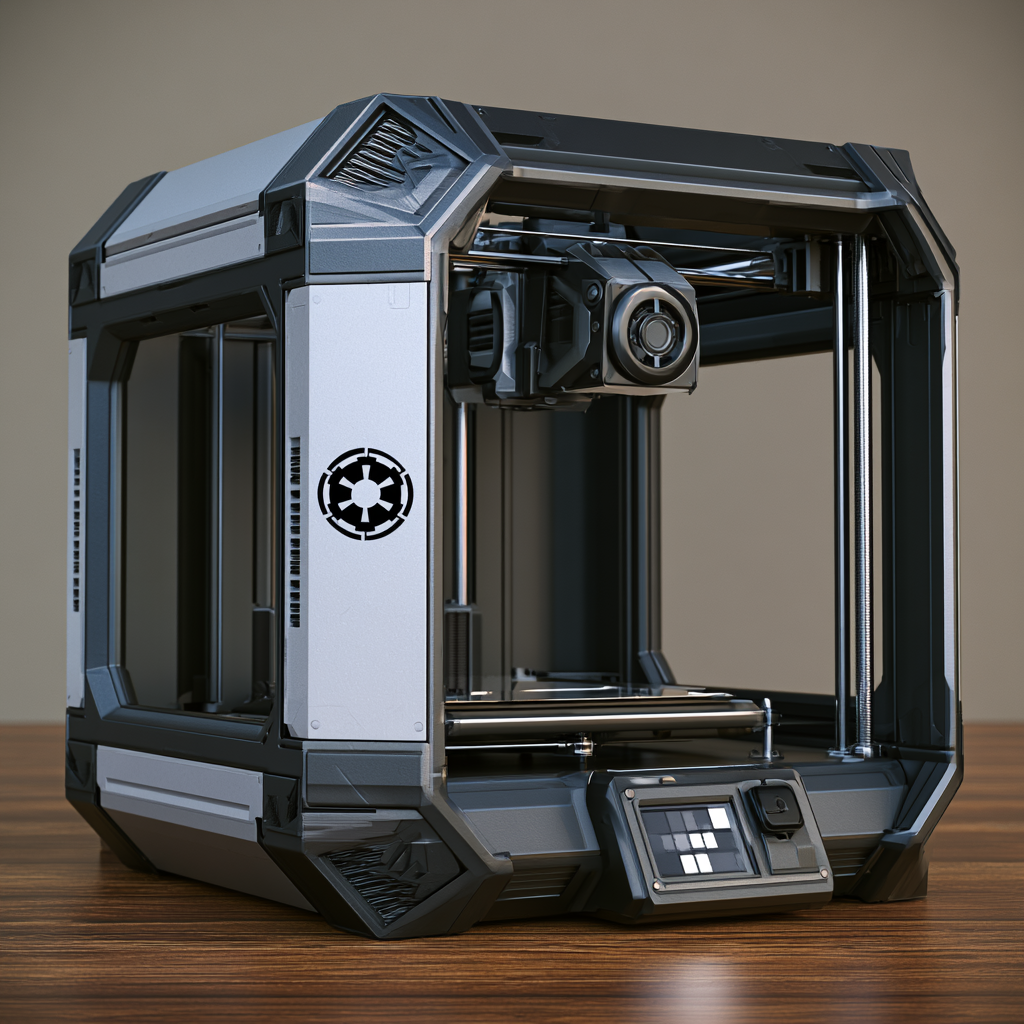
Should inventors buy a 3D printer or outsource prototype parts? Noah explains the differences between FDM, resin, and laser-based 3D printers, when each technology makes sense, and how to decide whether owning a printer is worth the investment. Learn how 3D printing fits into the product development process and how it can accelerate developing an invention while avoiding unnecessary expense.
Core Topics for this episode:
- Prototype Tools
- Prototyping
Key Takeaways Include:
Listen here:
Episode Blog
Should an Inventor Buy a 3D Printer?
A 3D printer can feel like a magical invention machine. Put a file into the computer, press a button, and several hours later a plastic object appears—usually accompanied by a small nest of stringy filament and at least one question about why the corner lifted.
For inventors, 3D printing can be extremely useful. But Noah McNeely and Steven Julian make an important distinction in this Flash of Genius episode: owning a tool is not the same as having a product development strategy.
What a 3D Printer Is Great For
Desktop 3D printers are excellent for learning. They let inventors quickly test size, shape, ergonomics, assembly, and basic mechanical concepts. A printed part can reveal problems that remain invisible on a computer screen.
You may discover that a handle is uncomfortable, a button is hard to reach, two parts cannot actually be assembled, or the “compact” product is roughly the size of a toaster oven. Those discoveries are valuable, especially when they happen before expensive tooling.
A printer is particularly useful when you expect to make many iterations. If you are repeatedly changing brackets, housings, clips, or internal geometry, printing in-house can shorten the feedback loop.
What It Is Not Great For
The danger is expecting a desktop printer to produce every kind of prototype. A rough FDM print may be ideal for checking fit, but inappropriate for a polished trade-show model. A resin print may capture fine detail, but use material that is too brittle for a working hinge. Printed plastic also behaves differently from injection-molded plastic, machined metal, silicone, or cast urethane.
The prototype should match the question you are trying to answer.
If the question is “Does this fit in the user’s hand?” a simple print may be perfect.
If the question is “Will this survive repeated loading?” the printed material and layer direction may produce misleading results.
If the question is “Will buyers love the final appearance?” a rough gray print with visible support scars may not be your strongest ambassador.
Consider the Total Investment
The purchase price is only part of the decision. A 3D printer also requires:
- Time to learn slicing and setup
- Maintenance and troubleshooting
- Material inventory
- Failed-print tolerance
- CAD files that are suitable for printing
- Post-processing and cleanup
For some inventors, that learning is enjoyable and strategically useful. For others, it becomes a second hobby that delays the actual product.
Steven’s playful enthusiasm for gadgets represents the temptation well: buying the machine feels like progress. Noah’s practical counterpoint is that the right tool depends on the work. Sometimes outsourcing a few prints is faster, cheaper, and more accurate than becoming your own print technician.
When Buying Makes Sense
A printer is easier to justify when:
- You have several projects or many expected iterations
- Fast overnight testing would save meaningful time
- You enjoy hands-on experimentation
- The parts fit the printer’s size and material capabilities
- You or someone on your team can prepare reliable CAD files
Buying may not make sense when you need only one or two parts, require an industrial process, or need a polished presentation model immediately.
Start With the Prototype Goal
Before shopping for printers, define the next prototype’s purpose. Are you testing fit, motion, aesthetics, assembly, customer response, or durability? That answer should determine the process.
You may discover that the right solution is FDM, SLA resin, SLS nylon, CNC machining, laser cutting, urethane casting, or a combination. Product development is not a loyalty program for one manufacturing method.
The Product Genius Take
A 3D printer can be a wonderful addition to an inventor’s toolkit, but it should earn its place by accelerating learning. Do not buy one because it feels like something inventors are supposed to own.
Buy it when the machine supports your development process. Outsource when a specialist can get you better information faster. The genius is not in owning every tool. It is in choosing the right tool for the next question.
Or, read the full transcript here:
Steven Julian
It's Flash of Genius. It is a quick hitting topic with Noah McNeely of Product Genius. You know, DC Comics Flash was one of the most underrated superheroes of all time. He was super fast and he got to the point really quick. So we're going to do the same thing. The Flash of Genius question of the day, should I buy a 3D printer?
Noah McNeely
Well, the answer is maybe. Dang it!
Steven Julian
It's always maybe or it depends with you.
Noah McNeely
So a couple things. One, you want to know what they can do, what they can't. And we're talking here today about the types that you might buy and put in your house. There are industrial 3D printers that do all sorts of different things. We're not going to cover those just because you probably don't have $10,000 to plop down on one. So three types of printers that would typically be around. One is called an FDM printer. This is, that's the sort of nerdy scientific name for it. It stands for Fused Deposition Modeling or something like that.
Steven Julian
Sounds good to me.
Noah McNeely
Yeah, it works, right? And this is what people typically think of when they think of. 3D printing. This is where you have this big spool of plastic, what they call filament. It's just a long, thin piece of plastic. It goes through an extruder and it lays down plastic in lines one layer at a time and it builds your part. Those are great for building kind of larger parts, parts that are pretty tough, pretty durable, not parts that necessarily look fantastic or have really good resolution. That's a great printer. if you're trying to build stuff to experiment with, like, you know, you want to make something and see, does it fit?
Does, you know, if I'm trying to make a, you know, a knuckle or a hinge or something like that, does it work? That's a great printer for that. You can get cheap ones, like in the... Really, the $200 range. Really? Yeah, absolutely. Now, those aren't the best, and all of these have a learning curve with them. The ones that are on the cheaper end, they're going to have a steeper learning curve. They're going to have more failures, and et cetera. Now, you can get FDM home printers. It costs a couple thousand dollars.
I think even Dremel, the Dremel tool people, I think they make one, and it's supposed to be quite good. It's hilarious.
Steven Julian
Again, Noah, you and I are close to the same age, depending on the age of people listening. We're almost having the conversation of, you know, oh, should I get my own copier or should I go down to the library to make my copy, the public library to make my copies? If someone did not buy one and they needed a 3D printer to print off some things that they're going to use in their prototype or development or testing, yada, yada, what does it cost to get it done if they don't have their own 3D printer?
And I know it depends. Can you give me a range? Yeah.
Noah McNeely
So there are services that'll do it for you. You can find them on the internet and that's going to range based on the quality of the service too. But depending on how big it is, you can get a printed part for maybe $15, $20, maybe less if it's really small. A lot of those services do have a minimum order, like $30, $40, whatever. But yeah, if you're only. going to do it once or twice, you don't want to buy it. Exactly. A lot of people though, even if you're not inventing or developing product, you might buy it for hobby reasons.
Figurines or miniatures usually. And it's kind of cool to do that with.
Steven Julian
So outside of the development of products, there might be other things you want to produce. I believe you were saying there were three types. So go back to maybe some of the descriptions you didn't cover before I interrupted you.
Noah McNeely
Right. So the next type is what they call a resin printer. And there's actually two types of resin printers. So both of the last two types are resin printers, but they're very different in how they operate. The way resin printers work is. you have, instead of this spool of plastic material that you lay down one layer at a time, you have this vat of goo. that's this liquid resin that you pour in. You don't want to get on your hands, it's nasty, it's sticky. I have to wash my hands like 12 times if I get it on there.
So you wear some gloves, but you put it. in there, and what happens is underneath the vat of glue, or vat of goo, which has a clear bottom, There is a bed of UV light bulbs and this particular type of resin, wherever it is exposed to UV light, it will harden. It will solidify. So then between the vat of goo and the UV light bulbs, there's a LCD screen, just like the old watches, the Casio watches from the 80s. You know, you would, you know, they'd have the numerals on that were dark and then the background is just clear.
That's exactly how these work, except it's a screen with a much higher resolution. So layer by layer, like a tenth of a millimeter at a time, it's going to turn this screen on to illuminate the areas that should be solid on that layer and they'll turn hard. It'll, you know, 10 seconds or so will go by depending on the resin you're using. The little machine will move to up and down and it'll grab that layer and then it'll make the next layer. And this continues through until you made the entire series of parts.
These are much more precise and accurate. Typically, well, that's not fair. They're much more precise. They make much finer resolution than the FDM machines. They're both accurate. They just do different things.
Steven Julian
Cost of one of those is obviously going to be a little more than the FDM machine.
Noah McNeely
Not necessarily. You can actually get some of the lower, smaller ones in these in the $200 to $300 range as well. And of course, they go up from there. Some of the really sophisticated ones that you might have in your home, maybe $1,000, maybe $2,000. Now, of course, there are industrial ones that cost tens of thousands. You're probably not going to buy it.
Steven Julian
And is the difference between industrial and home, just size? Is that the main thing or is there a massive difference?
Noah McNeely
It can be another thing. Size, speed, how long they're going to run before you have to do maintenance, the materials they can use, things like that.
Steven Julian
So last thing, maintenance. Should I buy a 3D printer? If I buy one, you know, it's the old when they bought a normal printer. How many times do I have to change a cartridge? How much do those cost? Maintenance and upkeep. of a 3D printer. Is it ridiculous? Is it not that terrible? Is it similar to, you know, it's going to be, hey, you got to put in a little bit of money. It's going to cost 50 to 100 bucks or more to replace some things.
Noah McNeely
It depends on how careful you are with it. On the FDM printers, you do have to replace the... Often the print nozzles from time to time, that's a replaceable part, but you can get like a pack of 10 of those for like 20 bucks or something. It's not expensive. On the LCD, which is the UV light resin printer I was talking about, the screens actually have to be replaced. Rarely, but that's an expected consumer. Well, that's going to cost $100. That's $100 to $200. That's half the price of the printer, but it's going to last a couple of years before you have to do that.
Steven Julian
Last question. Again, printing on paper, you have the paper and that's what it comes out on when you're doing a 3D printing. You have this goo, as you said, or the plastic, you know, the things you were talking about, they create. the actual prototype, the thing you hold in your hand. How does that stuff get replaced? You just buy more goo?
Noah McNeely
Yeah, so you can get goo, you can buy it on Amazon. It's not called goo, it's called resin. I don't know what you would find if you search for goo on Amazon.
Steven Julian
Let's not do that. We are not suggesting that. Don't blame us if you search for goo.
Noah McNeely
Yeah. And the stuff for the FDM printers, that's called filament. And it comes in all different types, all different colors, all different properties. Some of it's flexible.
Steven Julian
In a way. I mean, there's a lot of choices of types of filament.
Noah McNeely
Yes. Probably more variety than paper. But yeah, some of it's flexible. Some of it's really tough. Some of it's really fragile. Some of it's really clear. There's hundreds of different options.
Steven Julian
So I don't know if we're any closer to whether I should buy a 3D printer or any of our listeners, but certainly some good information to help them make their decision. That's the point. Be informed before you go buy your 3D printing.
Noah McNeely
Don't assume it's going to be something you're going to make. a trade show model with. It's not going to make that level of quality. It's really more part of your development process. Or it could be a hobby. Like I said, a lot of people have hobbies.
Steven Julian
When it comes to developing their product, how often do they need things that might break or they need to try different sizes or different types or different, you know, again, how often are they doing that? How many different products are they working on? Have they just got one? They probably could get away with just going, hey, can you print five of these or print them and come back and ask them to print again? But it starts to get to be the kind of thing where. If you're going to be doing it a lot, it's not a bad idea to look at buying a 3D printer.
Do you have a preference of the FDM over the resin?
Noah McNeely
They serve very different. I use both, actually. I have both here in-house and they serve very different purposes. And yeah, the more unknowns you have that you're trying to solve, that will tend to make you want to have a 3D. printer rather than not.
Steven Julian
Fantastic. Oh, third type. Sorry.
Noah McNeely
It's also a resin printer, but instead of the UV. It uses lasers that focus, and it is the most precise of all the home-style printers. It's also the most expensive. It uses the same type of resin as the UV stuff, but if you want to make super, super precise things, like let's say you were making little miniatures for gaming or something, you might want one of those.
Steven Julian
I think the best question came from Jody before we even came on the air. Can he use a 3D printer to create a 3D printer?
Noah McNeely
It'll get you 90% of the way there.
Steven Julian
But it doesn't give you the lasers. It doesn't give you the goo and the UV lighting and some of the other things.
Noah McNeely
Yeah, it won't give you the motors or anything like that.
Steven Julian
I like it. Noah McNeely, Product Quick Start. Thank you for this flash of genius.